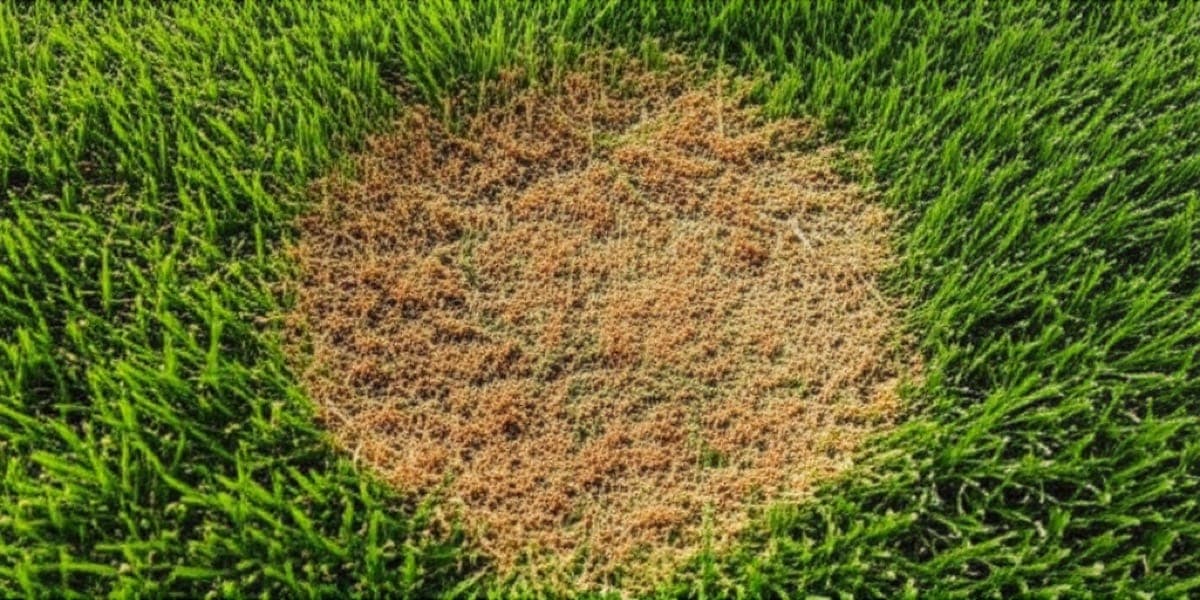
Few things are more frustrating than watching brown patches appear on a lawn you’ve worked hard to maintain. Those dead or dying areas can seem to appear overnight, and determining the cause often feels like solving a mystery. In Fort Wayne’s climate, brown patches can result from multiple factors—disease, insects, drought, or cultural problems—and accurate diagnosis is essential for effective treatment.
As a lawn care professional serving Northeast Indiana, I’ve diagnosed and treated thousands of brown patch cases. In this comprehensive guide, I’ll walk you through the systematic process we use to identify what’s killing your grass, explain the most common causes specific to our region, and provide actionable solutions to restore your lawn to health.

What Are the Most Common Causes of Brown Patches in Fort Wayne Lawns?
The most common causes of brown patches in Fort Wayne lawns are fungal diseases (particularly brown patch disease and dollar spot), grub damage from Japanese beetle larvae, drought stress from inadequate watering, and damage from improper cultural practices like mowing too short or fertilizer burn. Identifying the correct cause is critical because each requires a different treatment approach.
Here’s an overview of the primary culprits:
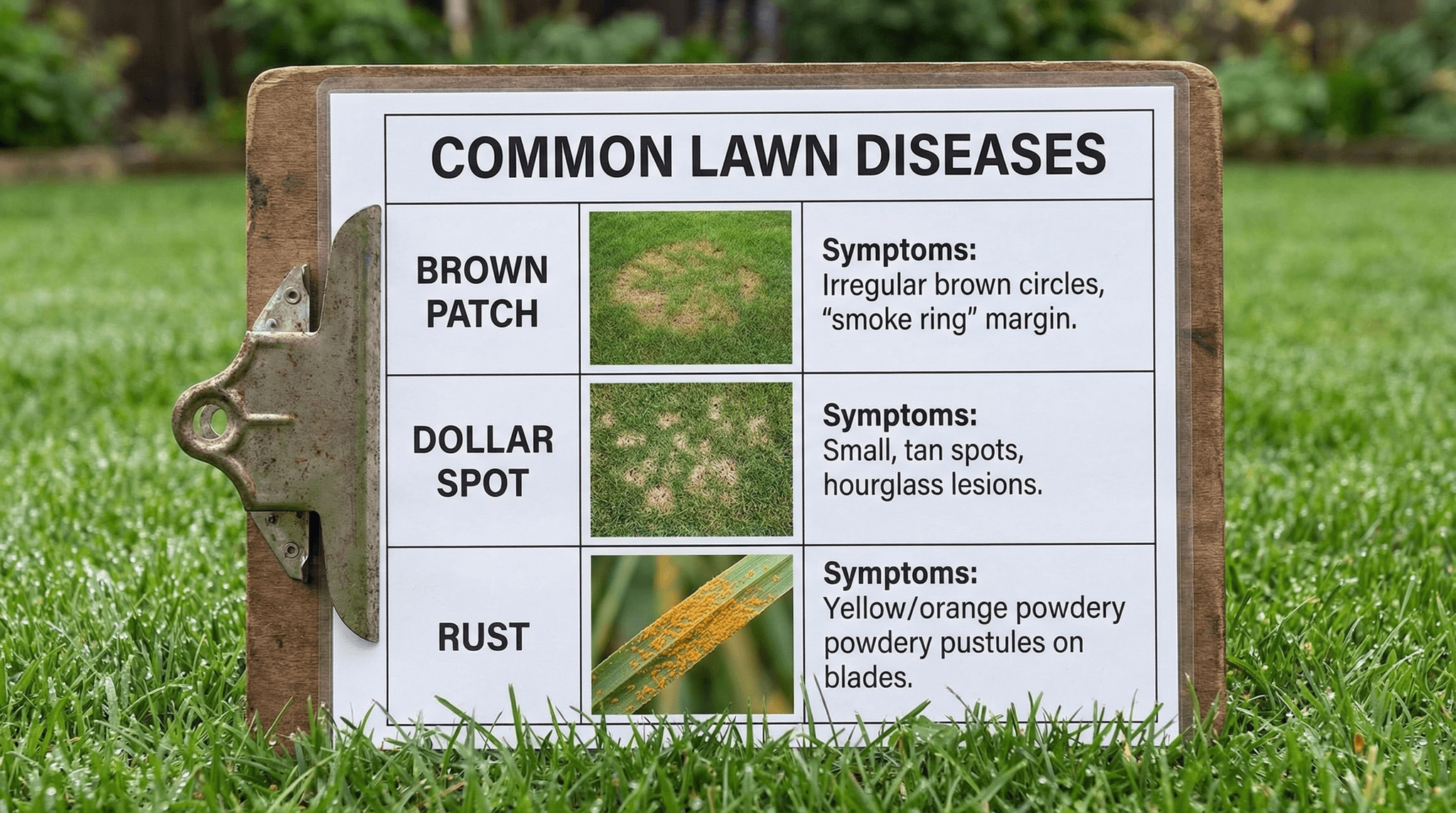
Disease-Related Brown Patches
| Disease | Appearance | Timing | Primary Cause |
|---|---|---|---|
| Brown Patch | Circular patches 6-24 inches | Summer (hot/humid) | Rhizoctonia fungus |
| Dollar Spot | Small 2-4 inch circles | Late spring-fall | Sclerotinia fungus |
| Pythium Blight | Greasy streaks, irregular | Hot/humid weather | Pythium fungus |
| Necrotic Ring Spot | Rings with green center | Spring and fall | Leptosphaeria fungus |
Insect-Related Damage
| Pest | Damage Pattern | Timing | Signs |
|---|---|---|---|
| Grubs | Irregular patches, sod pulls up | Late summer-fall | White larvae in soil |
| Chinch Bugs | Expanding yellowing areas | Summer heat | Bugs visible at grass crown |
| Sod Webworms | Irregular brown areas | Summer | Moth activity at dusk |
| Billbugs | Scattered dead spots | Early summer | Sawdust-like frass |
Environmental and Cultural Causes
- Drought stress - Irregular patterns, footprints remain visible
- Heat dormancy - Whole lawn browns evenly
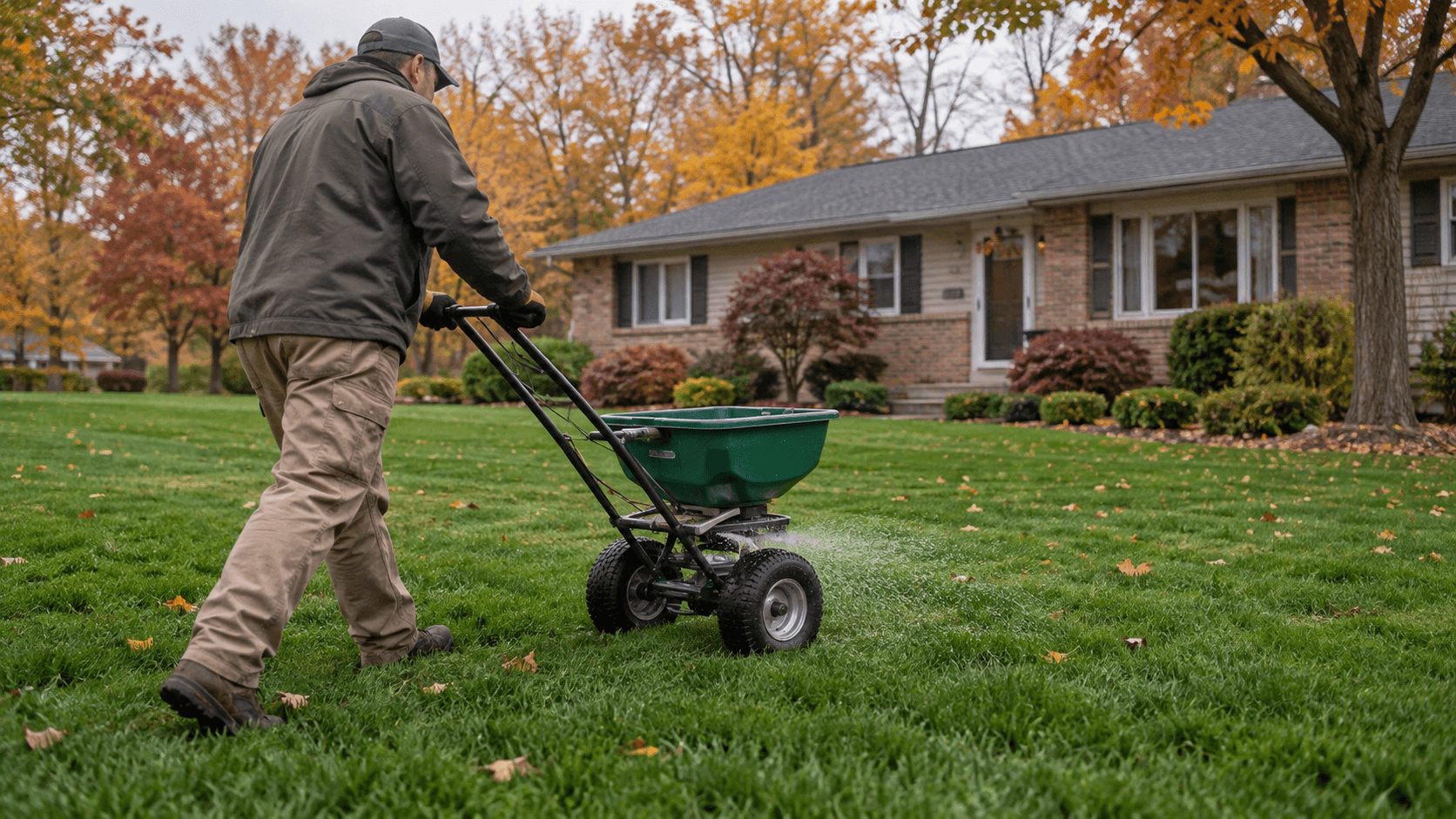
- Fertilizer burn - Streaks following spreader path
- Chemical spill - Irregular shape, clearly defined edges
- Dog urine - Small round spots with dark green rings
- Scalping - Brown in high spots or at mower turns
- Compaction - Traffic areas, paths across lawn
How Do You Identify Brown Patch Disease Specifically?
Brown patch disease causes circular patches ranging from 6 inches to several feet in diameter, with a distinctive “smoke ring” border of grayish-brown grass at the edge of actively spreading patches during morning hours when dew is present. The disease thrives when nighttime temperatures stay above 68°F and humidity is high, conditions common in Fort Wayne from late June through August.
Key Identification Features
Patch Characteristics:
- Circular or roughly circular shape
- Size ranges from 6 inches to 3+ feet
- Multiple patches may merge into larger areas
- Center may recover, creating ring appearance
Grass Blade Symptoms:
- Tan/brown lesions with dark borders
- Lesions wrap around blade
- Blades easily pull from sheath
- Yellowing before death
Smoke Ring Sign:
- Gray-brown border visible in morning
- Appears when fungus is actively spreading
- Disappears as morning dries
- Most diagnostic feature
Conditions That Promote Brown Patch
| Factor | Risk Level |
|---|---|
| Night temps above 68°F | High risk |
| Extended leaf wetness (10+ hours) | High risk |
| High humidity | High risk |
| Excess nitrogen | High risk |
| Poor air circulation | Moderate risk |
| Compacted soil | Moderate risk |
| Overwatering | High risk |
Treatment for Brown Patch Disease
Immediate Actions:
- Reduce watering frequency
- Water early morning only
- Avoid evening irrigation
- Stop nitrogen fertilization
- Improve air circulation if possible
Fungicide Options:
- Preventive: Apply before conditions favor disease
- Curative: Apply when symptoms first appear
- Products containing azoxystrobin, propiconazole, or myclobutanil
- Follow label directions exactly
- May need 2-3 applications

How Can You Tell if Grubs Are Causing Your Brown Patches?
Grub damage creates irregular brown patches that appear in late summer through fall, and affected turf pulls up easily like a carpet because the grub larvae have eaten the roots. To confirm grubs, cut a one-square-foot section of damaged turf and fold it back—if you find more than 5-10 white C-shaped larvae, grubs are your problem.
Grub Identification and Life Cycle
What Grubs Look Like:
- White to grayish body
- Brown head capsule
- C-shaped curl
- Three pairs of legs near head
- Size: 1/4 to 1 inch depending on species and age
Common Species in Northeast Indiana:
- Japanese beetle grubs (most common)
- European chafer
- June beetle (May/June beetle)
- Masked chafer
Grub Life Cycle in Fort Wayne
| Month | Stage | Lawn Activity |
|---|---|---|
| June-July | Adult beetles lay eggs | Mating flights visible |
| July-Aug | Eggs hatch, grubs feed | Damage begins appearing |
| Sept-Oct | Grubs reach full size | Maximum damage visible |
| Nov-March | Grubs move deep, dormant | No visible activity |
| April-May | Grubs move up, feed briefly | Minor spring damage |
| June | Pupate, emerge as adults | Cycle repeats |
How to Check for Grubs
- Choose test locations - Check where brown patches meet green grass
- Cut a section - Use a flat spade to cut 12" × 12" × 3" deep
- Fold back sod - Lift and examine soil and roots
- Count grubs - Look for white larvae in top 2-3 inches
- Assess threshold - 5-10 grubs per square foot requires treatment
Grub Treatment Options
Preventive Products (Apply June-July):
- Imidacloprid (Merit)
- Chlorantraniliprole (GrubEx)
- Apply before eggs hatch
- Most effective approach
Curative Products (Apply when grubs found):
- Trichlorfon (Dylox)
- Carbaryl (Sevin)
- Must contact grubs directly
- Water in immediately
- Less effective on mature grubs
What Does Drought Stress Look Like Versus Disease?
Drought-stressed grass shows footprints that remain visible for 30 minutes or more, displays a blue-gray tint before turning brown, and affects the entire lawn relatively uniformly rather than in distinct patches. Unlike disease, drought damage doesn’t have defined borders or unusual patterns, and the grass will recover once adequate moisture returns if dormancy hasn’t lasted too long.
Drought Stress Identification
Visual Symptoms:
- Blue-gray or purple tint initially
- Footprints stay visible (grass doesn’t spring back)
- Leaf blades fold or curl
- Uniform appearance across lawn
- Starts in hottest/driest areas first
Pattern Characteristics:
- No defined edges or circles
- Follows terrain (hilltops, south-facing slopes first)
- Areas near pavement/buildings affected more
- Shaded areas stay green longer
Drought vs Disease Comparison
| Feature | Drought Stress | Disease |
|---|---|---|
| Pattern | Uniform, terrain-based | Circular or irregular patches |
| Edges | Gradual transition | Often sharp borders |
| Timing | During dry periods | Often after rain/humidity |
| Recovery | Quick with water | Requires treatment |
| Spread | Doesn’t spread | Often expands over days |
Managing Drought Stress
Immediate Response:
- Don’t panic - dormant grass often recovers
- Water deeply (1 inch) if irrigating
- Avoid fertilizing stressed grass
- Raise mowing height
- Reduce foot traffic
Watering Guidelines:
- Water deeply and infrequently
- Early morning is best
- Aim for 1-1.5 inches per week (including rainfall)
- Allow grass to go dormant if water restrictions apply
- Don’t alternate between dormancy and active growth

How Do You Fix Brown Patches Caused by Fertilizer Burn?
Fertilizer burn creates brown streaks that follow your spreader path, appearing within 2-7 days of application with sharply defined edges where product overlap occurred. To fix fertilizer burn, water the affected areas heavily (1 inch daily for 4-5 days) to flush excess salts from the soil, then wait for grass to recover naturally or overseed severely damaged areas in fall.
Identifying Fertilizer Burn
Telltale Signs:
- Striped pattern following mowing paths
- Sharp edges between burned and healthy grass
- Occurs 2-7 days after fertilization
- Worst where spreader overlapped
- May see granules visible on grass
Severity Assessment:
- Mild: Yellowing, grass recovers
- Moderate: Brown tips, crowns survive
- Severe: Completely dead, needs reseeding
Causes of Fertilizer Burn
| Cause | How to Prevent |
|---|---|
| Over-application | Follow label rates exactly |
| Spreader overlap | Use half-rate in two directions |
| Wrong product | Use slow-release formulas |
| Hot weather | Avoid fertilizing in extreme heat |
| Dry soil | Water before and after application |
| Wet leaves | Apply when grass is dry |
| Spreader malfunction | Calibrate and maintain equipment |
Recovery Steps
Immediate Actions (First 48 Hours):
- Water heavily - 1 inch immediately
- Continue watering daily for 4-5 days
- Avoid walking on damaged areas
- Don’t add more fertilizer
Assessment Period (1-2 Weeks):
- Watch for new green growth
- Crown survival = recovery possible
- No green = will need reseeding
- Document extent of damage
Renovation (If Needed):
- Wait until fall (mid-August to mid-September)
- Remove dead material
- Loosen soil surface
- Overseed with quality seed
- Keep moist until established
What Causes Circular Brown Patches with Green Centers?
Circular brown patches with green centers are typically caused by necrotic ring spot or summer patch, both fungal diseases that attack grass roots in a circular pattern, killing the outer ring while allowing the center to survive or regrow. These diseases are common in Kentucky bluegrass lawns in Northeast Indiana and can persist for years without proper management.
Necrotic Ring Spot
Identification:
- Rings 3 inches to 3 feet diameter
- “Frog-eye” pattern (green center, dead ring)
- Occurs in spring and fall (55-80°F)
- Affects Kentucky bluegrass primarily
- Roots appear dark and rotted
Contributing Factors:
- Compacted soil
- Heavy thatch
- Poor drainage
- Excess nitrogen
- Shallow watering
- Stress from heat or drought
Summer Patch
Identification:
- Similar ring pattern to necrotic ring spot
- Active during hot weather (86-95°F)
- Crescent or irregular shapes
- Roots tan to brown
- May have pink mycelium at soil surface
Contributing Factors:
- Hot summer weather
- Compacted soil
- Excess nitrogen
- Poor root health
- Kentucky bluegrass susceptibility
Managing Ring Diseases
Cultural Controls:
- Aerate compacted areas
- Reduce nitrogen applications
- Water deeply but infrequently
- Raise mowing height
- Overseed with resistant varieties
Resistant Grass Varieties:
- Tall fescue (most resistant)
- Perennial ryegrass (resistant)
- Fine fescue (moderately resistant)
- Newer Kentucky bluegrass cultivars
Fungicide Options:
- Preventive application most effective
- Apply in spring before symptoms appear
- Products: azoxystrobin, thiophanate-methyl
- May require multiple years of treatment

How Do You Prevent Brown Patches from Returning?
Preventing brown patches requires a comprehensive approach that includes proper watering practices (deep and infrequent), correct mowing height (3+ inches), balanced fertilization, good air circulation, and addressing underlying soil problems like compaction. A healthy, properly maintained lawn resists disease, insects, and environmental stress far better than a stressed lawn.
Cultural Prevention Practices
Watering Best Practices:
- Water early morning (6-9 AM)
- Apply 1-1.5 inches per week
- Deep watering encourages deep roots
- Let soil dry between waterings
- Reduce frequency during cooler periods
Mowing Best Practices:
- Maintain 3-3.5 inch height
- Never remove more than 1/3 of blade
- Keep blades sharp
- Vary mowing pattern
- Leave clippings (disease-free lawns)
Fertilization Best Practices:
- Soil test every 2-3 years
- Use slow-release nitrogen
- Avoid excess nitrogen in summer
- Follow seasonal schedule
- Don’t fertilize stressed grass
Soil Health Improvements
| Problem | Solution | Timing |
|---|---|---|
| Compaction | Core aeration | Fall |
| Heavy thatch | Dethatching or aeration | Fall |
| Poor drainage | Aeration, topdressing | Fall |
| Low organic matter | Compost topdressing | Fall |
| pH imbalance | Lime or sulfur | Per soil test |
Annual Maintenance Calendar
| Month | Prevention Task |
|---|---|
| April | First mowing, pre-emergent |
| May | Begin regular mowing schedule |
| June | Monitor for early disease signs |
| July | Check for grubs, reduce nitrogen |
| August | Scout for grub damage |
| September | Aerate, overseed, fall fertilize |
| October | Continue mowing, winterizer |
| November | Final mowing, cleanup |
When Should You Call a Professional for Brown Patch Problems?
You should call a professional when brown patches continue spreading despite treatment, when you cannot confidently identify the cause, when damage covers more than 25% of your lawn, or when the problem returns year after year. Professional diagnosis can save money by ensuring correct treatment rather than guessing with multiple ineffective products.
Signs You Need Professional Help
Identification Uncertainty:
- Symptoms don’t match common descriptions
- Multiple problems appear present
- Previous treatments haven’t worked
- Damage patterns are unusual
Severity Concerns:
- Large areas affected (>25% of lawn)
- Damage spreading rapidly
- Problem recurring annually
- Multiple treatment failures
Timing Concerns:
- Growing season running out
- Need professional-grade products
- Renovation may be required
What Professionals Offer
Diagnostic Services:
- Visual assessment by trained eyes
- Soil and tissue testing
- Proper disease/pest identification
- Root and thatch evaluation
Treatment Advantages:
- Commercial-grade products
- Proper application equipment
- Correct timing
- Integrated approach
At Minnick Lawn & Landscaping, our lawn care services include comprehensive diagnosis and treatment of lawn diseases and pest problems throughout the Fort Wayne area.

Restore Your Lawn to Health
Brown patches don’t have to be permanent. With proper identification and treatment, most lawn damage can be repaired, and preventive practices can stop problems from returning. Start by identifying the cause, address it with appropriate treatment, and implement good cultural practices going forward.
Need help diagnosing or treating brown patches in your lawn? We’re here to help.
Request a Free Quote or call us at (260) 450-4676 for professional lawn diagnosis and treatment.
Frequently Asked Questions
Will brown patches recover on their own?
It depends on the cause. Drought-stressed grass often recovers with watering, but disease-killed grass typically requires treatment and may need overseeding. Grub damage requires treatment to prevent further spread.
How long does it take for brown patches to recover?
Minor damage may recover in 2-4 weeks with proper care. Severe damage requiring overseeding takes 6-8 weeks for seed establishment, then another season for full density. Root diseases may require multiple seasons of management.
Can brown patch spread to my neighbor’s lawn?
Fungal diseases can spread, but primarily through spores carried by wind, water, and equipment. Keeping your lawn healthy and treated reduces risk to neighboring properties. Grubs spread as adult beetles, so area-wide management is beneficial.
Is brown patch contagious between grass plants?
Yes, fungal diseases spread from plant to plant. The fungus produces spores that move through air and water. This is why early treatment and cultural practices that reduce spread (avoiding mowing wet grass, etc.) are important.
Should I bag clippings when my lawn has brown patch disease?
Yes, bagging clippings during active disease can reduce spore spread. After disease pressure subsides and treatment is complete, you can resume mulching. Sanitize mower blades between mowing sessions if possible.
Why do brown patches keep coming back every year?
Recurring problems indicate underlying issues: susceptible grass varieties, poor soil conditions, cultural practice problems, or endemic disease pressure. Address root causes through renovation, soil improvement, and management changes for lasting results.
Can I treat brown patch disease organically?
Cultural practices are the foundation of organic management: proper watering, mowing, and fertilization. Some organic fungicides (neem oil, potassium bicarbonate) provide limited suppression. Overseeding with resistant varieties provides long-term organic control.
What’s the best time of year to repair brown patch damage?
Fall (mid-August through mid-September in Fort Wayne) is ideal for overseeding and renovation. Soil is warm, air is cooling, and new grass has time to establish before winter. Spring seeding is less successful due to weed competition and summer stress.
Sources
- Purdue University Extension - Lawn Disease Guide
- University of Kentucky - Turfgrass Diseases
- Penn State Extension - Diagnosing Lawn Problems
- Ohio State University Extension - Grub Control
- The Lawn Institute - Lawn Care Best Practices
Related Articles
Adam Minnick is the owner of Minnick Lawn & Landscaping, serving Fort Wayne, Auburn, and Northeast Indiana since 2018. With years of experience in professional lawn care, Adam and his team help hundreds of local homeowners achieve beautiful, healthy lawns.