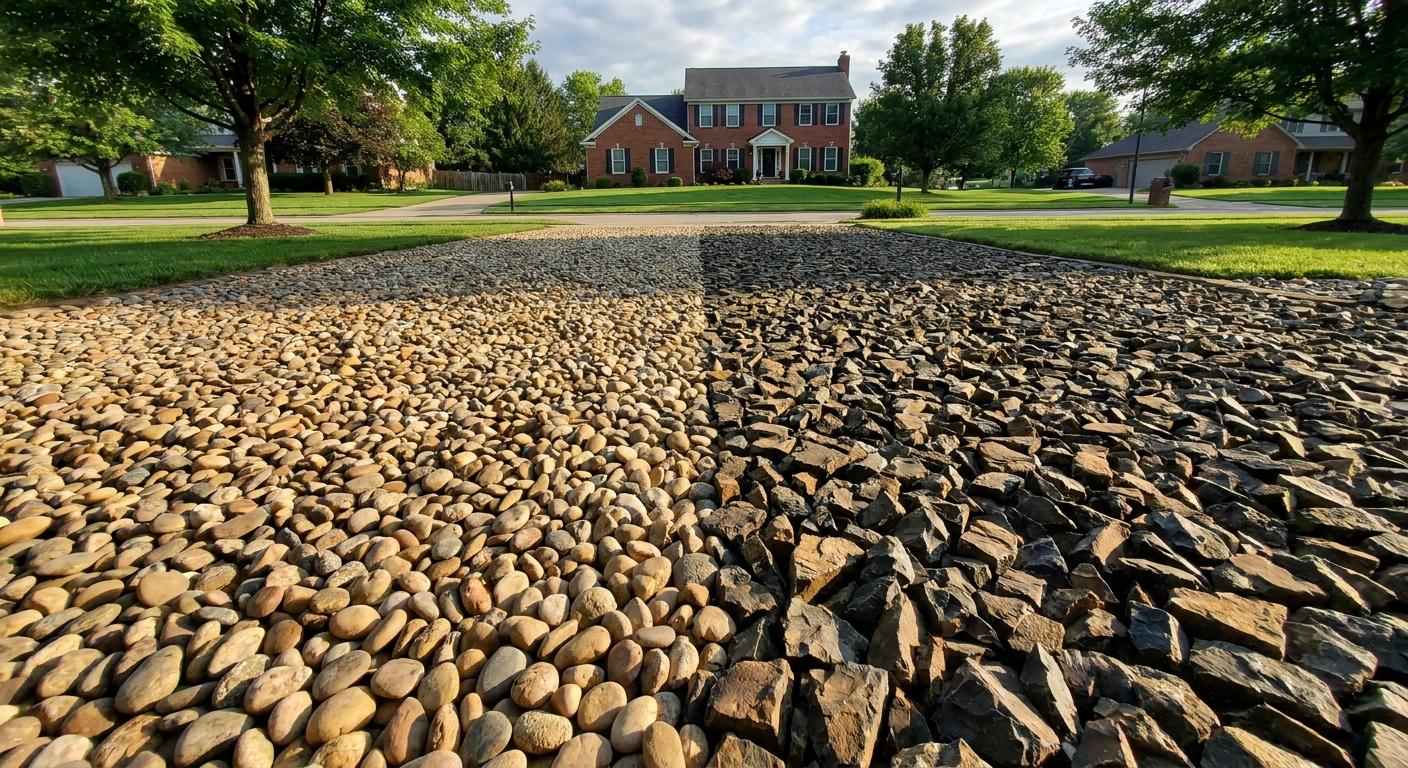
River rock comes in two primary forms—smooth, rounded regular river rock and angular cracked river rock—and the differences between them go far beyond appearance. Fort Wayne landscapers and homeowners often debate which type works best for driveways, pathways, garden beds, and decorative applications. The choice you make impacts drainage, durability, cost, and long-term maintenance in your Northeast Indiana yard.
What Makes Cracked River Rock Different from Regular River Rock?
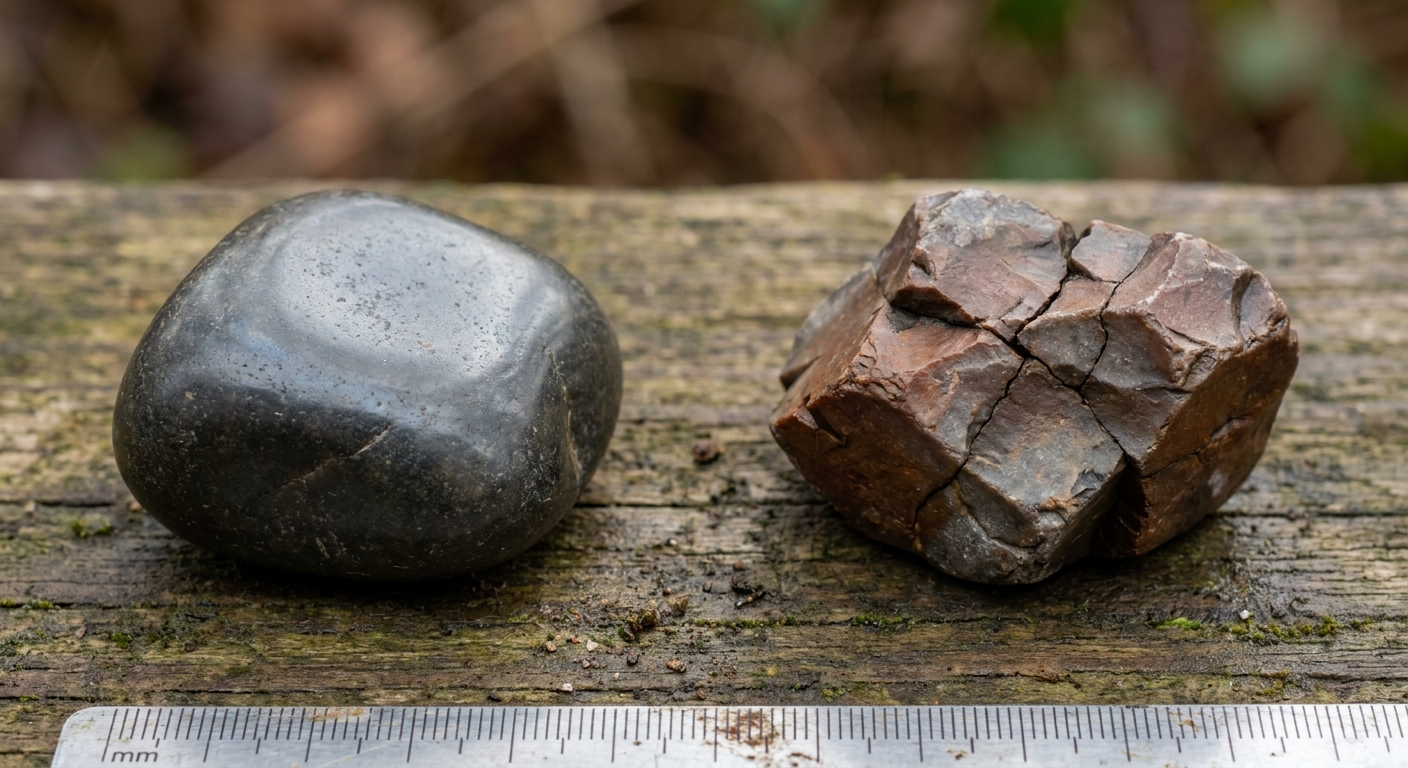
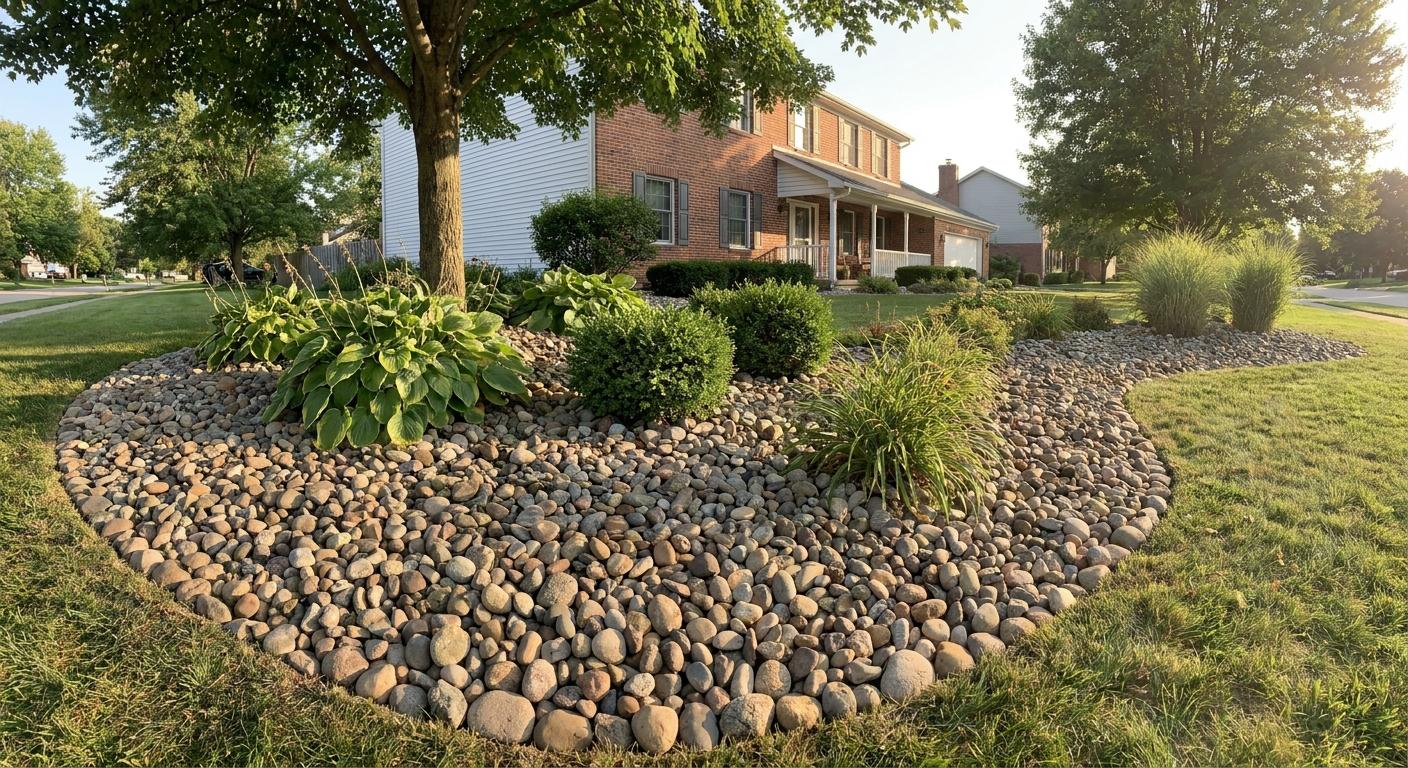
Cracked river rock features angular, jagged edges created by fracturing larger stones, while regular river rock maintains its naturally smooth, rounded surface shaped by years of water movement. This fundamental difference in texture and shape affects how these materials perform in your landscape. Cracked river rock offers superior interlocking capabilities, making it more stable for walkways and retaining walls, whereas regular river rock prioritizes aesthetic appeal with its polished appearance.
How the Rocks Are Produced
Regular river rock forms naturally over decades as water and sediment tumble stones smooth. Cracked river rock, however, is mechanically produced by breaking larger stones into angular fragments. This industrial process creates sharp edges that grip adjacent materials, whereas smooth river rocks tend to shift and settle under pressure. For Fort Wayne properties requiring stable hardscaping surfaces, this production difference is critical.
How Does Drainage Differ Between These Two Types?
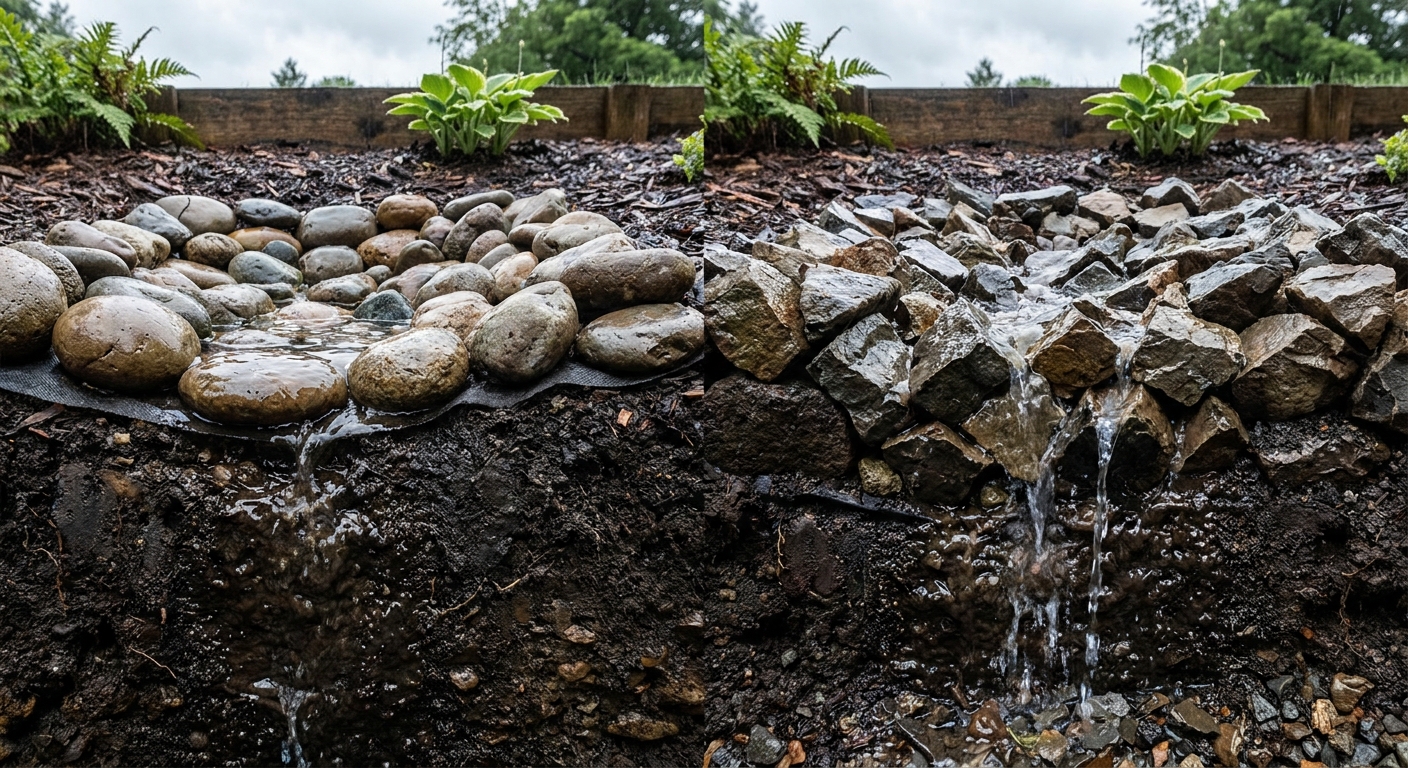
Drainage performance varies significantly between cracked and regular river rock due to their different shapes. Cracked river rock's angular edges create more friction and create tighter packing, potentially reducing water flow through the material. Regular river rock's smooth, rounded surface allows water to pass through more freely with minimal obstruction, making it the superior choice for areas requiring excellent drainage in Northeast Indiana's clay-heavy soil conditions.
Best Uses for Each Type's Drainage Properties
- Cracked River Rock: Ideal for decorative beds, pathways where slight compaction is desired, and areas where movement must be minimized
- Regular River Rock: Perfect for rain gardens, drainage fields, stream beds, and areas surrounding downspouts where water management is essential
- Mixed Applications: Layering regular rock below with cracked rock on top creates stability plus drainage efficiency
Which Type Is More Stable for Walkways and Patios?
Cracked river rock wins decisively for structural applications in Fort Wayne landscapes. The angular edges mechanically interlock like puzzle pieces, preventing individual stones from rolling or shifting underfoot. Regular river rock's smooth surface means stones can migrate and settle, creating uneven walking surfaces that pose safety hazards and require frequent raking and replacement along pathways and patio borders.
Stability Factors to Consider
When installing hardscaping features in Northeast Indiana, soil composition matters. Our region's clay-based soil becomes slippery when wet, and cracked river rock's angular design provides better traction and anchoring. If you're building a retaining wall or edging a raised garden bed, cracked river rock's interlocking nature ensures the structure remains stable through freeze-thaw cycles common to USDA Zone 5b.
Cracked river rock's angular edges create mechanical stability that prevents shifting, while regular river rock's smooth surface requires constant maintenance to maintain appearance and safety.
What Are the Cost Differences Between Cracked and Regular River Rock?
Regular river rock typically costs 15-25% less per ton than cracked river rock in Fort Wayne because it requires minimal processing. Cracked river rock's industrial fracturing process and superior durability justify its premium price. For large projects covering significant square footage, this price difference adds up quickly, but the reduced maintenance costs of cracked rock often offset the initial investment.
Long-Term Value Comparison
- Initial Cost: Regular rock ($30-45/ton) vs. Cracked rock ($40-60/ton)
- Installation Labor: Cracked rock requires less frequent leveling and replacement, saving money over time
- Maintenance: Regular rock needs raking every 2-4 weeks; cracked rock needs attention 2-3 times yearly
- Lifespan: Cracked rock lasts 5-7 years in high-traffic areas; regular rock may need replacement after 2-3 years
- Overall Cost: Cracked rock often proves more economical over a 5-year period despite higher upfront expense
Which Type Should You Choose for Your Fort Wayne Landscape?
Your choice depends on your primary goal. If aesthetics are paramount and the area receives light foot traffic, regular river rock's smooth, polished appearance creates a sophisticated look. If stability, durability, and low maintenance matter more—especially for walkways, driveways, or structural borders—cracked river rock is the superior investment. Many Northeast Indiana homeowners use both types strategically: regular river rock for decorative focal areas and cracked rock for functional, high-traffic zones.
Questions to Guide Your Decision
- Will this area experience regular foot or vehicle traffic?
- Is water drainage a concern in your Fort Wayne yard?
- How much ongoing maintenance are you willing to perform?
- Is your budget focused on initial cost or long-term value?
- Does the aesthetic blend complement your home's design?
How Can Minnick Help You Select the Right River Rock?
Choosing between cracked and regular river rock shouldn't be overwhelming. The landscape professionals at Minnick Lawn & Landscaping have completed hundreds of projects across Fort Wayne and Northeast Indiana, and we understand how both materials perform in our regional climate. We'll assess your specific landscape needs, soil conditions, and aesthetic goals to recommend the perfect solution. Whether you need mulch and rock delivery or complete hardscaping installation, we handle everything from material selection through final placement. Contact us today for a free consultation and discover which river rock type will transform your outdoor space.
Ready to upgrade your Fort Wayne landscape? Request a free quote from Minnick Lawn & Landscaping and let our experts guide your river rock selection. We serve Auburn, New Haven, Huntertown, Leo-Cedarville, Grabill, and throughout Allen County. Call us at (260) 927-5185 to discuss your project.