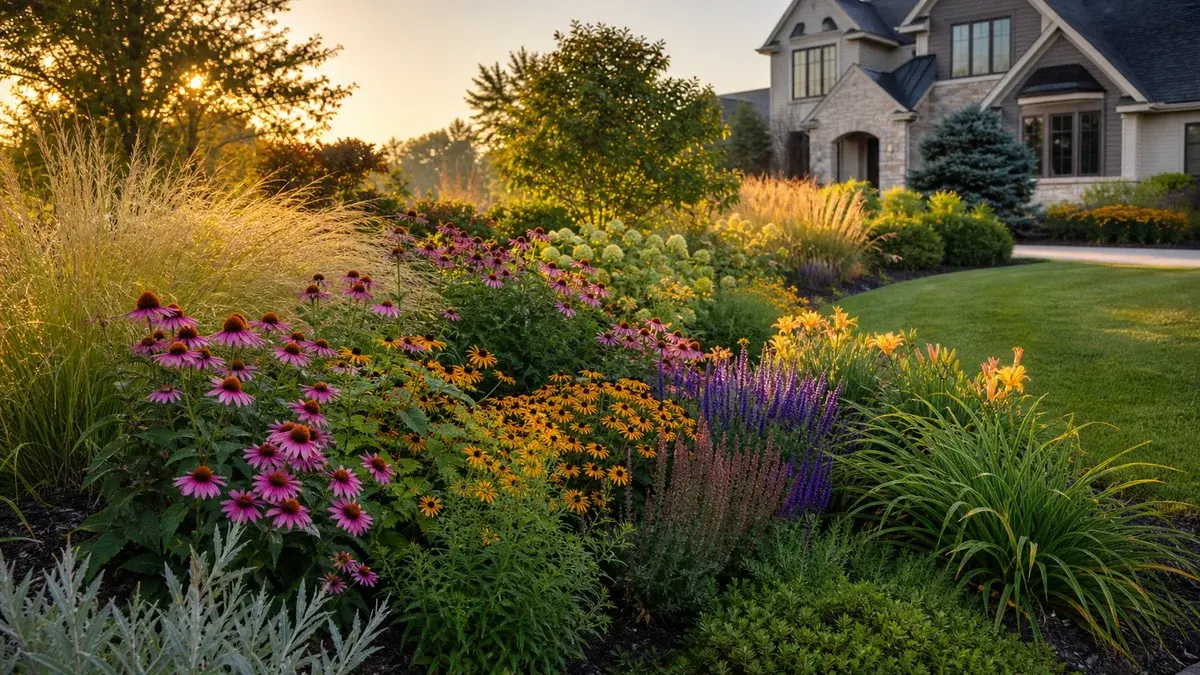
Adding perennials to your Fort Wayne landscape is the smartest way to enjoy continuous color without replanting every year. These hardy plants thrive in Northeast Indiana's Zone 5b climate and return season after season, giving you reliable blooms from spring through fall while requiring minimal maintenance once established.
Which perennials deliver the longest bloom times in Fort Wayne?
The longest-blooming perennials in Fort Wayne are coneflowers, black-eyed Susans, and daylilies, which flower for 8-12 weeks or more when deadheaded regularly. Choosing varieties that bloom at different times ensures your garden stays colorful from May through October. Plant spring bloomers like peonies and tulips alongside summer powerhouses and fall asters for seamless color transitions.
Spring and Early Summer Stars
- Peonies – Fragrant, long-lived, and nearly pest-free; they thrive in Fort Wayne's clay soils and bloom reliably for 7-10 days in late May
- Coral Bells (Heuchera) – Stunning foliage in burgundy, orange, or gold; delicate flower spikes add texture for weeks
- Creeping Phlox – Low-growing ground cover with vibrant pink, purple, or white blooms in April and May
- Tulips and Alliums – Classic spring color; plant bulbs in fall for reliable April-May displays
Summer Workhorses
- Coneflowers (Echinacea) – Purple, pink, orange, and yellow varieties bloom June-September; butterflies and bees love them
- Black-eyed Susans (Rudbeckia) – Golden-yellow blooms with dark centers; extremely tough and prolific in Northeast Indiana heat
- Daylilies – Choose multiple varieties for continuous color; some repeat-bloom throughout summer
- Salvia – Tall spires of blue, purple, or red flowers; drought-tolerant once established
- Bee Balm – Red, pink, purple, or orange blooms; fragrant foliage and a pollinator magnet
What colors work best in Fort Wayne landscape designs?
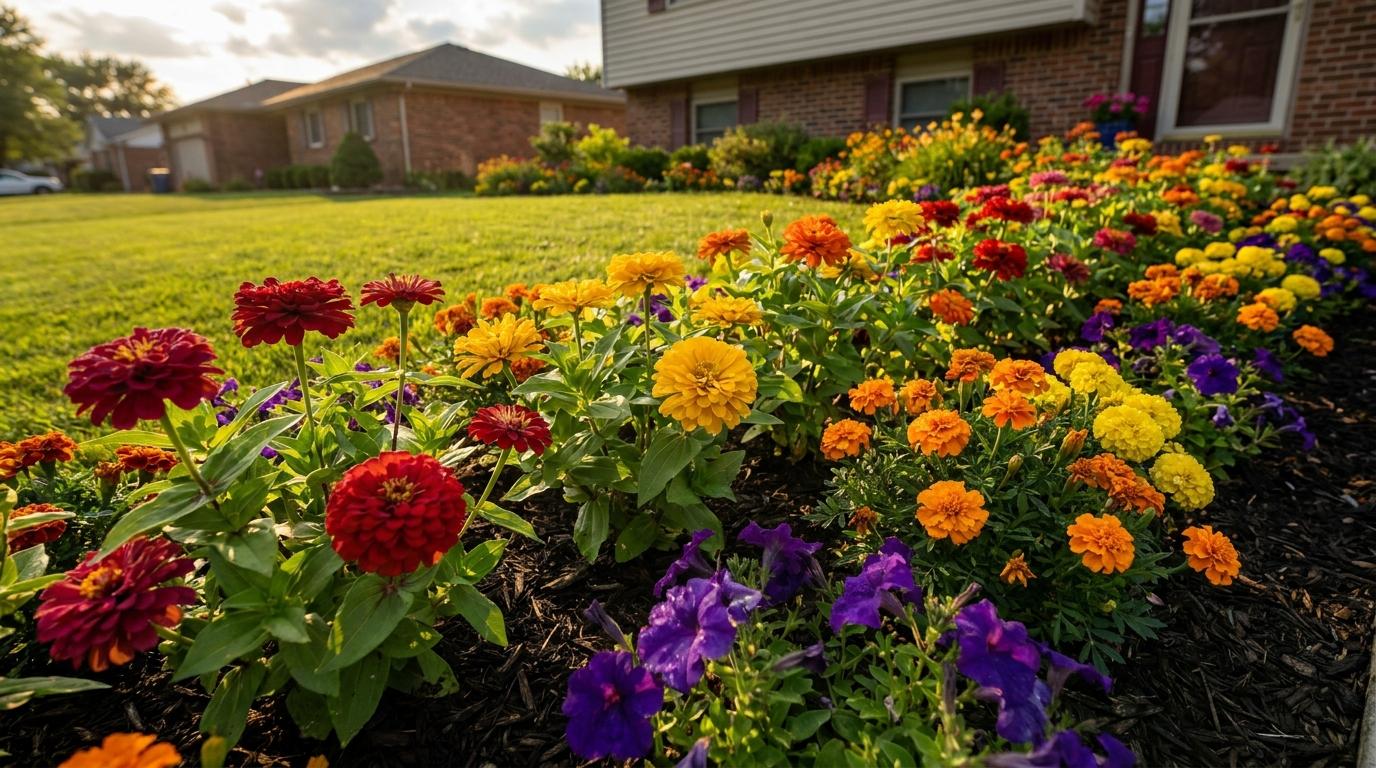
The best color schemes depend on your home's style and existing landscape. Fort Wayne's green lawns and natural surroundings pair beautifully with bold purples and oranges, soft pastels, or classic red-and-yellow combinations. Consider your roof color, siding, and hardscaping materials when selecting perennials to create a cohesive design.
Proven Color Combinations
- Purple + Yellow: Plant Salvia with Black-eyed Susans for striking contrast
- Pink + White: Pair pink Bee Balm with white Phlox for a cottage garden feel
- Red + Orange: Combine red Coneflowers with orange Daylilies for warm, energetic displays
- Blue + Silver: Mix blue Salvia with silvery-leafed Artemisia or Russian Sage for cool, sophisticated style
- Mixed Pastels: Layer coral, blush, and cream varieties for a soft, romantic garden
Pro Tip: Plant perennials in groups of three to five for maximum visual impact. A single plant gets lost, but a cluster of the same color creates drama and draws the eye through your landscape.
How do you ensure perennials thrive in Northeast Indiana soil?
Most Northeast Indiana yards have heavy clay soil, which drains poorly and requires amendment before planting perennials. Mix compost or aged mulch into your planting beds to improve drainage and add nutrients. Well-draining soil is essential; waterlogged roots in Fort Wayne's wet springs lead to rot and fungal issues.
Soil Prep Steps for Fort Wayne Gardens
- Test your soil pH (most perennials prefer 6.0-7.0); clay in this region typically runs neutral to slightly alkaline
- Amend heavy clay with 3-4 inches of compost worked 8-12 inches deep
- Add a 2-3 inch mulch layer after planting to retain moisture and regulate soil temperature
- Water deeply after planting; established perennials need 1-1.5 inches per week during dry spells
- Avoid planting in low spots where spring melt and rain collect
When should you plant perennials in Fort Wayne?
In Fort Wayne's Zone 5b climate, the ideal planting windows are spring (April-May, after the last frost around May 15th) and early fall (August-September). Fall planting gives roots time to establish before winter dormancy. Container-grown perennials can be planted anytime the ground isn't frozen, but they'll establish best in cooler months.
Seasonal Timing Matters
- Spring: Plant in April-May for strong root development during the growing season
- Fall: Plant in August-September for a head start next spring (roots grow through mild fall weather)
- Summer: Avoid planting during June-July heat in Fort Wayne unless you commit to daily watering
- Winter: Never plant; frozen ground and cold stress kill young perennials
Which low-maintenance perennials are best for busy Fort Wayne homeowners?
If you want stunning color without constant fussing, choose drought-tolerant perennials like Russian Sage, Sedums, Yarrow, and ornamental grasses. These thrive in Fort Wayne once established, need minimal deadheading, and shrug off the region's temperature swings. They're perfect for landscape designs that look beautiful with less effort.
Toughest Performers
- Russian Sage – Wispy blue flowers, silvery foliage; blooms July-October with almost no care needed
- Sedums and Stonecrops – Succulent leaves in pink, red, or burgundy; flowers in late summer; extremely drought-tough
- Yarrow – Flat-topped clusters in red, pink, yellow, or white; tolerates poor soil and heat
- Ornamental Grasses – Miscanthus and switchgrass provide movement and color without deadheading
- Catmint – Purple-blue blooms June-September; carefree and fragrant
How can professional landscaping help your perennial garden succeed?
A landscape designer understands Fort Wayne's unique growing conditions and can create a cohesive perennial garden that maximizes color, accounts for mature plant sizes, and fits your property's style. The team at Minnick Lawn & Landscaping specializes in landscaping designs that incorporate perennials for long-term color and minimal maintenance, plus we handle soil prep, planting, and initial care to ensure success.
Creating a vibrant perennial garden in Fort Wayne is absolutely achievable with the right plant selections, proper soil preparation, and smart timing. Whether you prefer bold, eye-catching colors or soft, romantic pastels, Northeast Indiana's climate supports dozens of beautiful perennial varieties. Ready to transform your landscape with color that returns year after year? Request a free quote from Minnick Lawn & Landscaping and let our team design a perennial garden tailored to your Fort Wayne home.