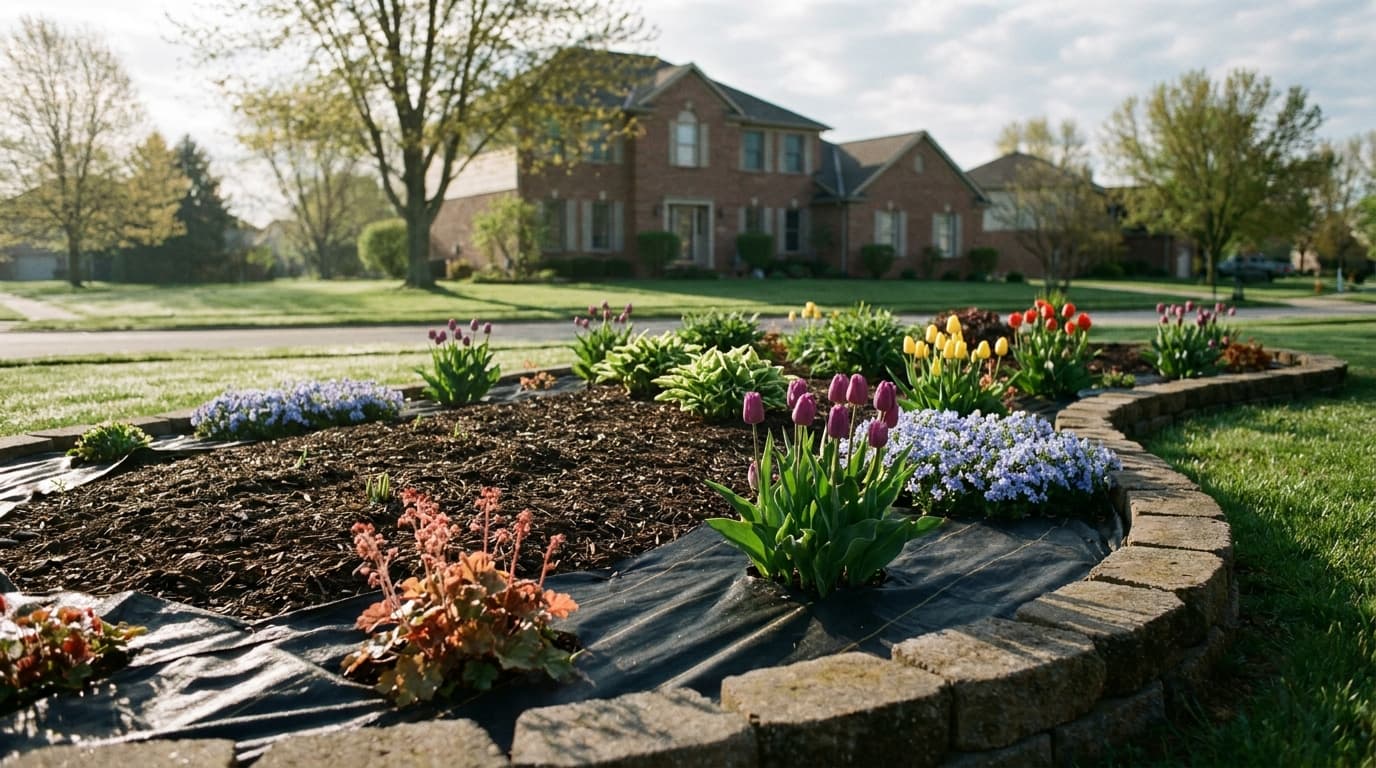
Weed barriers are one of the most debated topics in Northeast Indiana landscaping. While they promise to eliminate hand-weeding and reduce maintenance, they come with real tradeoffs that can affect your flower beds' long-term health. Understanding both sides helps you make the right choice for your Fort Wayne landscape.
What Exactly Is a Weed Barrier and How Does It Work?
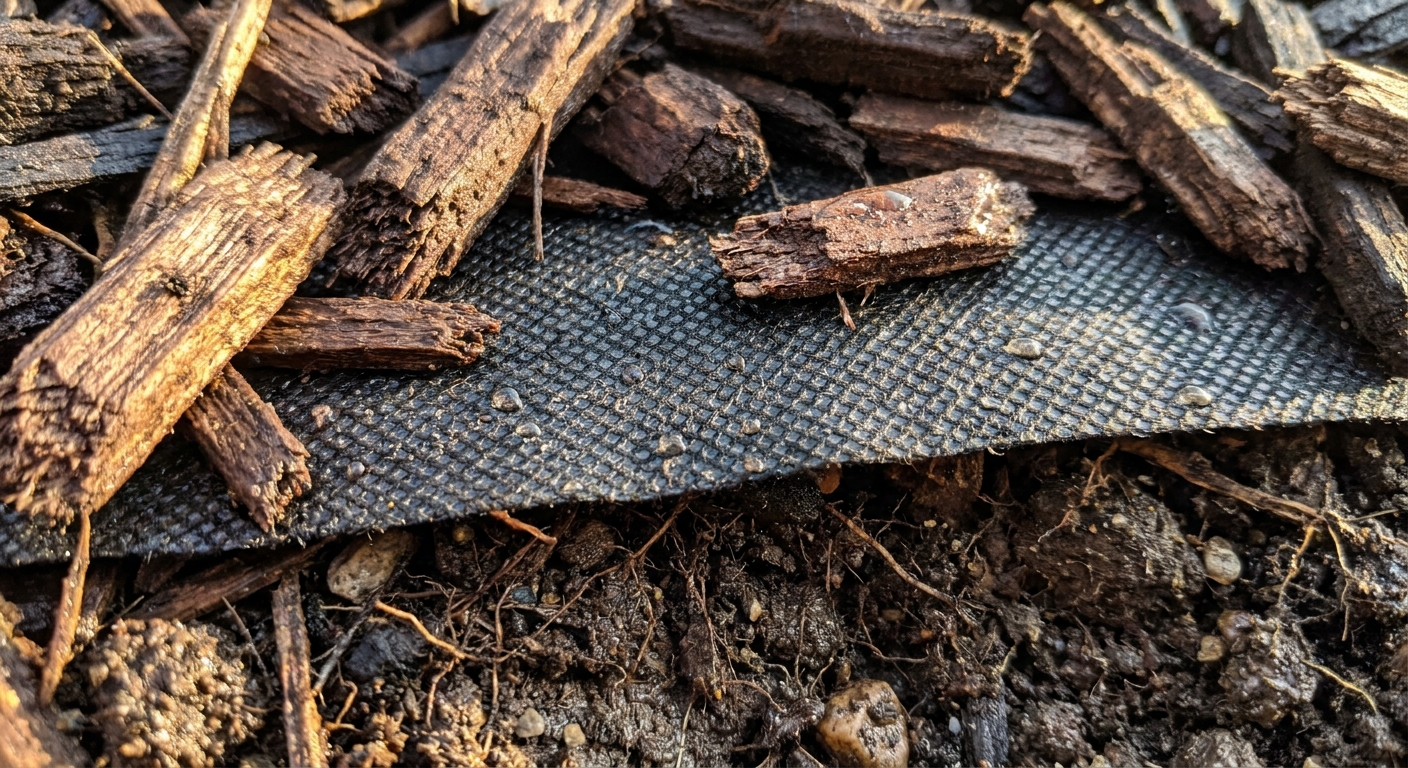
A weed barrier is a permeable or semi-permeable fabric laid down between your soil and mulch to prevent weeds from germinating and pushing through. The most common types are landscape fabric and plastic sheeting. In Fort Wayne's clay-heavy soil, barriers work by blocking sunlight from reaching dormant weed seeds while allowing water and nutrients to pass through to plant roots.
The fabric comes in various grades and thicknesses. Thicker commercial-grade barriers (3-4 ounces per square yard) last longer than thin landscape cloth, which can degrade after 2-3 years in our Northeast Indiana sun and weather cycles.
What Are the Main Benefits of Using Weed Barriers?
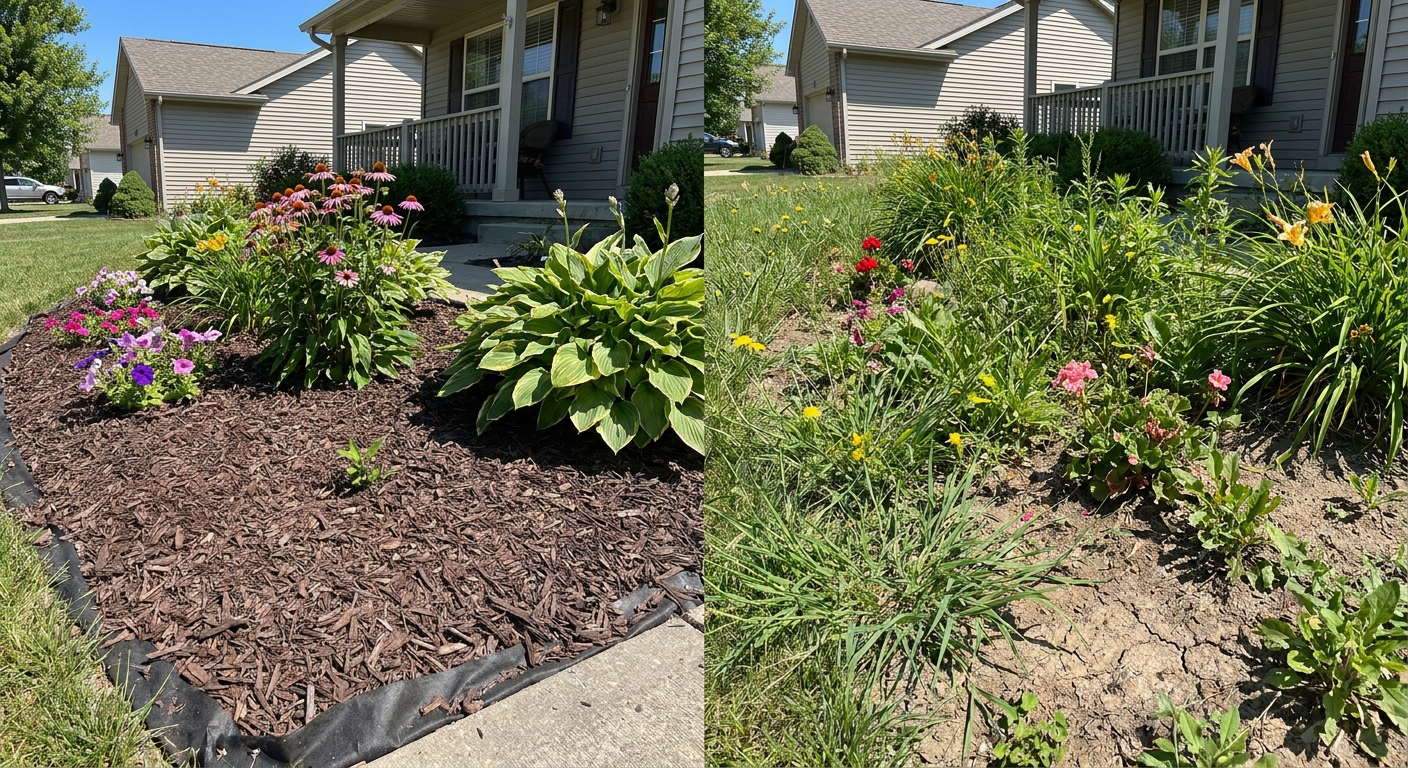
Weed barriers deliver genuine advantages for Fort Wayne homeowners looking to reduce yard work. The most obvious benefit is less hand-weeding—especially valuable during hot summers when weeds thrive in our Zone 5b climate. You'll spend significantly fewer hours pulling weeds by hand or using post-emergent herbicides.
Additional benefits include:
- Moisture retention: Barriers help soil retain water longer, reducing how often you need to irrigate during dry spells
- Temperature regulation: The fabric insulates soil, keeping roots cooler in summer and warmer in winter
- Cleaner appearance: Barriers keep mulch from mixing with soil and creating a muddier look
- Reduced herbicide use: Fewer weeds means less chemical application, better for kids and pets
- Faster establishment: New perennials and shrubs can establish without competing with aggressive weeds
For commercial landscaping properties or large beds, these time-savings translate directly into lower maintenance costs year after year.
What Problems Can Weed Barriers Create?
Despite their appeal, weed barriers create significant long-term problems that many Fort Wayne homeowners discover too late. The biggest issue: weeds eventually grow on top of the barrier itself, particularly in mulch where seeds can germinate and roots can establish in the decaying fabric.
Major drawbacks include:
- Weed growth above the barrier: Wind-blown seeds and debris accumulate on top, creating an ideal growing medium for new weeds that root into the deteriorating fabric
- Degradation and breakdown: Landscape fabric breaks down under Fort Wayne's UV exposure, especially near the soil surface where it becomes brittle within 3-5 years
- Poor water infiltration: As fabric degrades unevenly, it creates dams that prevent water from reaching plant roots, causing dry spots and drainage problems
- Difficulty planting: Adding new perennials or shrubs requires cutting holes, which weakens the barrier's effectiveness and creates edges where weeds creep in
- Mulch mixing: Over time, mulch breaks down and mixes with the fabric, creating a compacted layer that's difficult to remove
- Soil biology disruption: Barriers can restrict beneficial soil organisms and microbes, reducing soil health and plant vigor
- Installation costs: Quality installation takes time and labor, adding $0.50-$1.50 per square foot depending on bed size and complexity
How Do Weed Barriers Perform in Northeast Indiana's Climate?
Fort Wayne's climate puts extra stress on landscape fabric. Our freeze-thaw cycles, high moisture springs, and intense summer UV exposure accelerate degradation compared to milder regions. Fabric installed in spring typically shows significant wear by year three, with complete breakdown often occurring by year five.
Our clay-heavy soil also compounds the problem. When barriers prevent water from infiltrating properly, clay soil becomes even more compacted and prone to erosion. Heavy rains common in Northeast Indiana can pool on top of the barrier, creating waterlogged conditions that kill shallow-rooted perennials.
Weed barriers solve a short-term problem but often create bigger maintenance headaches within 3-5 years—especially in Fort Wayne's challenging soil and climate conditions.
What's the Better Alternative to Weed Barriers?
Rather than relying on barriers, successful Fort Wayne landscapers focus on dense planting and proper mulch management. This approach eliminates most weeds naturally while building soil health over time.
Smart alternatives include:
- Dense spacing: Plant perennials and shrubs closer together (following mature size guidelines) so their foliage shades the soil and prevents weed germination
- Regular mulching: Add 2-3 inches of fresh mulch annually—this naturally suppresses weeds without the degradation problems of barriers
- Hand maintenance: Pull emerging weeds when soil is moist (easiest after rain), before they establish deep roots
- Appropriate plant selection: Choose native Northeast Indiana perennials that naturally outcompete weeds
- Hardscaping: Use edging, gravel, or hardscape features to define beds and reduce weed-prone edges
Our team at Minnick Lawn & Landscaping has found that properly designed landscaping with dense perennial plantings requires less total maintenance than barrier-dependent beds—and the plants look better for longer.
Should You Remove an Existing Weed Barrier?
If you have deteriorating fabric under your existing Fort Wayne flower beds, removal is usually worth the effort. Deteriorated barriers trap moisture, prevent proper planting, and create more work than they save. The removal process involves careful excavation to avoid damaging plant roots, but the improved drainage and planting flexibility pay off immediately.
If your barrier is relatively new and intact, you can leave it in place while planning a transition. As plants mature and mulch is refreshed annually, you're moving toward the healthier, low-barrier approach.
The weed barrier debate comes down to this: they provide quick relief from weeds but shift the maintenance burden rather than eliminate it. For Fort Wayne homeowners seeking truly low-maintenance flower beds, dense planting and consistent mulching outperform barriers every time. Ready to redesign your beds for long-term success? Request a free landscaping quote from Minnick Lawn & Landscaping and let's build something that thrives in Northeast Indiana's climate.