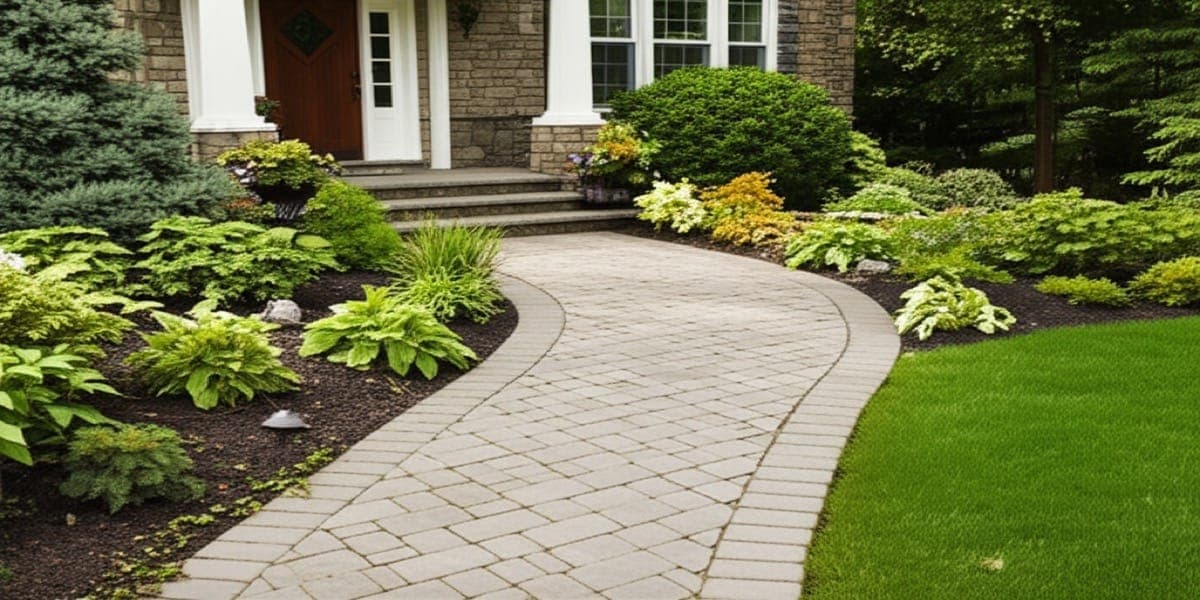
Your front walkway is more than a path to your door—it’s the opening statement of your home’s character. A well-designed walkway guides visitors, enhances curb appeal, and can significantly increase property value. Whether you’re replacing a cracked concrete path or designing for a new construction, these ideas help Fort Wayne homeowners create welcoming entrances.

What Makes a Great Front Walkway?
A great front walkway balances aesthetics with function: it’s wide enough for comfortable passage, made from durable materials, properly graded for drainage, well-lit for safety, and designed to complement your home’s architecture. The best walkways feel intentional and inviting, guiding visitors naturally to your entrance.
Key Walkway Elements
| Element | Purpose | Consideration |
|---|---|---|
| Width | Comfortable passage | 4 ft minimum, 5 ft preferred |
| Material | Durability, aesthetics | Match home style |
| Pattern | Visual interest | Complexity vs cost |
| Border | Definition, containment | Contrasting or matching |
| Lighting | Safety, ambiance | Path and accent lights |
| Landscaping | Frame the path | Low maintenance plants |
How Wide Should a Front Walkway Be?
Front walkways should be at least 4 feet wide to allow two people to walk side-by-side comfortably. For larger homes or more formal entrances, 5-6 feet creates a grander feel. Secondary paths and garden walkways can be narrower at 2-3 feet.
Width recommendations:
- Main front walkway: 4-6 feet
- Side entry: 3-4 feet
- Garden paths: 2-3 feet
- Service access: 2-3 feet
Why width matters:
- Two people walking together
- Carrying groceries or packages
- Wheelchair/stroller accessibility
- Visual proportion to home
What Materials Work Best for Walkways?
Pavers offer the most design flexibility and durability, but natural stone, stamped concrete, and gravel all have their place. Choose materials that complement your home’s architecture and landscape style.
Material Comparison
| Material | Durability | Cost | Style Options |
|---|---|---|---|
| Concrete pavers | Excellent | $$ | Many colors/shapes |
| Natural stone | Excellent | $$$ | Unique, natural |
| Stamped concrete | Good | $$ | Pattern variety |
| Brick | Excellent | $$-$$$ | Classic look |
| Gravel | Moderate | $ | Rustic, casual |
| Flagstone | Excellent | $$$ | Natural, irregular |
Material Selection by Home Style
Colonial/Traditional:
- Brick pavers
- Herringbone pattern
- Natural stone borders
Contemporary:
- Large format pavers
- Clean lines
- Minimal borders
Craftsman:
- Flagstone or slate
- Natural stone
- Integrated plantings
Ranch:
- Concrete pavers
- Simple patterns
- Practical design

What Pattern Should You Choose?
Pattern affects both aesthetics and structural integrity. Interlocking patterns like herringbone provide superior stability, while simpler patterns reduce installation costs. Consider visibility—intricate patterns show best on wider walkways.
Popular Walkway Patterns
Running bond:
- Classic, simple
- Brick-like appearance
- Economical installation
- Good for narrow paths
Herringbone:
- Strong interlock
- Visual interest
- Higher install cost
- Best for wider walks
Basketweave:
- Traditional charm
- Good interlock
- Moderate complexity
- Works with borders
Random/irregular:
- Natural stone look
- Unique appearance
- Skilled installation
- Higher cost
Pattern Visibility by Width
| Pattern | Best Width |
|---|---|
| Running bond | Any width |
| Herringbone | 4 ft+ |
| Basketweave | 4 ft+ |
| Circular insets | 5 ft+ |
How Do Borders Enhance Walkways?
Borders define edges, contain pavers, and provide design contrast. A contrasting border makes even a simple running bond pattern look custom and intentional.
Border options:
- Soldier course (pavers on edge)
- Sailor course (perpendicular pavers)
- Contrasting color
- Natural stone edge
- Double border
Border benefits:
- Visual definition
- Structural containment
- Design sophistication
- Pattern termination
What Walkway Shapes Create Impact?
Straight walkways suit formal homes and short distances, while curved paths add interest and work better for longer approaches. The key is matching the shape to your home’s character and landscape.
Shape Guide
| Shape | Best For |
|---|---|
| Straight | Formal homes, short paths |
| Gently curved | Long approaches, informal style |
| S-curve | Long distances, garden feel |
| Angular | Modern homes, geometric landscapes |
Curved walkway considerations:
- Requires more material (cuts)
- Natural feel
- Can slow visitors (showcase landscaping)
- Works with meandering gardens

How Does Landscaping Frame a Walkway?
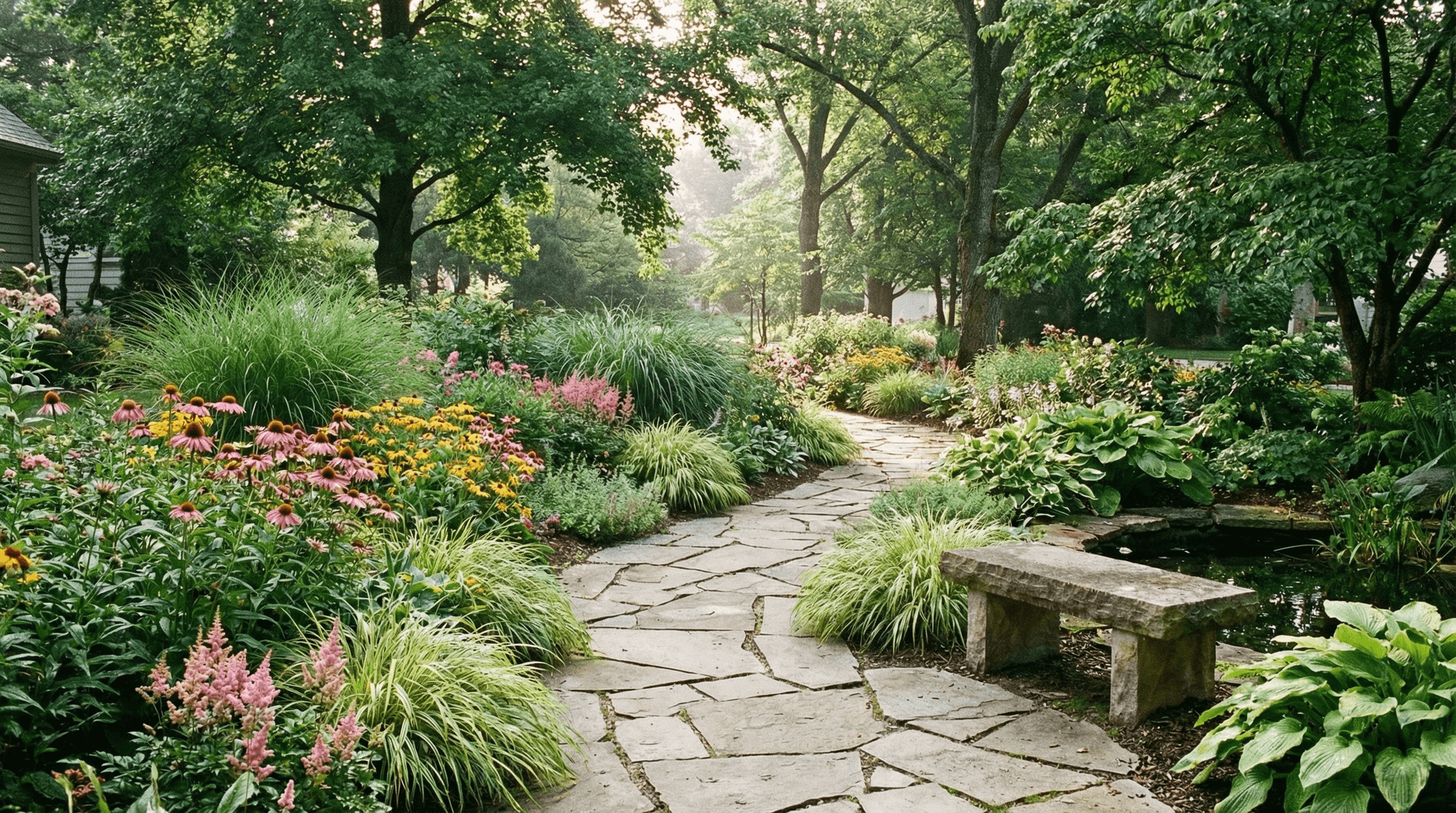
Landscaping transforms a functional path into a landscape feature. Border plantings soften hardscape edges, seasonal color adds interest, and strategic placement guides the eye toward your entrance.
Planting Design Tips
Along walkway edges:
- Low-growing perennials
- Ornamental grasses
- Seasonal color
- Leave clearance for path
Entry points:
- Specimen plants
- Decorative containers
- Frame the entrance
- Scale to home size
Best plants for walkway borders:
- Boxwood (formal, evergreen)
- Lavender (fragrant, low)
- Hostas (shade, texture)
- Daylilies (color, low maintenance)
- Ornamental grasses (movement, softness)
What Lighting Enhances Walkways?
Walkway lighting serves both safety and aesthetics. Path lights illuminate the walking surface while uplights and accent lights create drama and highlight landscaping.
Lighting Types
| Type | Purpose | Placement |
|---|---|---|
| Path lights | Walking surface | Every 6-8 ft |
| Bollard lights | Taller illumination | Entry points |
| Step lights | Stair safety | Each tread |
| Uplights | Accent landscaping | At key plants |
| Downlights | Subtle path wash | Trees, structures |
Lighting considerations:
- LED for efficiency
- Low voltage for safety
- Timer or smart control
- Avoid glare
What Design Mistakes Should You Avoid?
Common walkway mistakes include making paths too narrow, using materials that don’t match the home, poor drainage planning, and neglecting lighting. Avoiding these issues creates a walkway you’ll love for decades.
Mistakes to avoid:
- Too narrow (less than 4 feet)
- Wrong material for home style
- No edge containment
- Poor drainage (puddling)
- Inadequate base preparation
- No lighting
- Awkward path routing
Proper Base Preparation
A proper base prevents settling, heaving, and paver movement:
- Remove sod and topsoil
- Compact subgrade
- 4-6" compacted gravel base
- 1" sand setting bed
- Edge restraints

How Much Do Walkway Projects Cost?
Walkway costs depend on materials, width, length, and site conditions. A basic 40-foot paver walkway typically costs $2,000-5,000 installed, while premium materials and elaborate designs can exceed $10,000.
Cost Factors
| Factor | Impact |
|---|---|
| Material choice | Major |
| Walkway width | Direct |
| Pattern complexity | Moderate |
| Site preparation | Varies |
| Removal of existing | Adds cost |
Typical Price Ranges
| Material | Per Square Foot |
|---|---|
| Concrete pavers | $12-20 |
| Natural stone | $18-35 |
| Stamped concrete | $8-15 |
| Brick | $14-25 |
Sample project costs (40 ft × 4 ft = 160 sq ft):
- Basic pavers: $2,000-3,200
- Mid-range pavers + border: $2,500-4,000
- Natural stone: $3,000-5,600
Our hardscaping services create custom walkways that enhance Fort Wayne homes.
Request a Free Quote or call us at (260) 450-4676 for walkway design consultation.
Frequently Asked Questions
Should my walkway match my driveway?
Not necessarily, but they should complement each other. Using the same material family with different patterns or colors creates cohesion without monotony.
How long do paver walkways last?
Properly installed paver walkways last 25-50+ years with minimal maintenance.
Can walkways be installed over existing concrete?
Sometimes, if the concrete is stable and properly prepared. It’s often better to remove old concrete for optimal results.
Adam Minnick is the owner of Minnick Lawn & Landscaping, serving Fort Wayne, Auburn, and Northeast Indiana since 2018.