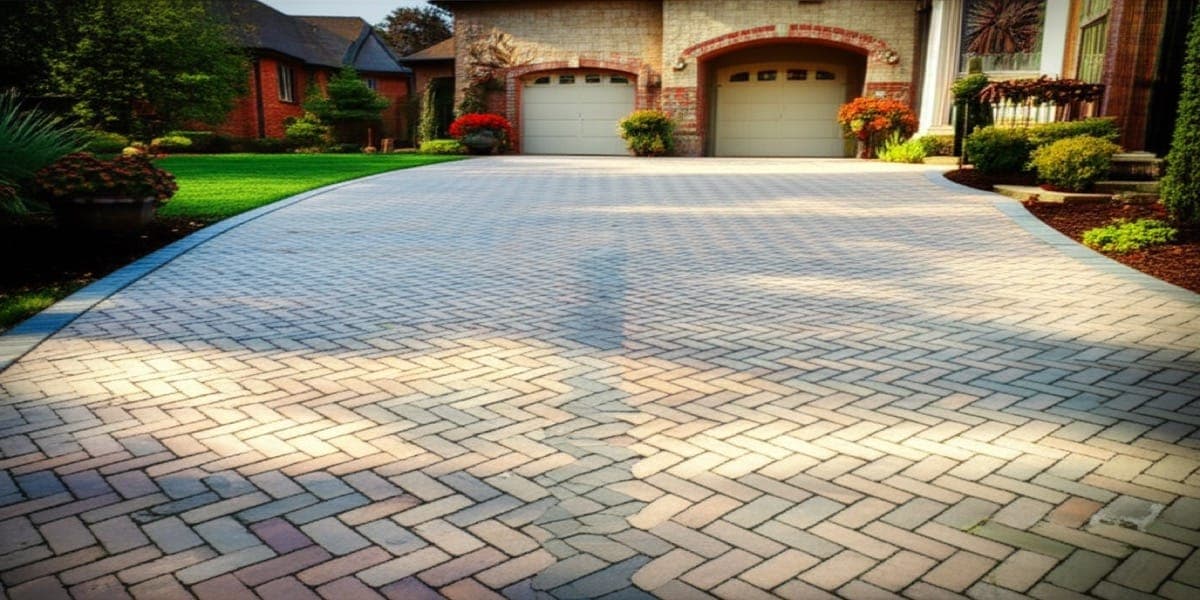
A paver driveway transforms your property’s first impression, offering endless design possibilities that concrete simply can’t match. From classic herringbone patterns that handle heavy loads to intricate circular designs that create stunning focal points, the right paver pattern elevates your Fort Wayne home’s curb appeal while providing decades of durable performance.

What Are the Most Popular Driveway Paver Patterns?
The most popular driveway paver patterns include herringbone (45° or 90°), running bond, basket weave, and circular designs. Herringbone offers the strongest interlock for driveways, running bond provides classic simplicity, basket weave adds visual interest, and circular patterns create dramatic focal points.
Pattern Comparison Overview
| Pattern | Difficulty | Strength | Best For |
|---|---|---|---|
| Herringbone 90° | Moderate | Excellent | Heavy traffic |
| Herringbone 45° | Moderate | Excellent | Visual impact |
| Running bond | Easy | Good | Budget projects |
| Basket weave | Moderate | Good | Traditional homes |
| Stack bond | Easy | Fair | Modern homes |
| Circular/fan | Difficult | Good | Focal points |
How Does Herringbone Pattern Work for Driveways?
Herringbone is the gold standard for paver driveways because the interlocking zigzag pattern distributes weight across multiple pavers, preventing individual units from shifting under vehicle loads. The 90° version offers maximum strength, while the 45° angle creates more visual drama.
Why herringbone excels:
- Maximum interlock strength
- Resists shifting and spreading
- Handles heavy vehicle loads
- Timeless visual appeal
Installation considerations:
- Requires more cuts at edges
- Takes longer to install
- Slightly higher labor cost
- Worth the investment for driveways
Herringbone Variations
90° Herringbone:
- Rectangular pattern
- Maximum structural strength
- Traditional appearance
- Easier to install than 45°
45° Herringbone:
- Diamond orientation
- Same structural strength
- More dynamic appearance
- More edge cuts required

What Is Running Bond Pattern?
Running bond is the simplest and most economical paver pattern, where pavers are laid end-to-end with each row offset by half a paver length. This creates the classic brick-like appearance seen in traditional architecture and provides adequate strength for most residential driveways.
Running bond advantages:
- Simple installation
- Fewer cuts needed
- Lower labor cost
- Classic appearance
Running bond limitations:
- Less interlock than herringbone
- Can develop tracking lines
- Less distinctive appearance
- May shift more over time
Running Bond Variations
- Standard running bond: 50% offset
- Third bond: 33% offset
- Random running bond: Varied offsets
- Soldier course borders: Pavers on edge
How Does Basket Weave Pattern Look?
Basket weave creates a woven appearance by alternating pairs of pavers in perpendicular directions. This traditional pattern adds visual texture and interest while providing good structural performance for residential driveways with normal traffic loads.
Basket weave characteristics:
- Woven visual effect
- Good structural interlock
- Traditional aesthetic
- Moderate installation complexity
Best applications:
- Colonial-style homes
- Traditional architecture
- Accent areas
- Combined with borders
What About Circular and Fan Patterns?
Circular and fan patterns create dramatic focal points, typically used at driveway entrances, aprons, or courtyard areas. These intricate designs require skilled installation but deliver stunning visual impact that makes your property stand out.
Circular pattern uses:
- Driveway aprons
- Turnaround areas
- Courtyard centers
- Entry focal points
Fan pattern applications:
- European-style entries
- Curved driveways
- Accent sections
- High-visibility areas
Installation Complexity
| Pattern | Skill Level | Time Factor | Cost Premium |
|---|---|---|---|
| Running bond | Beginner | 1x | None |
| Herringbone | Intermediate | 1.3x | 10-20% |
| Basket weave | Intermediate | 1.2x | 10-15% |
| Circular | Advanced | 2x+ | 30-50% |

How Do Borders Enhance Paver Driveways?
Borders frame your driveway, contain edge pavers, and provide opportunities for color and pattern contrast. A well-designed border elevates a simple pattern into a sophisticated design and helps prevent edge pavers from shifting.
Border options:
- Soldier course (pavers on edge)
- Sailor course (pavers flat, perpendicular)
- Contrasting color borders
- Double borders
- Stone or natural edge
Border benefits:
- Contains field pavers
- Adds visual definition
- Creates design contrast
- Increases perceived value
What Paver Colors Work Best for Driveways?
Natural earth tones—charcoal, gray, tan, and brown—remain the most popular and timeless choices for driveways. These colors hide stains, complement most home colors, and maintain their appeal as design trends change.
Color Selection Guide
| Color Family | Maintenance | Style | Pairs With |
|---|---|---|---|
| Charcoal/gray | Low (hides stains) | Modern | Most homes |
| Tan/sandstone | Moderate | Traditional | Warm brick |
| Brown/umber | Moderate | Classic | Earth tones |
| Red/terracotta | Higher | Colonial | Red brick |
| Mixed/tumbled | Low | Aged look | Historic homes |
Color considerations:
- Home exterior coordination
- Stain visibility
- Heat absorption
- Long-term trends
What Paver Shapes Are Available?
Beyond standard rectangular pavers, you can choose from interlocking shapes, squares, circles, and combination sets that enable unique patterns and designs.
Common paver shapes:
- Standard brick (4"×8")
- Holland (4"×8", thinner)
- Square (6"×6", 12"×12")
- Large format (12"×24", 18"×18")
- Interlocking (I, H, Z shapes)
- Circles and fans
Shape and Pattern Combinations
| Shape | Best Patterns |
|---|---|
| Standard brick | Herringbone, running bond, basket weave |
| Square | Stack bond, pinwheel, modular |
| Large format | Running bond, random, modern grid |
| Interlocking | Their designed pattern |
| Mixed sizes | Random, modular sets |

How Much Do Different Patterns Cost?
Pattern complexity directly affects installation cost, with simpler patterns like running bond being the most economical and intricate circular designs commanding premium pricing. Material costs remain similar—the difference is primarily labor.
Pattern Cost Comparison
| Pattern | Material Cost | Labor Cost | Total (per sq ft) |
|---|---|---|---|
| Running bond | $4-8 | $6-10 | $10-18 |
| Herringbone | $4-8 | $8-12 | $12-20 |
| Basket weave | $4-8 | $7-11 | $11-19 |
| Circular | $5-10 | $12-20 | $17-30 |
Factors affecting cost:
- Pattern complexity
- Edge cuts required
- Border design
- Base preparation
- Site accessibility
How Do You Choose the Right Pattern?
Consider your home’s architecture, personal style, budget, and practical needs when selecting a driveway paver pattern. The right choice balances aesthetics with function and long-term satisfaction.
Decision factors:
- Home architectural style
- Existing hardscape elements
- Traffic volume
- Budget constraints
- Personal taste
Pattern Recommendations by Home Style
| Home Style | Recommended Patterns |
|---|---|
| Colonial/Traditional | Herringbone, basket weave |
| Ranch | Running bond, herringbone |
| Contemporary | Large format, stack bond |
| Mediterranean | Circular, fan patterns |
| Craftsman | Herringbone, mixed colors |
Our hardscaping services create stunning paver driveways throughout Fort Wayne.
Request a Free Quote or call us at (260) 450-4676 for driveway paver consultation.
Frequently Asked Questions
What’s the strongest pattern for a driveway?
Herringbone provides the strongest interlock because forces are distributed across multiple pavers rather than transferred in straight lines.
Can I mix patterns in one driveway?
Yes. Many designs use different patterns for the main field and borders, or change patterns at focal points like the apron.
Do larger pavers make installation faster?
Larger pavers cover more area per unit but are heavier and require more precise base preparation. Overall installation time may be similar.
Adam Minnick is the owner of Minnick Lawn & Landscaping, serving Fort Wayne, Auburn, and Northeast Indiana since 2018.