Northeast Indiana summers can swing from soaking wet to bone dry, and your lawn’s health depends on how you respond to changing conditions. Too much water promotes disease and shallow roots; too little causes drought stress and dormancy. Understanding how much water your Fort Wayne lawn actually needs—and the best way to deliver it—makes the difference between a lawn that thrives and one that struggles through summer.
In this guide, I’ll cover everything you need to know about summer lawn watering, from calculating exact water needs to knowing when dormancy is actually the smart choice. Whether you’re managing an irrigation system or dragging hoses, these principles will help you water efficiently and effectively.

How Much Water Does a Fort Wayne Lawn Need Per Week?
A healthy Fort Wayne lawn needs approximately 1 to 1.5 inches of water per week during summer, including rainfall. Cool-season grasses like Kentucky bluegrass and tall fescue require consistent moisture to stay green, but most established lawns can survive on less water by going dormant during drought periods without permanent damage.
Weekly Water Requirements
| Condition | Weekly Need | Notes |
|---|---|---|
| Normal summer | 1 inch | Maintains active growth |
| Hot/dry periods | 1.5 inches | Compensates for evaporation |
| Cool/humid periods | 0.5-0.75 inch | Rainfall often sufficient |
| Drought dormancy | 0.25 inch (monthly) | Minimum for crown survival |
Factors That Affect Water Needs
Grass Type:
- Kentucky bluegrass: Higher water demand
- Tall fescue: More drought tolerant
- Fine fescue: Best drought tolerance
- Perennial ryegrass: Moderate needs
Soil Type:
- Sandy soil: Drains fast, needs more frequent watering
- Clay soil (common in Fort Wayne): Holds water, needs less frequent but deeper watering
- Loamy soil: Ideal, moderate watering needs
Site Conditions:
- Full sun: Higher evaporation, more water needed
- Partial shade: Less evaporation
- Slopes: Water runs off, may need more applications
- Near pavement/buildings: Extra heat stress
Measuring Rainfall and Irrigation
To track how much water your lawn receives:
- Use rain gauges - Place several around lawn
- Check local weather data - Fort Wayne airport records available
- Tuna can test - Place empty cans during irrigation to measure output
- Smart controllers - Automatically track and adjust
When is the Best Time of Day to Water Your Lawn?
The best time to water your Fort Wayne lawn is early morning, between 4 AM and 9 AM, when temperatures are cool, wind is minimal, and grass blades have time to dry before nightfall. Morning watering reduces evaporation loss by up to 30% compared to midday watering and prevents the prolonged leaf wetness that promotes fungal disease.
Watering Time Comparison
| Time | Rating | Pros | Cons |
|---|---|---|---|
| 4-9 AM | Best | Low evaporation, disease prevention | Requires automation or early wake-up |
| 9 AM-12 PM | Acceptable | Still reasonable efficiency | Some evaporation loss |
| 12-4 PM | Poor | Water when needed | High evaporation, wasted water |
| 4-8 PM | Caution | Convenient timing | Promotes disease if grass stays wet overnight |
| After dark | Avoid | — | Extended wetness causes disease |
Why Morning Watering Matters
Disease Prevention:
- Grass dries during day
- Fungal spores need wet leaves to infect
- Brown patch, dollar spot thrive with night wetness
- Morning watering = dry grass by nightfall
Efficiency:
- Lower temperatures = less evaporation
- Less wind = better coverage
- More water reaches roots
- Lower water bills
Plant Health:
- Water available for daytime photosynthesis
- Roots can absorb during active growth
- Prepares grass for afternoon heat
- Consistent routine supports health
Setting Up Automatic Irrigation
For irrigation systems:
- Program for early morning - 5-7 AM is ideal
- Run all zones before 9 AM if possible
- Avoid evening watering - Never after 6 PM
- Use rain sensors - Skip unnecessary cycles
- Check coverage - Ensure all areas reached

How Often Should You Water During Summer?
For most Fort Wayne lawns, watering 2-3 times per week with deep, thorough soakings is far better than watering daily with light sprinklings. Deep, infrequent watering encourages roots to grow deeper into the soil, making your lawn more drought-resistant, while shallow daily watering creates weak, shallow roots that stress easily during hot weather.
Watering Frequency Guidelines
| Soil Type | Frequency | Duration per Zone | Total Weekly |
|---|---|---|---|
| Sandy | 3× per week | 15-20 minutes | 1-1.5 inches |
| Loam | 2× per week | 25-35 minutes | 1-1.5 inches |
| Clay | 1-2× per week | 30-45 minutes | 1-1.5 inches |
Deep vs Shallow Watering
Deep Watering (Correct):
- Water penetrates 6+ inches
- Roots grow deep to find moisture
- Lawn tolerates drought better
- Less water needed long-term
- Grass stays healthier
Shallow Watering (Incorrect):
- Water only reaches top 1-2 inches
- Roots stay near surface
- Lawn stresses quickly in heat
- Needs water more often
- More total water used
Checking Water Penetration
After watering, check penetration:
- Wait 15-30 minutes
- Push screwdriver or probe into soil
- Note depth of easy penetration
- Wet soil is easy to penetrate
- Target: 6-8 inch penetration
Adjusting for Conditions
Increase frequency when:
- Extended hot weather (90°F+)
- No rainfall for 7+ days
- New sod or seed establishing
- Sandy soil draining quickly
Decrease frequency when:
- Rainfall providing moisture
- Temperatures cooling
- Humidity high
- Clay soil still moist
How Can You Tell if Your Lawn Needs Water?
Your lawn tells you when it needs water through visible signs: footprints remain visible for 30+ minutes after walking on it, the grass takes on a bluish-gray tint, and individual blades begin to fold or curl lengthwise. Responding at these early signs prevents stress damage, but waiting too long forces dormancy that takes weeks to reverse.
Early Warning Signs
| Sign | What It Means | Action Needed |
|---|---|---|
| Footprints stay visible | Grass blades don’t spring back | Water within 24 hours |
| Blue-gray color | Leaves beginning to close | Water immediately |
| Leaf curling/folding | Grass conserving moisture | Water immediately |
| Wilting appearance | Moderate stress | Water today |
Progressive Drought Stress
Stage 1: Early Stress (Act Now)
- Footprints remain visible
- Slight color change
- Grass still recovers quickly
- Water within 24 hours
Stage 2: Moderate Stress (Action Required)
- Blue-gray tint throughout
- Leaf rolling or folding
- Slower growth
- Water immediately
Stage 3: Severe Stress (Damage Beginning)
- Brown patches appearing
- Grass laying flat
- Very slow or no growth
- Water deeply, recovery takes time
Stage 4: Dormancy (Survival Mode)
- Uniform brown color
- Grass completely dormant
- Crowns still alive (usually)
- Provide minimum water monthly
Monitoring Tools
Visual Inspection:
- Walk lawn daily during drought
- Note color changes
- Check shaded vs sunny areas
- Compare to irrigated areas
Technology Options:
- Soil moisture meters
- Smart irrigation controllers
- Weather-based controllers
- In-ground sensors

Should You Let Your Lawn Go Dormant During Drought?
Allowing your lawn to go dormant during extended drought is often the wisest choice for Fort Wayne homeowners facing water restrictions or wanting to conserve water. Healthy, established cool-season grasses can survive 4-6 weeks of dormancy without permanent damage as long as they receive a deep watering (about 0.5 inch) every 2-3 weeks to keep the crowns alive.
Understanding Dormancy
What Happens:
- Grass stops growing
- Blades turn brown
- Crowns remain alive
- Roots stay viable
- Recovery possible
Benefits of Accepting Dormancy:
- Significant water savings
- Grass survives naturally
- Less work during drought
- Environmentally responsible
- Cost savings
Dormancy Guidelines
| Factor | Recommendation |
|---|---|
| When to allow | Extended drought, water restrictions |
| Minimum water | 0.5 inch every 2-3 weeks |
| Maximum duration | 4-6 weeks safely |
| Recovery time | 2-4 weeks with adequate water |
| New lawns | Do not allow dormancy in first year |
Maintaining Dormant Lawns
Do:
- Provide minimum monthly water
- Avoid heavy traffic
- Skip fertilization
- Continue mowing if any growth
- Monitor for severe stress
Don’t:
- Alternate between dormancy and active growth
- Fertilize dormant grass
- Apply pesticides
- Allow excessive traffic
- Panic at brown color
Reviving from Dormancy
When drought ends:
- Water deeply - 1-1.5 inches over several days
- Wait for green-up - May take 2-4 weeks
- Don’t over-water - Roots need to recover too
- Mow when needed - When grass reaches 3+ inches
- Fertilize lightly - Only after growth resumes
What Are the Signs of Overwatering?
Overwatering causes just as many problems as underwatering. Signs include spongy soil that squishes when walked on, persistent fungal diseases like brown patch and dollar spot, mushroom growth, yellowing grass, excessive thatch, and shallow root systems. If your lawn feels squishy or you see standing water hours after irrigation, you’re watering too much or too frequently.
Overwatering Symptoms
| Symptom | What It Means |
|---|---|
| Spongy, soft soil | Soil constantly saturated |
| Fungal disease | Prolonged wetness promotes fungi |
| Mushrooms | Excessive moisture in soil |
| Yellow grass | Root suffocation from waterlogging |
| Runoff during watering | Applying faster than soil absorbs |
| Algae or moss | Persistent moisture |
| Thatch buildup | Decomposition slowed by wet conditions |
| Shallow roots | No need to grow deep for water |
Problems Caused by Overwatering
Root Issues:
- Roots suffocate from lack of oxygen
- Shallow root development
- Root rot
- Unable to support grass during stress
Disease Issues:
- Brown patch thrives in wet conditions
- Dollar spot increases
- Pythium blight develops
- Various fungal problems
Other Problems:
- Wasted water and money
- Nutrient leaching
- Soil compaction increases
- Environmental runoff
How to Correct Overwatering
- Stop watering - Let soil dry out
- Check irrigation schedule - Reduce frequency
- Audit system - Check for leaks, broken heads
- Monitor soil moisture - Water only when needed
- Improve drainage - Aerate compacted areas

How Should You Water New Sod or Seed in Summer?
New sod and seed require more frequent watering than established lawns because they lack deep root systems. New sod needs daily watering for the first 2 weeks, gradually tapering over 4-6 weeks, while seed needs the top inch of soil kept consistently moist (multiple light waterings daily) until germination and establishment, typically 2-3 weeks.
New Sod Watering Schedule
| Week | Frequency | Duration | Goal |
|---|---|---|---|
| Week 1-2 | Daily | 15-20 min | Keep roots moist |
| Week 3-4 | Every other day | 25-30 min | Encourage rooting |
| Week 5-6 | 3× per week | 30-35 min | Transition to normal |
| Week 7+ | 2× per week | 35-45 min | Normal schedule |
Tips for New Sod:
- Water immediately after installation
- Check edges and seams (dry faster)
- Walk on sod to check moisture
- Pull corner to check rooting
- Can mow after rooted (won’t pull up)
New Seed Watering Schedule
| Stage | Frequency | Method | Goal |
|---|---|---|---|
| Seeding to germination | 2-4× daily | Light misting | Keep surface moist |
| Germination to 2" tall | 1-2× daily | Light watering | Support seedlings |
| 2" to first mowing | Daily | Moderate | Establish roots |
| After first mow | Every other day | Normal | Transition |
| Established | 2× weekly | Deep | Normal schedule |
Tips for New Seed:
- Never let seed dry out
- Multiple short sessions better than one long one
- Cover with straw mulch to retain moisture
- Reduce as grass establishes
- Be patient - establishment takes 6-8 weeks
Summer Seeding Challenges
Summer is not ideal for seeding cool-season grasses because:
- High temperatures stress seedlings
- Evaporation increases water needs
- Weed competition is fierce
- Disease pressure is highest
If you must seed in summer:
- Plant drought-tolerant varieties
- Consider slit-seeding
- Water frequently
- Provide some shade if possible
- Consider waiting until fall
What Smart Irrigation Technology Can Help Manage Watering?
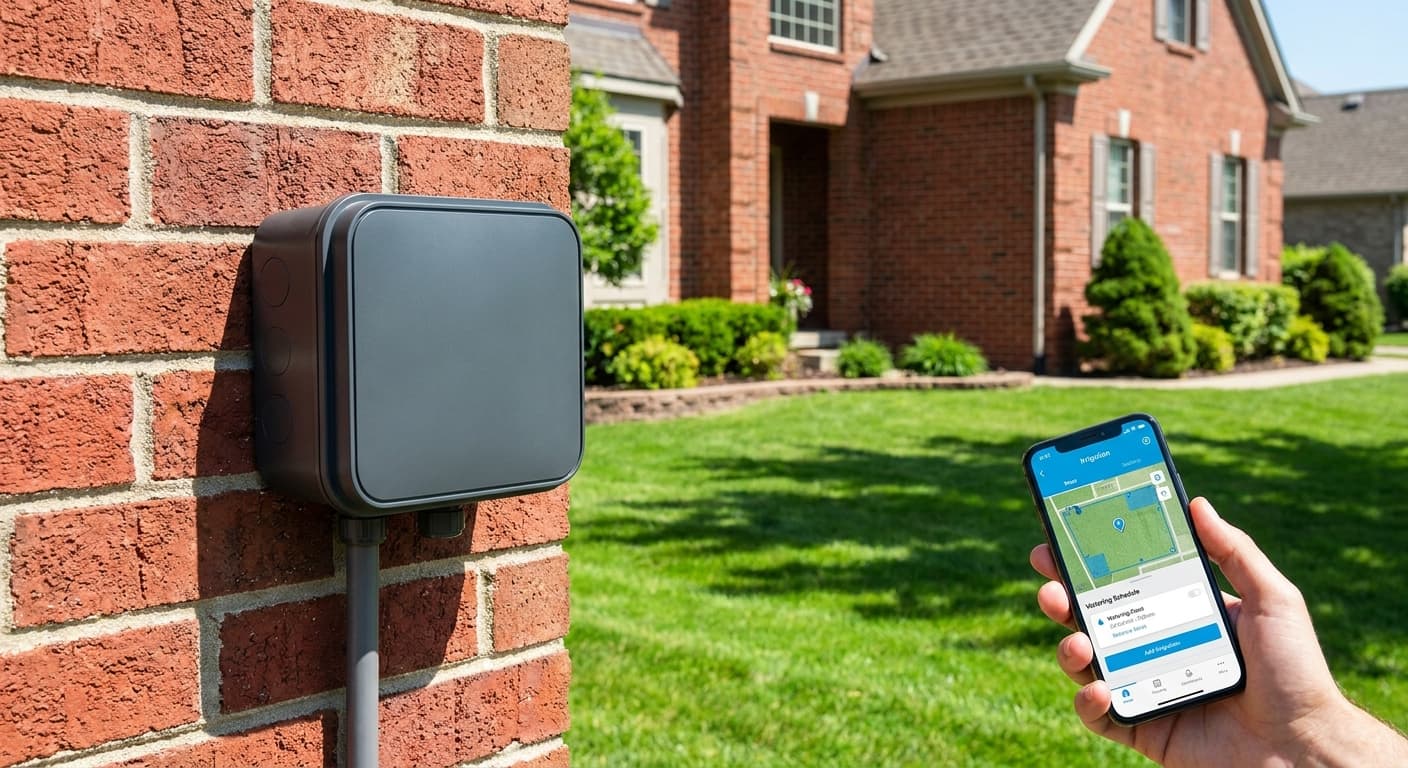
Smart irrigation technology like WiFi-connected controllers, soil moisture sensors, and weather-based systems can reduce water use by 20-50% while keeping your lawn healthier by automatically adjusting watering based on actual conditions. These systems pay for themselves through water savings and reduced lawn stress within 1-3 seasons.
Smart Controller Options
| Type | How It Works | Savings | Cost |
|---|---|---|---|
| Weather-based | Uses local weather data to adjust | 20-30% | $150-300 |
| Soil moisture sensor | Measures actual soil moisture | 30-40% | $200-400 |
| Flow monitoring | Detects leaks and problems | 10-20% | $100-200 |
| Full smart system | Combines multiple technologies | 30-50% | $300-600 |
Features to Look For
Essential Features:
- WiFi connectivity for phone control
- Weather adjustment capability
- Rain delay function
- Zone-by-zone control
- Easy programming
Advanced Features:
- Soil moisture integration
- Flow rate monitoring
- Leak detection
- Seasonal auto-adjust
- Evapotranspiration (ET) calculation
DIY Improvements
Even without smart technology:
- Install rain sensor - $25-50, prevents unnecessary watering
- Add shut-off timer - Prevents forgetting to turn off hose
- Use moisture meter - $15-30, check before watering
- Track rainfall - Simple rain gauge helps
- Set phone reminders - Basic but effective

What Water Conservation Tips Help During Drought Restrictions?
During drought restrictions, prioritize watering high-visibility areas, water deeply but less frequently, apply early morning to reduce evaporation, consider letting low-traffic areas go dormant, and use mulch around trees and beds to retain soil moisture. Most established lawns survive drought restrictions with minimal permanent damage if managed properly.
Prioritizing Limited Water
Water first:
- New plantings (will die without water)
- Valuable trees and shrubs
- High-visibility lawn areas
- Backyard/low-visibility last
Consider sacrificing:
- Out-of-sight areas
- Areas easily repaired later
- Lawn strips (between sidewalk and street)
- Secondary lawn areas
Efficiency Strategies
| Strategy | Water Saved | How It Helps |
|---|---|---|
| Early AM watering | 20-30% | Less evaporation |
| Raise mowing height | 10-20% | Shades soil, slows evaporation |
| Sharp mower blades | 5-10% | Less stress = less water need |
| Reduce fertilizer | Variable | Slows growth, reduces need |
| Mulch beds | Significant | Keeps moisture in soil |
| Fix leaks | 10-25% | Stops waste |
Long-term Drought Preparation
For future droughts:
- Aerate annually to improve water penetration
- Overseed with drought-tolerant varieties
- Improve soil with organic matter
- Consider reducing lawn area
- Install efficient irrigation
- Build healthy, deep root system
At Minnick Lawn & Landscaping, our lawn care services include irrigation system audits and recommendations to help your Fort Wayne property water more efficiently.
Keep Your Lawn Healthy All Summer
Smart watering combines proper timing, appropriate amounts, and responsive adjustments based on conditions. By following these guidelines, your Fort Wayne lawn can stay healthy through summer heat while conserving water and preventing problems.
Need help optimizing your irrigation or developing a watering plan? We’re here to help.
Request a Free Quote or call us at (260) 450-4676 to discuss lawn irrigation and summer care.
Frequently Asked Questions
How do I know if I’m watering enough?
Check water penetration 30 minutes after watering by pushing a screwdriver into soil. It should slide easily to 6+ inches. Also monitor grass color and footprint test—if footprints remain visible, you need more water.
Can I water my lawn at night?
Night watering is not recommended because grass stays wet for extended periods, promoting fungal disease. If evening is your only option, water early enough for grass to dry somewhat before dark, but early morning remains best.
My irrigation system runs for 10 minutes per zone. Is that enough?
It depends on your sprinkler output and soil type. Do a tuna can test to measure output, then calculate time needed to apply 0.5 inch per session (for twice-weekly watering). Most systems need 20-40 minutes per zone.
Should I water differently in sandy soil?
Yes, sandy soil drains quickly and can’t hold as much water. Water more frequently (3× weekly) with shorter durations. Sandy soil may need 50% more total applications but shorter sessions to prevent runoff.
How much does it cost to water a lawn in Fort Wayne?
At average Fort Wayne water rates, watering a 5,000 sq ft lawn 1 inch per week costs approximately $15-25 monthly during summer. Smart watering can reduce this by 20-40%.
Can brown dormant grass come back?
Yes, most dormant grass recovers with adequate water. The crown (growing point) survives even when blades are brown. Recovery takes 2-4 weeks with consistent moisture. Grass that’s truly dead won’t green up.
Does mulching clippings help with drought?
Yes, mulched clippings return moisture to the soil and act as light mulch, reducing evaporation. They also provide nutrients, reducing fertilizer needs. Always mulch unless grass is diseased.
When should I turn off my sprinklers in fall?
Gradually reduce watering as temperatures cool, typically reducing frequency in September and stopping regular irrigation by late October. Continue occasional deep watering until ground freezes if rainfall is insufficient.
Sources
- Purdue University Extension - Lawn Watering
- University of Illinois Extension - Watering Guidelines
- EPA WaterSense - Outdoor Water Use
- The Lawn Institute - Water Conservation
- Indiana American Water - Conservation Tips
Related Articles
- Lawn Fertilization Schedule for Northeast Indiana Climate
- Why Your Lawn Has Brown Patches and How to Fix Them
Adam Minnick is the owner of Minnick Lawn & Landscaping, serving Fort Wayne, Auburn, and Northeast Indiana since 2018. With years of experience in professional lawn care, Adam and his team help hundreds of local homeowners achieve beautiful, healthy lawns.