After tree removal, you’re left with a stump—an eyesore that interferes with mowing, attracts pests, and limits landscape use. You have three main options for dealing with it: mechanical grinding (fast but more expensive), chemical treatment (slow but cheaper), or natural decay (free but takes years). Each approach has trade-offs that suit different situations.

What Are Your Stump Removal Options?
Stump grinding uses powerful machines to shred the stump below ground level in hours. Chemical treatment accelerates decay over months. Natural decomposition takes years. Complete excavation (digging out) is possible but expensive and destructive. Most homeowners choose grinding or chemical treatment.
Option Comparison
| Method | Timeline | Cost | Effort |
|---|---|---|---|
| Grinding | Hours | $$ | Professional |
| Chemical | 6-12 months | $ | DIY possible |
| Natural decay | 3-10 years | Free | Minimal |
| Excavation | Hours | $$$ | Professional |
How Does Stump Grinding Work?
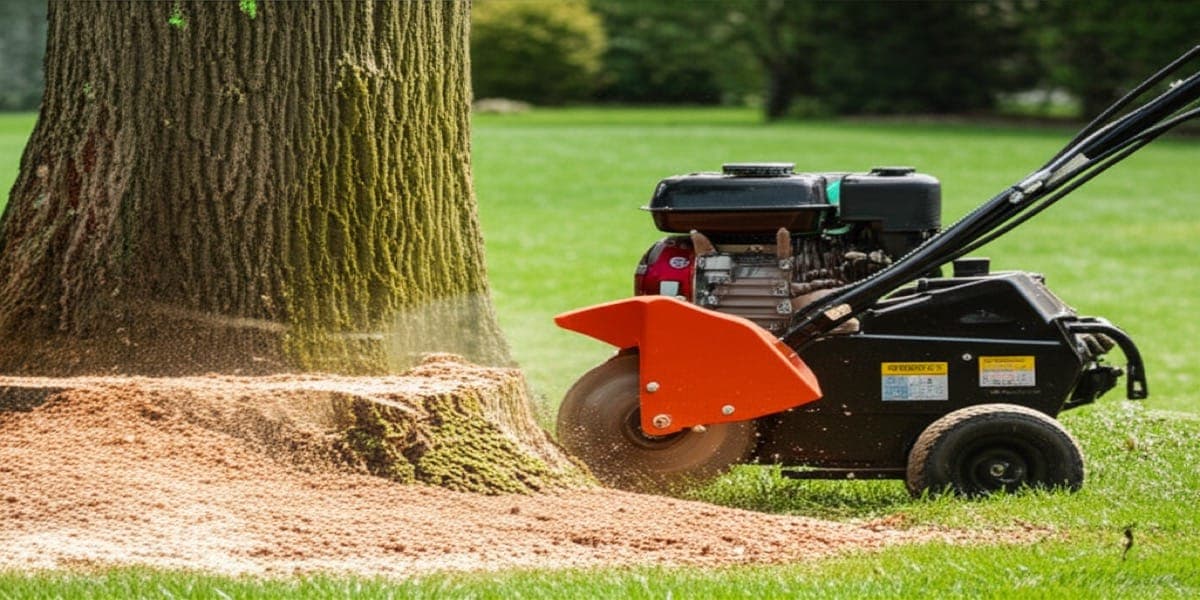
A stump grinder uses a rotating cutting wheel with carbide teeth to chip away the stump, typically grinding 6-12 inches below ground level. The machine turns the stump into a pile of wood chips that can be used as mulch or removed. Grinding is fast, effective, and leaves the area ready for landscaping.
Grinding Process
- Clear area around stump
- Remove rocks and debris
- Grind stump below grade
- Grind major surface roots
- Fill hole with chips or soil
- Area ready for use
Grinding Depth Options
| Depth | Purpose | Cost Impact |
|---|---|---|
| 4-6" | Lawn area | Standard |
| 8-12" | Garden bed planting | Moderate increase |
| 12-18" | Tree replanting | Higher cost |
| Full removal | Construction | Much higher |
Grinding Pros and Cons
Advantages:
- Fast (hours, not months)
- Complete removal below grade
- Immediate results
- Roots die naturally
- Area usable quickly
Disadvantages:
- Costs more than chemical
- Requires equipment access
- Creates large chip pile
- Roots remain (decay over time)
- Possible utility conflicts

How Does Chemical Stump Removal Work?
Chemical stump removers accelerate decay by breaking down wood fibers, making the stump soft and rotten enough to remove or burn. The process takes 6-12 months. Products contain potassium nitrate or similar compounds that speed decomposition.
Chemical Treatment Process
- Cut stump close to ground if possible
- Drill holes (1" diameter, 8-12" deep)
- Fill holes with stump remover
- Add water as directed
- Cover to retain moisture
- Wait 6-12 months
- Break up softened wood or burn
Chemical Treatment Tips
- More holes = faster results: Drill many holes
- Keep moist: Speeds decomposition
- Patience required: Takes months
- Multiple applications: May be needed
- Check fire regulations: Before burning
Chemical Pros and Cons
Advantages:
- Lower cost than grinding
- DIY possible
- No equipment needed
- Kills roots too
Disadvantages:
- Takes 6-12+ months
- Requires patience
- Less complete removal
- Chemicals in soil
- Multiple applications needed
What About Natural Decomposition?
Stumps eventually decay on their own, but the timeline varies dramatically by species, size, and conditions. Softwoods (pine, spruce) decay faster than hardwoods (oak, maple). Small stumps decompose faster than large ones. In Fort Wayne’s climate, expect 3-10+ years for natural decay.
Decay Timeline Estimates
| Species | Small Stump | Large Stump |
|---|---|---|
| Pine/softwood | 3-5 years | 5-8 years |
| Maple | 5-7 years | 8-12 years |
| Oak | 7-10 years | 10-15+ years |
Speeding Natural Decay
- Keep stump moist
- Cover with soil or mulch
- Add nitrogen (fertilizer)
- Drill holes for moisture penetration
- Accept the timeline
How Do You Choose the Right Method?
Consider timeline, budget, and plans for the area. Grinding makes sense for visible locations, where you want to plant, or where you need immediate results. Chemical treatment works for patient homeowners on a budget. Natural decay suits hidden areas with no urgency.
Decision Guide
| Situation | Recommended Method |
|---|---|
| Want it gone now | Grinding |
| Planting in location | Grinding (deep) |
| Tight budget, patient | Chemical |
| Hidden area, no rush | Natural decay |
| Many stumps | Grinding (volume discount) |
| Large, accessible stumps | Grinding |
| Small stumps, no hurry | Chemical or natural |

What Does Stump Grinding Cost?
Stump grinding typically costs $100-400 per stump for average residential stumps, with pricing based on diameter. Many companies offer per-inch pricing ($2-4 per inch of diameter) or minimum charges. Multiple stumps often qualify for volume discounts.
Cost Factors
| Factor | Impact |
|---|---|
| Stump diameter | Primary factor |
| Number of stumps | Volume discount possible |
| Accessibility | Difficult access adds cost |
| Grinding depth | Deeper = more cost |
| Root grinding | Adds to price |
Typical Pricing
- Per inch of diameter: $2-4
- Minimum charge: $75-150
- Average stump (12-18"): $100-200
- Large stump (24-36"): $150-400
- Volume discount: 10-30% for multiple
Can You Grind a Stump Yourself?
Stump grinder rental is possible, and DIY makes sense for multiple stumps if you’re comfortable with powerful equipment. Rental costs $150-300 per day. However, operating a stump grinder requires physical strength, mechanical aptitude, and safety awareness.
DIY Considerations
Rental requirements:
- Truck or trailer to transport
- Physical ability to operate
- Safety equipment
- Time (learning curve)
When to DIY:
- Multiple stumps (cost savings)
- Good equipment access
- Comfortable with machinery
- Time available
When to hire:
- Single stump (cost similar to rental)
- Difficult access
- Large stumps
- Prefer convenience
What Happens to Roots After Grinding?
Grinding removes the stump but leaves roots in the ground. Without the stump and tree to feed them, roots die and decay naturally over 2-5 years. They become soft and break down without causing problems in most cases.
Root Considerations
- Roots die after stump removal
- Decay takes 2-5 years
- May see settling as roots decompose
- Usually not a problem for lawns
- May affect planting directly over roots
Should You Fill the Hole or Use the Chips?
The grinding creates a hole filled with wood chips. You can leave chips as mulch, mix them with soil, or remove them and fill with topsoil. For lawn areas, remove excess chips and fill with topsoil before seeding.
Hole Management
| Plan for Area | Recommendation |
|---|---|
| Lawn | Remove chips, add topsoil, seed |
| Garden bed | Mix chips with soil, amend |
| Mulched area | Leave chips as mulch |
| Tree replanting | Remove chips, add compost/soil |
Our tree care services include professional stump grinding throughout Fort Wayne.
Request a Free Quote or call us at (260) 450-4676 for stump removal service.
Frequently Asked Questions
Will the stump grow back after grinding?
Some species (like willows and poplars) may send up sprouts from remaining roots. Treat sprouts with herbicide or they’ll eventually exhaust themselves.
How soon can I plant after stump grinding?
For flowers or shrubs, you can plant immediately after amending the soil. For a new tree, wait a season and ensure adequate soil replacement.
Is it OK to leave a stump?
Stumps attract termites and carpenter ants, harbor fungal diseases, and create obstacles. Removal is recommended, especially near structures.
Adam Minnick is the owner of Minnick Lawn & Landscaping, serving Fort Wayne, Auburn, and Northeast Indiana since 2018.