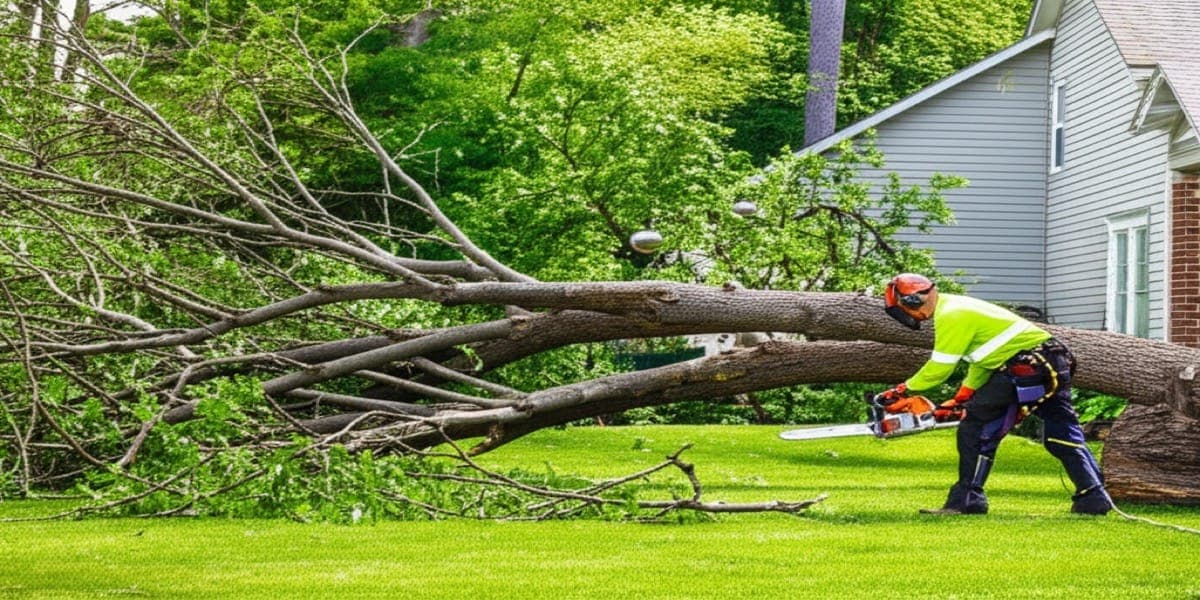
Storm-damaged tree being removed in Fort Wayne

Fort Wayne sees its share of severe weather—straight-line winds, tornadoes, ice storms, and heavy snow all damage trees. When storms strike, knowing what to do immediately after protects your safety, helps you make good decisions about damaged trees, and gets you appropriate help quickly. This guide walks through storm response from initial safety to recovery.

Storm-damaged tree on property

What Should You Do Immediately After a Storm?

Stay inside until the storm fully passes, then assess your property from a safe distance. Look for downed power lines, hanging branches, and leaning trees before approaching damaged areas. Never assume a downed line is dead—always treat it as energized and call the utility company.

Immediate Safety Steps

  1. Wait for storm to pass completely
  2. Stay inside while assessing through windows
  3. Look for hazards: Power lines, hanging branches, unstable trees
  4. Keep family and pets inside until hazards are identified
  5. Call 911 if lines are down or immediate danger exists
  6. Contact utility company for downed electrical lines

Hazard Priorities

HazardAction
Downed power linesCall utility, stay far away
Lines in treesAssume energized, call utility
Tree on houseDon’t enter; call professional
Hanging branchesStay clear, call professional
Blocking roadCall local authorities

How Do You Identify Dangerous Situations?

Any situation involving power lines, structural damage, or unstable trees is dangerous and requires professional help. Hanging branches (widow-makers) can fall without warning. Trees leaning on structures create ongoing risk. Partially uprooted trees may fall completely.

High-Risk Scenarios

Power line involvement:

  • Lines down in yard
  • Lines tangled in tree
  • Tree touching lines
  • Lines across driveway/road

Structural threats:

  • Tree on house/building
  • Tree on vehicle
  • Leaning against structure
  • Hanging over structure

Unstable trees:

  • Partially uprooted
  • Severe lean (new)
  • Split trunk
  • Hanging branches

Power lines entangled with fallen tree

When Should You Call Emergency Services?

Call 911 for immediate life safety threats: power lines down, trees on occupied structures, blocked emergency access, or injuries. Call your utility company for power line issues that aren’t immediate emergencies. Call tree services for everything else.

Who to Call

SituationContact
Injuries911
Power lines down911, then utility
Tree on occupied building911
Blocked roadsLocal authorities
Lines in trees (no other hazard)Utility company
Tree damage (no lines)Tree service
Hanging branchesTree service

What Can You Safely Handle Yourself?

Small debris, branches you can reach from the ground, and minor damage may be DIY appropriate. Anything requiring a ladder, chainsaw near structures, or work near power lines requires professional help. When in doubt, wait for professionals.

Safe DIY Tasks

  • Picking up small debris
  • Moving fallen branches (ground level)
  • Documenting damage (photos)
  • Tarping exposed areas if safely accessible

Requires Professional

  • Chainsaw work
  • Ladder work
  • Anything near power lines
  • Hanging branches
  • Trees on structures
  • Large debris removal

How Do You Assess Tree Damage?

Once safe to approach, assess damage severity to determine whether trees can be saved. Trees with minor damage often recover well; those with major structural damage may need removal. The assessment helps prioritize work and communicate with tree services.

Damage Categories

CategoryDescriptionLikely Outcome
MinorSmall branches lost, light damageFull recovery
ModerateLarger branches lost, crown damageOften recovers
SevereMajor limbs or leader lostEvaluate carefully
CriticalTrunk damage, severe lean, uprootingOften remove

Assessment Questions

  • How much of the crown is lost?
  • Is the main trunk damaged?
  • Are major limbs split or torn?
  • Is the tree leaning newly?
  • Is root plate lifted?
  • What’s the tree’s pre-storm condition?

Arborist assessing storm-damaged tree

Should Damaged Trees Be Saved or Removed?

Trees with less than 50% crown loss, no trunk damage, and stable root systems usually recover. Trees with major structural damage, severe trunk wounds, or significant lean often need removal. Species, age, location, and value all factor into the decision.

Save vs Remove Guidelines

Often saveable:

  • Minor branch loss (under 25%)
  • Healthy before storm
  • Good structure remaining
  • No trunk damage
  • Stable roots

Consider removal:

  • Major limb loss (over 50%)
  • Trunk splits or wounds
  • Uprooting/severe lean
  • Previously compromised
  • Repeated storm damage

What About Trees Leaning on Structures?

Trees against structures are unstable and dangerous. Don’t enter or occupy the affected structure until the tree is removed. Weight shifts and secondary failures can occur without warning. This is professional work requiring specialized equipment.

Safety steps:

  • Don’t enter building if avoidable
  • Don’t attempt to prop or stabilize
  • Document for insurance
  • Call professional immediately
  • Follow their safety instructions

How Do You Choose an Emergency Tree Service?

After storms, demand for tree services surges and storm chasers appear. Choose established, insured companies over unfamiliar door-knockers. Get basic documentation before work begins. Be patient—legitimate companies are overwhelmed after major storms.

Choosing Wisely

Green flags:

  • Established local company
  • Proof of insurance
  • Written estimate
  • Professional equipment
  • Reasonable timeline

Red flags:

  • Out-of-state plates
  • Cash-only, no paperwork
  • Pressure to decide immediately
  • Prices far below market
  • No insurance documentation

What Should You Document for Insurance?

Photograph all damage before cleanup begins. Document the tree’s pre-storm condition if possible (previous photos). Keep records of all expenses. Contact your insurance company promptly—homeowner’s policies typically cover tree removal if the tree damages covered structures.

Documentation Checklist

  • Photos of all damage (multiple angles)
  • Photos of affected structures
  • Written notes on damage
  • Contractor estimates and invoices
  • Communication records with insurance
  • Receipts for emergency expenses

Our tree care services provide emergency storm response throughout Fort Wayne.


Request a Free Quote or call us at (260) 450-4676 for emergency tree service.


Frequently Asked Questions

Does insurance cover storm-damaged tree removal?

Typically, yes—if the tree damages covered property (house, fence, etc.). Trees that fall without hitting structures may not be covered.

How long before tree services can respond after a major storm?

Major storms can create weeks of backlog. Critical emergencies (on structures, blocking access) get priority; cosmetic cleanup waits.

Can storm-damaged trees recover?

Many trees recover from moderate damage if properly pruned. Severe structural damage often means removal is the best option.


Adam Minnick is the owner of Minnick Lawn & Landscaping, serving Fort Wayne, Auburn, and Northeast Indiana since 2018.