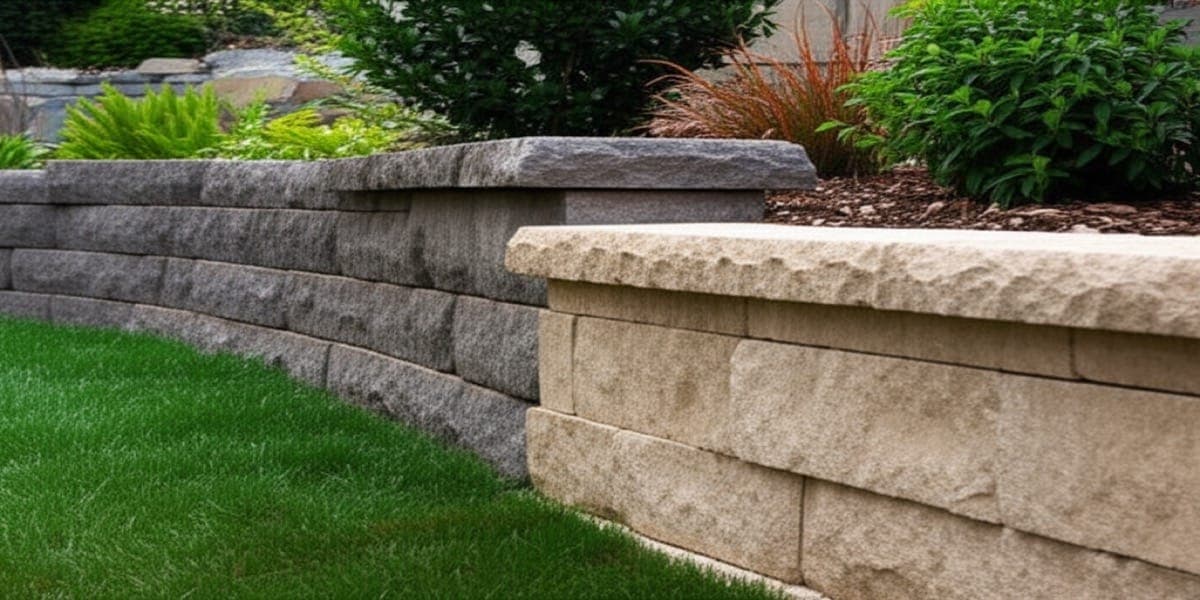
Retaining walls solve grade changes, create usable flat areas, and add architectural interest to landscapes. The material you choose affects not only appearance but also longevity, cost, and suitability for different heights and conditions. Understanding the strengths and limitations of natural stone, concrete block, and timber helps you select the right material for your Fort Wayne project.

How Do the Main Retaining Wall Materials Compare?
Natural stone offers timeless beauty and excellent durability but costs more. Manufactured concrete block provides consistent appearance with good structural integrity at moderate cost. Timber creates a rustic, natural look affordably but has the shortest lifespan. Each material suits different aesthetic preferences, structural needs, and budgets.
Material Comparison Overview
| Factor | Natural Stone | Concrete Block | Timber |
|---|---|---|---|
| Cost | High ($25-40/sq ft) | Medium ($15-25/sq ft) | Low ($10-20/sq ft) |
| Lifespan | 50-100+ years | 30-50+ years | 15-25 years |
| Max height | Varies | 3-4 ft (DIY), higher engineered | 4 ft max |
| Appearance | Natural, unique | Consistent, varied | Rustic, natural |
| DIY feasibility | Difficult | Moderate | Easiest |
| Maintenance | Very low | Low | Moderate |
Natural Stone Retaining Walls
Best for:
- Premium landscapes
- Natural aesthetic
- Long-term value
- Curved walls
Considerations:
- Requires skilled installation
- Heavy—difficult DIY
- Variable material
- Highest cost
Concrete Block Retaining Walls
Best for:
- Most residential applications
- Consistent look
- Structural reliability
- Moderate budgets
Considerations:
- Good value
- Interlocking systems
- Various colors/textures
- Moderate DIY projects
Timber Retaining Walls
Best for:
- Garden borders
- Casual landscapes
- Budget projects
- Low walls only
Considerations:
- Shortest lifespan
- Subject to rot
- Easiest DIY
- Not for tall walls

What Are the Cost Differences?
Material and installation costs vary significantly: timber walls run $10-20 per square foot, concrete block ranges from $15-25 per square foot, and natural stone costs $25-40+ per square foot for professionally installed walls. DIY can reduce costs 30-50% but isn’t recommended for walls over 2-3 feet.
Cost Breakdown Per Square Foot
| Material | Materials Only | Installed |
|---|---|---|
| Timber | $5-10 | $10-20 |
| Concrete block | $8-15 | $15-25 |
| Natural stone | $15-25 | $25-40+ |
Total Project Estimates (4’ x 20’ wall, 80 sq ft)
| Material | DIY | Professional |
|---|---|---|
| Timber | $600-1,000 | $800-1,600 |
| Concrete block | $1,000-1,500 | $1,200-2,000 |
| Natural stone | Not recommended | $2,000-3,200+ |
Hidden Costs to Consider
- Drainage - Gravel, pipe ($200-500)
- Base preparation - Excavation, gravel ($300-800)
- Engineering - Required for walls over 4’ ($500-1,500)
- Permits - May be required ($50-200)
How Long Does Each Material Last?
Properly installed natural stone walls can last 50-100+ years, concrete block walls typically last 30-50 years, and timber walls average 15-25 years before needing replacement. Northeast Indiana’s freeze-thaw cycles affect all materials, making proper drainage critical for longevity.
Longevity Comparison
| Material | Expected Lifespan | Failure Mode |
|---|---|---|
| Natural stone | 50-100+ years | Settling, movement |
| Concrete block | 30-50+ years | Frost heave, lean |
| Timber (treated) | 15-25 years | Rot, insect damage |
Factors Affecting Longevity
Critical for all materials:
- Proper drainage behind wall
- Adequate base preparation
- Correct installation technique
- Appropriate material for height
Material-specific factors:
- Stone: Mortar condition (if used)
- Block: Freeze-thaw cycles
- Timber: Ground contact, moisture

What Design Options Does Each Material Offer?
Concrete block offers the most consistent design options with various colors, textures, and cap styles readily available. Natural stone provides unique, variable appearance with colors depending on stone type. Timber offers the fewest options but creates a distinctive rustic look.
Design Options
| Feature | Stone | Block | Timber |
|---|---|---|---|
| Colors | Earth tones | Many | Brown/gray |
| Textures | Natural variety | Manufactured variety | Wood grain |
| Curves | Excellent | Moderate | Difficult |
| Steps | Beautiful | Good | Possible |
| Terracing | Excellent | Good | Limited |
Popular Styles
Natural stone looks:
- Field stone (rustic)
- Cut stone (formal)
- Dry stack (natural)
- Mortared (traditional)
Block options:
- Textured face (most popular)
- Smooth face (modern)
- Split face (natural look)
- Curved systems (flexibility)
When Should You Hire a Professional?
Hire a professional for walls over 3-4 feet tall (may require engineering), walls holding significant load, natural stone installation, or any wall near structures. DIY is reasonable for low timber or block walls (under 2-3 feet) in non-critical locations with proper research and preparation.
DIY vs Professional
| Scenario | DIY Possible | Professional Recommended |
|---|---|---|
| Wall under 2 ft | Yes (all materials) | Optional |
| Wall 2-3 ft | Yes (block, timber) | Preferred for stone |
| Wall 3-4 ft | Maybe (block only) | Recommended all |
| Wall over 4 ft | No | Required (engineering) |
| Near foundation | No | Required |
| Significant load | No | Required |
Professional Advantages
- Engineering when needed
- Proper drainage installation
- Equipment for heavy materials
- Warranty coverage
- Permits and inspections
Our hardscaping services include professional retaining wall design and installation.
Choose the Right Material for Your Project
Each retaining wall material has its place. Timber works for simple, budget-conscious projects. Block offers the best balance of cost, durability, and appearance. Stone provides premium aesthetics and maximum longevity. Match your choice to your priorities, budget, and project scope.
Request a Free Quote or call us at (260) 450-4676 to discuss retaining wall options for your property.
Frequently Asked Questions
Do I need a permit for a retaining wall?
Most municipalities require permits for walls over 4 feet high or walls that affect drainage or are near property lines. Check Fort Wayne/Allen County requirements before starting.
Can I build a retaining wall myself?
DIY is feasible for simple walls under 2-3 feet using timber or interlocking block. Taller walls or natural stone typically require professional installation.
How do I prevent my retaining wall from failing?
Proper drainage is critical—install gravel and perforated pipe behind the wall. Adequate base preparation and correct setback (lean into the slope) also prevent failure.
Adam Minnick is the owner of Minnick Lawn & Landscaping, serving Fort Wayne, Auburn, and Northeast Indiana since 2018.