Healthy green fertilized lawn in Fort Wayne Indiana neighborhood

A beautiful, thick lawn doesn’t happen by accident. In Northeast Indiana’s climate, proper fertilization timing makes the difference between a lawn that thrives and one that struggles with weeds, disease, and seasonal stress. Understanding when and how to feed your Fort Wayne lawn—based on our specific soil conditions and growing season—is the key to year-round success.

After years of caring for lawns across the Fort Wayne area, I’ve developed a fertilization schedule that works with our climate rather than against it. In this guide, I’ll share the complete annual fertilization plan we use for our clients, including specific product recommendations, application rates, and the timing windows that produce the best results in Northeast Indiana.

Healthy green lawn showing results of proper fertilization program

When Should You Apply the First Fertilizer of the Year?

The first fertilizer application for Fort Wayne lawns should occur in late April to early May, when soil temperatures consistently reach 55°F and grass has broken dormancy with active growth visible. Applying too early wastes product and can feed spring weeds, while waiting too long misses the prime window when cool-season grasses benefit most from supplemental nutrition.

This timing coincides with your first or second mowing of the season. If your lawn isn’t ready to mow, it’s not ready for fertilizer either. The grass needs to be actively growing to absorb nutrients effectively.

How to Know Your Lawn is Ready

Look for these signs before applying spring fertilizer:

  • Active green growth - Grass is visibly growing, not just greening up
  • Mowing needed - Lawn has reached 3+ inches and needs cutting
  • Soil temperature - Thermometer reads 55°F+ at 4-inch depth
  • Consistent warmth - No hard frosts expected in the forecast

First Application Guidelines

FactorRecommendation
TimingLate April - Early May
Product TypeBalanced slow-release (21-0-0 or similar)
Application Rate0.75-1 lb nitrogen per 1,000 sq ft
FormGranular preferred over liquid

Many Fort Wayne homeowners make the mistake of fertilizing on the first warm weekend in March. That fertilizer feeds weeds and early crabgrass rather than your desirable grass, which is still semi-dormant. Patience pays dividends.

How Many Times Should You Fertilize a Lawn in Northeast Indiana?

For optimal lawn health in the Fort Wayne area, plan for 4-5 fertilizer applications per year, spaced approximately 6-8 weeks apart during the growing season. This schedule provides consistent nutrition without overwhelming the grass or creating excessive growth that requires constant mowing.

The exact number depends on your lawn’s current condition and your goals:

Application Schedule Overview

ApplicationTimingPurpose
1stLate April - Early MaySpring green-up and recovery
2ndLate May - Early JuneSupport peak spring growth
3rdLate July - Early AugustSummer stress recovery
4thMid-SeptemberFall growth and root development
5th (Optional)Late October - NovemberWinterizer for root health

Factors That Affect Frequency

  • Soil quality - Poor soils may need more frequent applications
  • Grass type - Kentucky bluegrass typically needs more nitrogen than fescue
  • Lawn age - New lawns need more feeding than established turf
  • Irrigation - Irrigated lawns can utilize more fertilizer
  • Goals - Competition-level lawns may need more frequent feeding

Signs You’re Under-Fertilizing

  • Pale or yellowish-green color
  • Thin grass density
  • Slow recovery from wear
  • Increased weed pressure
  • Poor response to environmental stress

Signs You’re Over-Fertilizing

  • Excessive growth requiring frequent mowing
  • Thatch buildup
  • Increased disease susceptibility
  • Nutrient runoff concerns
  • Burned or brown spots

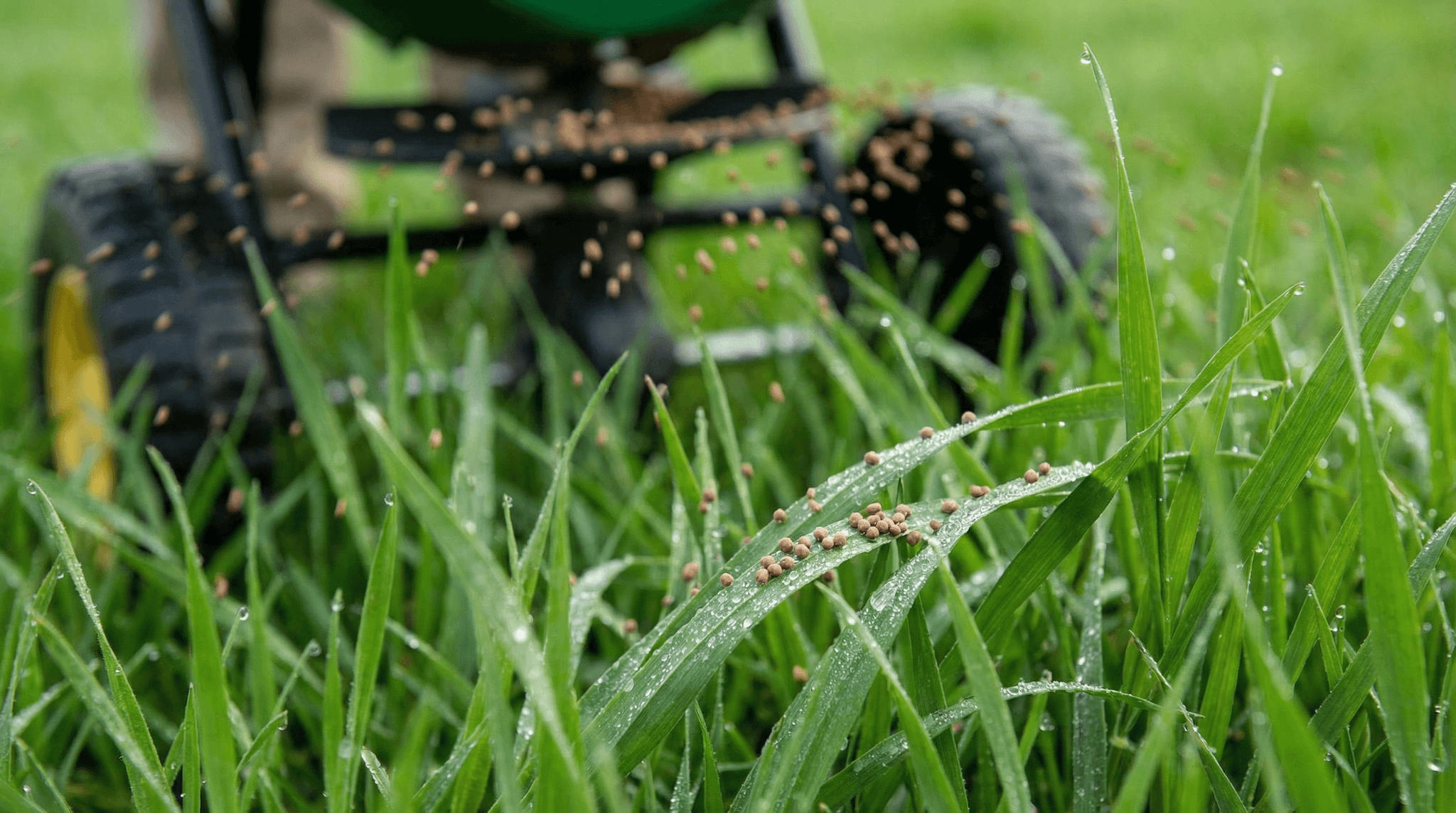
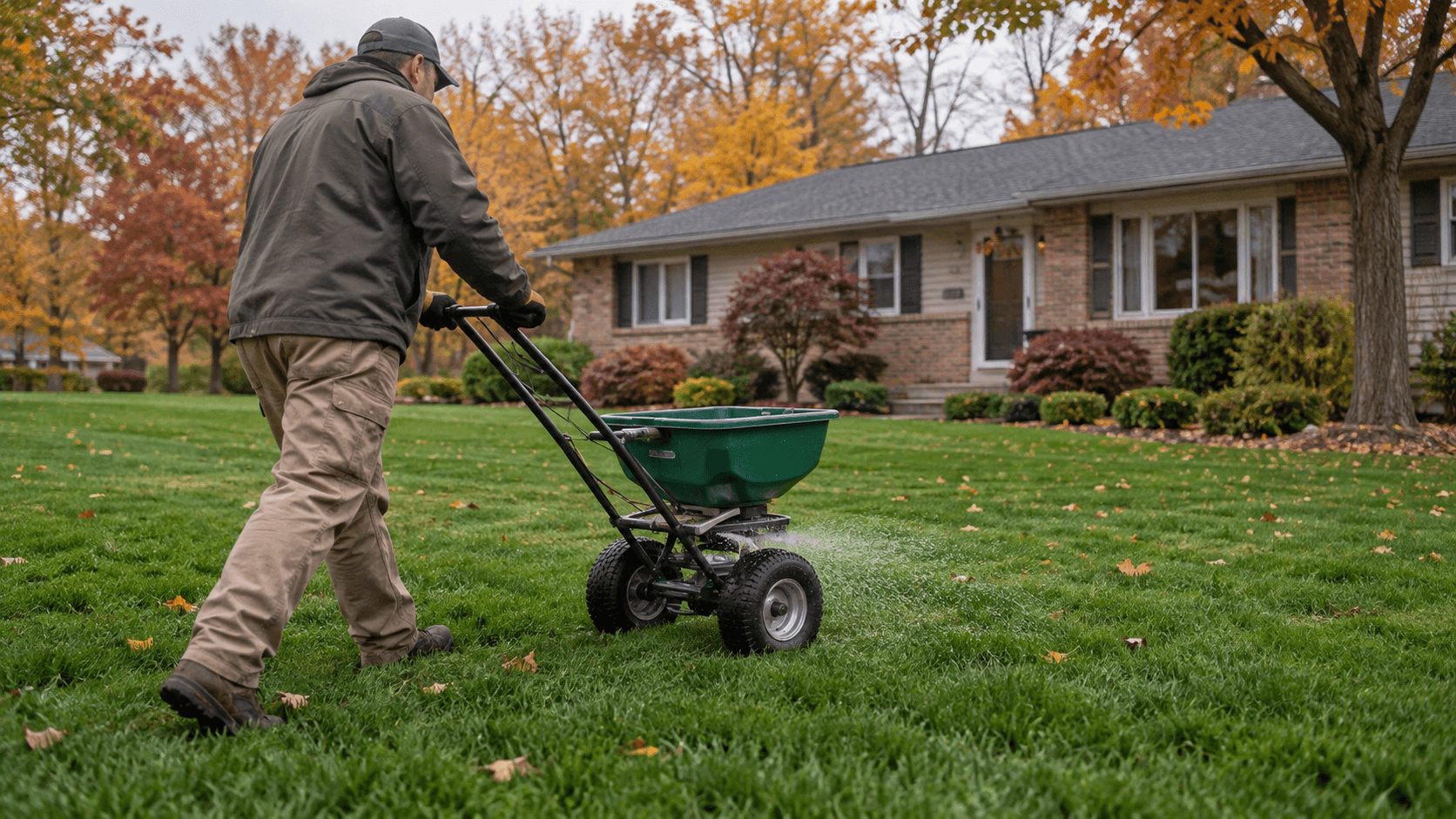
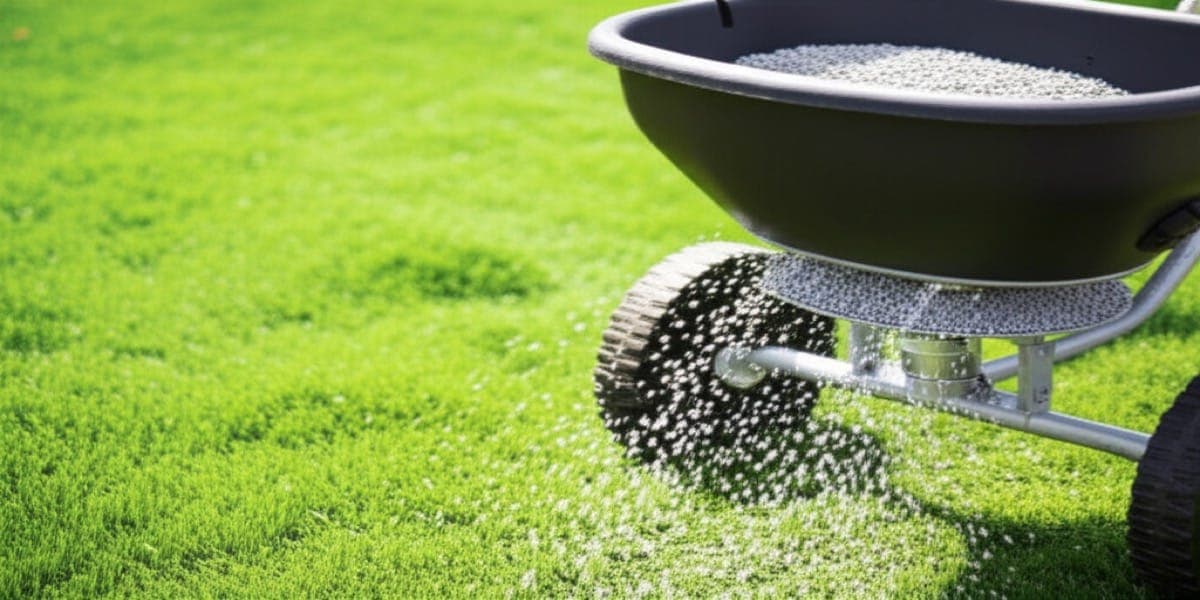
Spreader applying granular fertilizer to lawn

What Type of Fertilizer is Best for Fort Wayne Lawns?

For most Fort Wayne lawns, a slow-release granular fertilizer with a nitrogen-phosphorus-potassium (N-P-K) ratio appropriate for the season produces the best results. Cool-season grasses in Northeast Indiana respond best to higher nitrogen content with moderate potassium, while phosphorus needs are typically lower for established lawns due to our soil composition.

Understanding fertilizer numbers helps you make smart choices:

Reading Fertilizer Labels

The three numbers on every fertilizer bag represent:

  1. Nitrogen (N) - Promotes leaf growth and green color
  2. Phosphorus (P) - Supports root development
  3. Potassium (K) - Builds stress tolerance and disease resistance

A bag labeled 24-0-10 contains:

  • 24% nitrogen
  • 0% phosphorus
  • 10% potassium
SeasonIdeal N-P-K RatioProduct Example
Spring21-0-0 or 24-0-4Slow-release nitrogen
Summer18-0-6Balanced with potassium
Fall24-0-10Higher potassium for roots
Winter21-0-0Nitrogen for root storage

Slow-Release vs Quick-Release

Slow-Release (Preferred for most applications)

  • Feeds grass over 6-8 weeks
  • Reduces burn risk
  • More consistent growth
  • Less frequent mowing
  • Better for environment

Quick-Release

  • Immediate green-up within days
  • Higher burn risk
  • Rapid growth spurt
  • Useful for recovery situations
  • Requires careful application

How Much Fertilizer Should You Apply Per Application?

Each fertilizer application should deliver approximately 0.75 to 1 pound of actual nitrogen per 1,000 square feet of lawn. This rate provides adequate nutrition without excessive growth or environmental impact, and it’s the standard professional recommendation for cool-season grasses in the Midwest.

Calculating the correct amount requires simple math:

How to Calculate Application Rate

  1. Determine your lawn size - Measure or estimate square footage
  2. Find nitrogen percentage - First number on the bag (e.g., 24%)
  3. Calculate coverage - Divide 100 by nitrogen percentage

Example: 24-0-10 fertilizer

  • 100 ÷ 24 = 4.17 lbs of product per 1,000 sq ft

For a 10,000 square foot lawn:

  • 4.17 × 10 = 41.7 lbs of product total

Application Rate Quick Reference

Bag N-P-KProduct Amount per 1,000 sq ftFor 10,000 sq ft
24-0-104.2 lbs42 lbs
21-0-04.8 lbs48 lbs
18-0-65.5 lbs55 lbs
16-0-86.25 lbs62.5 lbs

Calibrating Your Spreader

Every spreader is different. To ensure accurate application:

  1. Check manufacturer settings - Many fertilizers list recommended spreader settings
  2. Do a test run - Apply to a measured area and weigh remaining product
  3. Adjust as needed - Fine-tune settings until you achieve target rate
  4. Mark your settings - Record what works for future applications

Lawn showing difference between fertilized and unfertilized sections

What’s the Best Fertilization Schedule for Spring in Fort Wayne?

Spring fertilization in Fort Wayne should include two applications: the first in late April to early May targeting early growth, and the second in late May to early June supporting peak spring vigor. This two-application approach provides consistent nutrition during the most active growth period for cool-season grasses in Northeast Indiana.

Spring Application #1: Late April - Early May

Goals:

  • Break dormancy support
  • Early green-up
  • Root development stimulation

Recommended Product: Slow-release nitrogen (21-0-0 or 24-0-4)

Application Tips:

  • Apply after first mowing of season
  • Water in lightly if rain isn’t expected
  • Avoid application before heavy rain (runoff risk)

Spring Application #2: Late May - Early June

Goals:

  • Support peak growth phase
  • Build density before summer stress
  • Maintain deep green color

Recommended Product: Balanced slow-release with potassium (18-0-6)

Application Tips:

  • Apply before summer heat arrives
  • Space 6-8 weeks from first application
  • Consider combination product with weed control if needed

Spring Fertilization Mistakes to Avoid

  1. Too early application - Feeds weeds, not grass
  2. Heavy single dose - Better to split into two lighter applications
  3. Ignoring soil test - May be adding nutrients you don’t need
  4. Quick-release products - Cause surge growth and stress
  5. Skipping pre-emergent - Spring is also time for crabgrass prevention

Should You Fertilize Your Lawn During Summer?

Yes, a single mid-summer fertilizer application in late July to early August benefits Fort Wayne lawns by helping them recover from heat stress and preparing for fall growth. However, summer fertilization requires careful product selection and timing to avoid burning stressed grass or encouraging disease in hot, humid conditions.

Summer Fertilization Guidelines

FactorSummer Recommendation
TimingLate July - Early August
ProductLight, slow-release (18-0-6)
Rate0.5-0.75 lb N per 1,000 sq ft
Application TimeEarly morning or evening
WateringApply before expected rain or irrigate

When to Skip Summer Fertilization

Skip the summer application if:

  • Lawn is drought-stressed and dormant
  • Temperatures consistently above 90°F
  • No irrigation available
  • Lawn shows signs of disease
  • Recent extreme weather stress

Summer-Specific Tips

Do:

  • Apply in early morning before heat
  • Water immediately after application
  • Use slow-release products only
  • Apply at reduced rate
  • Monitor for signs of stress

Don’t:

  • Apply during drought without irrigation
  • Use quick-release nitrogen
  • Fertilize diseased lawns
  • Apply during extreme heat waves
  • Over-apply hoping for quick results

Lawn mower on healthy summer lawn in Fort Wayne

Why is Fall Fertilization So Important for Northeast Indiana Lawns?

Fall is the most critical fertilization period for Fort Wayne lawns because cool-season grasses experience a second growth surge, focusing energy on root development and carbohydrate storage before winter dormancy. Applications in September and October/November prepare your lawn to survive winter and emerge vigorous in spring, making fall feeding more important than spring feeding for long-term lawn health.

How Fall Feeding Works

As air temperatures cool in fall:

  1. Top growth slows - Grass blades grow less aggressively
  2. Root growth accelerates - Energy directed underground
  3. Carbohydrate storage - Plants store food for winter
  4. Nutrient uptake increases - Cooler temps improve absorption

This combination means fall fertilizer:

  • Goes toward roots, not excessive blade growth
  • Gets stored for spring green-up
  • Builds stress tolerance for winter
  • Creates denser turf next year

Fall Fertilization Schedule

Application #4: Mid-September

  • Goals: Support fall growth, begin winter prep
  • Product: Balanced fertilizer with potassium (24-0-10)
  • Rate: 1 lb N per 1,000 sq ft
  • Notes: Most important application of the year

Application #5: Late October - November (Winterizer)

  • Goals: Final nutrient boost before dormancy
  • Product: Nitrogen-heavy (21-0-0)
  • Rate: 0.75-1 lb N per 1,000 sq ft
  • Timing: After last mowing but before ground freezes

Fall Fertilization Benefits

BenefitHow It Helps
Deeper rootsBetter drought tolerance next year
Nutrient storageFaster spring green-up
Thicker densityNatural weed suppression
Disease resistanceHealthier plants overall
Winter hardinessSurvives cold better

What Role Does Soil Testing Play in Fertilization?

A soil test is the foundation of an effective fertilization program because it reveals exactly what nutrients your lawn needs and which ones are already adequate. Fort Wayne area soils vary significantly, and testing eliminates guesswork, saves money on unnecessary products, and prevents over-application that harms both your lawn and the environment.

What Soil Tests Reveal

A comprehensive soil test measures:

  • pH level - Affects nutrient availability
  • Nitrogen (N) - Current levels and recommendations
  • Phosphorus (P) - Often adequate in Indiana soils
  • Potassium (K) - Important for stress tolerance
  • Organic matter - Indicates soil health
  • Micronutrients - Iron, manganese, zinc, etc.

How to Get Your Soil Tested

Option 1: Purdue Extension Service

Option 2: Commercial Labs

  • Cost: $20-50 depending on depth of analysis
  • Results: Usually faster turnaround
  • Some local garden centers offer testing

Option 3: DIY Test Kits

  • Cost: $10-30
  • Results: Less accurate but useful for pH
  • Good for quick checks between professional tests

Common Fort Wayne Soil Issues

IssueTypical Solution
Low pH (acidic)Apply lime to raise pH
High pH (alkaline)Apply sulfur to lower pH
Low nitrogenIncrease fertilization rate
High phosphorusSkip P in fertilizer choices
Compacted soilAerate and add organic matter

Soil testing kit and results for lawn fertilization planning

What Equipment Do You Need for Proper Fertilizer Application?

Proper fertilizer application requires a calibrated broadcast or drop spreader for even distribution across your lawn. Using the right equipment prevents streaking, burning, and uneven growth that results from hand-spreading or poorly calibrated spreaders, ensuring every square foot of your Fort Wayne lawn receives the same nutrition.

Types of Spreaders

Broadcast (Rotary) Spreaders

  • Best for: Large lawns (5,000+ sq ft)
  • Coverage: Wide swath (6-12 feet)
  • Pros: Fast, efficient, good overlap
  • Cons: Difficult to control near beds and edges
  • Price range: $30-300

Drop Spreaders

  • Best for: Small to medium lawns, precision work
  • Coverage: Exact width of hopper
  • Pros: Precise control, no overthrow
  • Cons: Slower, requires careful overlap
  • Price range: $40-200

Spreader Maintenance

To ensure accurate application:

  1. Clean after each use - Fertilizer residue causes rust
  2. Calibrate seasonally - Settings drift over time
  3. Store dry - Moisture causes clogging
  4. Check wheels and gears - Ensure consistent speed
  5. Replace worn parts - Agitators and shutoff plates wear out

Application Technique

For even coverage:

  • Walk at consistent speed
  • Overlap passes by 1-2 feet with broadcast spreader
  • Apply half rate in two perpendicular passes for best coverage
  • Start and stop spreader before turns
  • Avoid applying near water features

Can You Fertilize and Apply Weed Control at the Same Time?

Yes, combination fertilizer and weed control products (often called “weed and feed”) can be effective for Fort Wayne lawns when timed correctly. However, separate applications often provide better results because optimal timing for weed control doesn’t always align with optimal fertilization timing in our Northeast Indiana climate.

When Combination Products Work

Combination products are effective when:

  • Pre-emergent timing (late April) aligns with first fertilization
  • Post-emergent weed control is needed during normal feeding windows
  • Convenience is a priority
  • Weed pressure is moderate

When Separate Applications Are Better

Separate applications are preferred when:

  • Specific weed types need targeted treatment
  • Optimal weed control timing differs from fertilization needs
  • Professional-grade products are used
  • Maximum effectiveness is the priority

Common Combination Product Types

TypePurposeBest Timing
Fertilizer + Pre-emergentPrevent crabgrass + feed lawnLate April
Fertilizer + Broadleaf herbicideKill dandelions + feed lawnLate May or September
Fertilizer + IronGreen color + feed lawnAny feeding window

If you’re dealing with specific weed problems, our lawn care services include targeted weed control programs tailored to Fort Wayne’s common weed species.


Create Your Annual Fertilization Plan

Following a consistent fertilization schedule transforms struggling lawns into neighborhood standouts. Start with a soil test, choose products appropriate for each season, and stick to the timing windows that work best in Northeast Indiana’s climate.

Need help developing a custom fertilization program for your lawn? We’re here to help.

Request a Free Quote or call us at (260) 450-4676 to discuss professional lawn fertilization services.


Frequently Asked Questions

What time of day is best to fertilize my lawn?

The best time to fertilize is early morning or late afternoon when temperatures are cooler. Avoid midday application in summer, as heat can stress grass and reduce fertilizer effectiveness. Also avoid applying just before heavy rain, which can wash product away.

Can I fertilize my lawn myself, or should I hire a professional?

Many homeowners successfully fertilize their own lawns with proper equipment and knowledge. Professional services benefit those who lack time, want guaranteed results, or have challenging lawn conditions that require expertise.

How long should I wait to mow after fertilizing?

Wait 24-48 hours after fertilizer application before mowing. This allows granules to work into the soil. If possible, water the lawn before mowing to help dissolve remaining granules.

Is organic fertilizer better than synthetic for Fort Wayne lawns?

Both types can be effective. Organic fertilizers release slowly and improve soil biology but are generally more expensive and require larger quantities. Synthetic fertilizers are more concentrated and cost-effective. Many successful programs combine both approaches.

Why is my lawn still yellow after fertilizing?

Yellowing after proper fertilization may indicate pH problems (nutrients unavailable), iron deficiency, overwatering, disease, or compaction issues. A soil test helps identify the underlying cause.

How soon after seeding can I fertilize?

For new grass seedlings, wait until after the second mowing (usually 4-6 weeks after germination) before applying regular fertilizer. Starter fertilizers with higher phosphorus can be applied at seeding.

Can I fertilize a lawn with bare spots?

Yes, but address the bare spots first through overseeding. Apply starter fertilizer at seeding, then resume regular fertilization after new grass is established (2-3 mowings).

What happens if I apply too much fertilizer?

Over-application causes fertilizer burn (brown patches), excessive growth, thatch buildup, and potential groundwater contamination. If you’ve over-applied, water heavily to dilute and wash fertilizer into soil.


Sources


Adam Minnick is the owner of Minnick Lawn & Landscaping, serving Fort Wayne, Auburn, and Northeast Indiana since 2018. With years of experience in professional lawn care, Adam and his team help hundreds of local homeowners achieve beautiful, healthy lawns.