You overseed a thin lawn by spreading new grass seed over existing turf, making sure the seed touches bare soil, and keeping that soil moist until the seedlings take hold. Fall is the best season to do it in Fort Wayne because cool nights, warm soil, and fewer weeds give new cool-season grass its best shot. Here is how the process works, and what to do if you are reading this in late October.
Why Is Fall the Best Time to Overseed in Northeast Indiana?
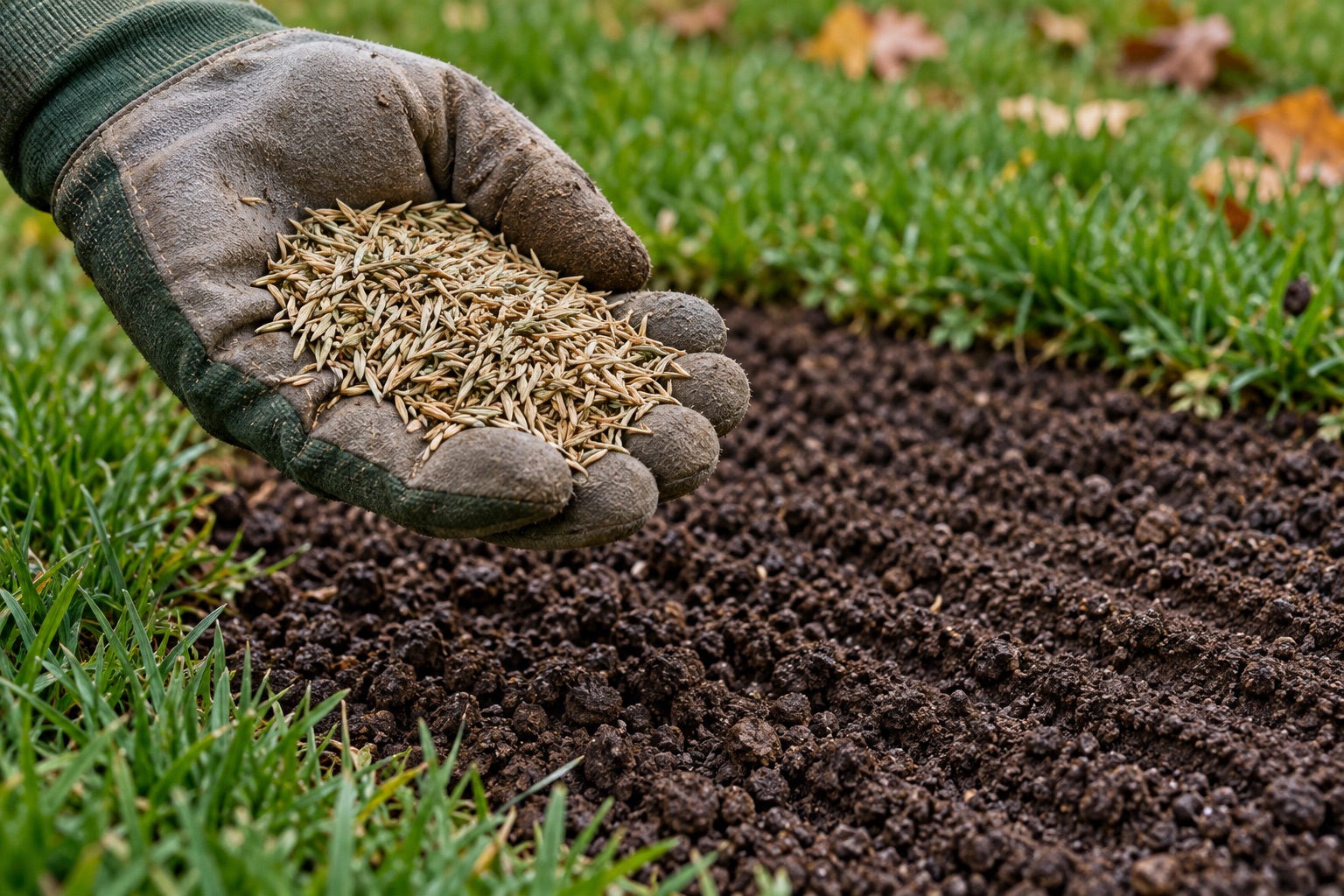
Cool-season grasses like Kentucky bluegrass, perennial ryegrass, and tall fescue, the types that dominate Northeast Indiana lawns, put their energy into root growth when days are mild and nights are cool. Fall also brings steadier rainfall, less summer weed pressure, and soil that is still holding heat from summer.
A thin lawn rarely fixes itself. Fall overseeding gives new grass a head start before winter and a thicker turf by next summer.
In USDA Zone 5b, the ideal overseeding window typically runs from late summer through September, when soil temperatures are in the range cool-season seed likes best. That window gets tighter every week as soil cools.
- Fewer weeds: Crabgrass and other summer weeds are finished for the year, so new seedlings face less competition.
- Better moisture: Fall dew and rain make it easier to keep seed damp.
- Root development: Grass seeded in fall gets a full cool season to build roots before summer heat.
How Do You Prepare a Thin Lawn for Overseeding?
Seed has to touch soil to sprout. If it lands on top of thatch or matted leaves, most of it will never root. Start by mowing the lawn a bit shorter than usual and bagging the clippings, then rake out fallen leaves and debris so soil is exposed.
Fort Wayne's clay-heavy soil compacts easily, which makes preparation especially important. Loosening the surface gives seed somewhere to settle and roots somewhere to grow.
- Rake or dethatch: Pull up dead grass and thatch so seed reaches soil.
- Core aerate: Aeration pulls small plugs from compacted clay and creates ideal pockets for seed.
- Clear leaves: A leaf layer will smother seedlings, so keep it raked off all fall.
What Type of Grass Seed Should You Use in Fort Wayne?
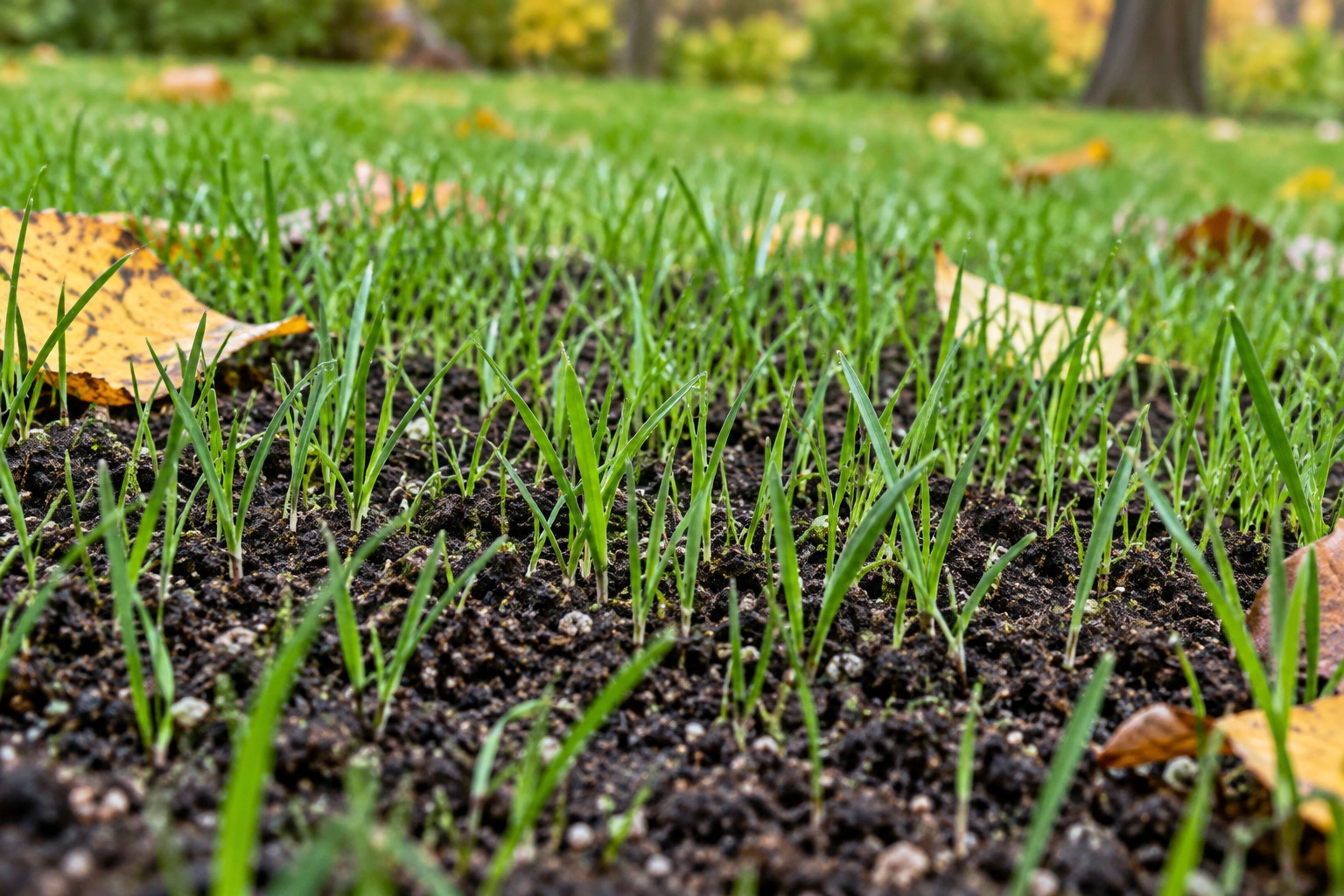
Choose a cool-season blend suited to your yard's light. Many Northeast Indiana homeowners use a mix that combines Kentucky bluegrass, perennial ryegrass, and fine or tall fescue. Bluegrass fills in and repairs itself, ryegrass sprouts quickly, and fescue handles shade and drought better.
Read the seed tag before you buy. Look for a recent test date, a low percentage of weed seed, and no more than a trace of inert filler. Match the blend to your conditions: a sunny front lawn and a shady backyard under mature trees often need different mixes.
How Do You Spread Grass Seed on an Existing Lawn?
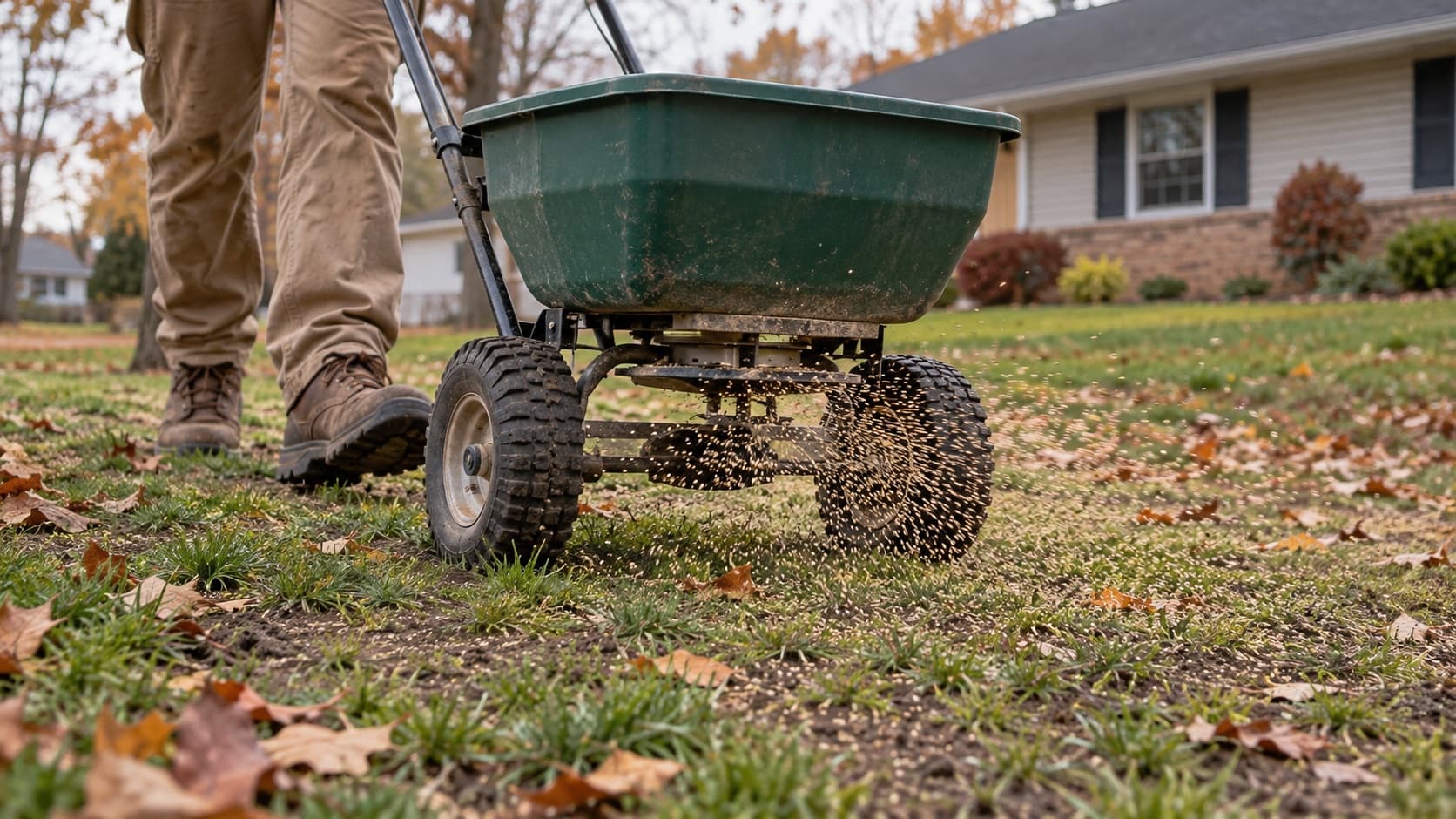
A broadcast or drop spreader gives the most even coverage. Follow the overseeding rate printed on the bag for your blend rather than guessing, and spread half the seed in one direction and half in the perpendicular direction to avoid stripes and gaps.
After spreading, lightly rake the seed or run over it with a roller so it settles into the soil. The goal is good contact, not burial. If you are repairing bare spots, add a thin layer of compost or topsoil over the seed to hold moisture. A starter fertilizer applied at seeding supports root growth, so check the product label and avoid weed killers that block germination.
How Often Should You Water New Grass Seed?
Watering is where most overseeding jobs succeed or fail. Seed needs consistent moisture to germinate, so the top inch of soil should stay damp but not soggy. Typically that means short, light watering once or twice a day rather than one deep soak, until the seedlings are established.
- Keep it damp: Do not let the seedbed dry out during germination.
- Taper off: As seedlings grow, water less often but more deeply.
- Hold off foot traffic: Young grass is easy to damage, so keep kids and pets off it as much as you can.
Germination times vary by species, but ryegrass often sprouts in one to two weeks while Kentucky bluegrass can take several weeks. Wait to mow until new grass is tall enough, and keep the mower blade high for the first cuts.
Is It Too Late to Overseed in Late October in Fort Wayne?
By late October, soil in Northeast Indiana is cooling quickly, and germination slows or stalls. Seed spread now may sprout slowly, and young seedlings may not have time to mature before hard freezes. That does not mean every lawn is a lost cause, but your odds are lower than in September.
One option some homeowners use is dormant seeding, where seed is spread after the ground has cooled enough that it will not germinate until spring. It can work, though results are less predictable than early fall seeding. If your lawn is badly thin, plan to overseed again early next fall, and consider core aeration and a soil test in the meantime.
When Should You Call a Professional for Lawn Overseeding?
If your lawn is more than lightly thin, if compacted clay is holding back root growth, or if you do not have the equipment for aerating and seeding evenly, a professional can save you time and wasted seed. Our lawn care services cover the seasonal work that keeps Fort Wayne lawns thick and healthy.
Ready to thicken up your lawn? Request a free quote from Minnick Lawn & Landscaping this season. Our team will assess your lawn and recommend a plan that fits your yard and your timeline.