Healthy lawn free of crabgrass in Fort Wayne Indiana

Crabgrass is the most frustrating weed Fort Wayne homeowners face. This aggressive annual grass seems to appear overnight, spreading rapidly through summer to take over large patches of lawn before dying and leaving ugly brown areas each fall. The good news is that crabgrass is entirely preventable with proper timing and technique—but once it’s established, your options become much more limited.

After years of helping Northeast Indiana homeowners battle crabgrass, I’ve learned that success comes down to one key principle: prevention beats treatment every time. In this comprehensive guide, I’ll explain exactly how crabgrass works, when to apply pre-emergent herbicides in our Fort Wayne climate, and what to do if crabgrass has already invaded your lawn.

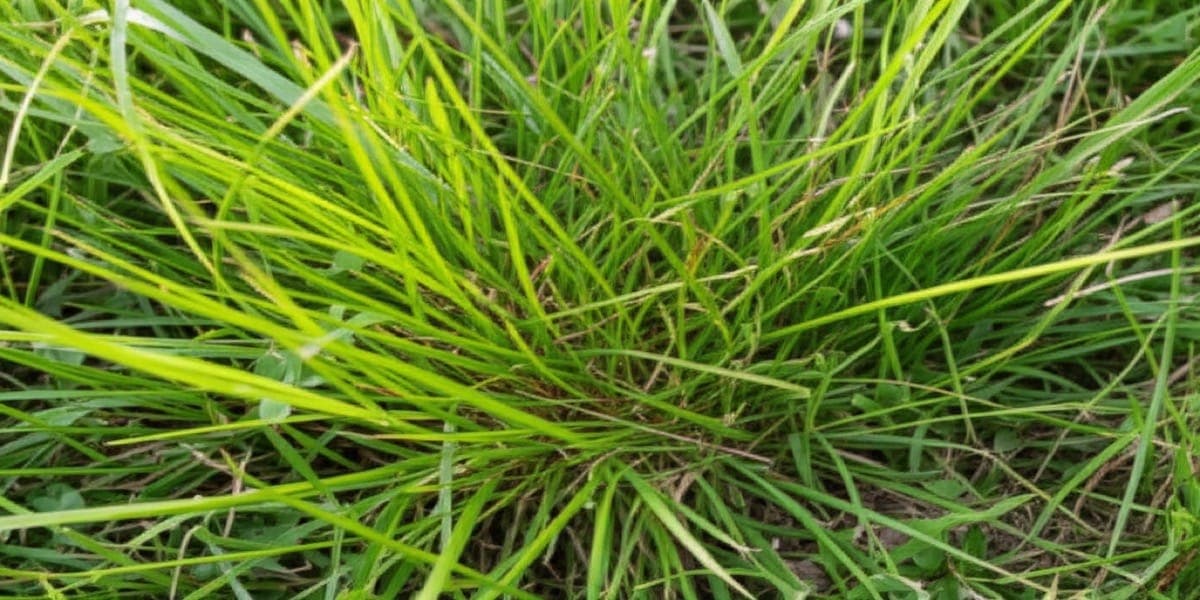
Close-up of crabgrass growing in lawn

What Is Crabgrass and Why Is It So Problematic?

Crabgrass is an annual grass weed that germinates from seed each spring when soil temperatures reach 55-60°F, grows aggressively through summer, produces thousands of seeds, then dies with the first hard frost. Its “crab-like” growth pattern features stems that spread outward from a central point, crowding out desirable grass. A single crabgrass plant can produce up to 150,000 seeds, ensuring next year’s invasion is even worse.

Crabgrass Life Cycle in Fort Wayne

StageTimingWhat Happens
Seed DormancyNovember - MarchSeeds overwinter in soil
GerminationApril - MaySoil temps reach 55°F
Seedling GrowthMay - JunePlants establish
Rapid GrowthJune - AugustPlants spread aggressively
Seed ProductionAugust - SeptemberEach plant makes thousands of seeds
DeathOctober - NovemberFirst hard frost kills plants

Why Crabgrass Thrives in Northeast Indiana

Several factors make Fort Wayne lawns vulnerable:

  • Climate: Hot summers favor crabgrass growth
  • Soil: Seeds survive Indiana winters easily
  • Lawn stress: Summer drought creates openings
  • Thin turf: Any bare spot invites crabgrass
  • Mowing habits: Cutting too short favors crabgrass

Identifying Crabgrass

Visual Characteristics:

  • Light green to yellow-green color
  • Coarse texture compared to turf
  • Spreads in star or crab pattern
  • Wider blades than most lawn grasses
  • Grows faster than surrounding grass
  • Low-growing, mat-forming habit

When It Appears:

  • First visible: Late May to early June
  • Most noticeable: July through September
  • Dies and turns brown: After first frost

When Should You Apply Pre-Emergent Herbicide in Fort Wayne?

Apply pre-emergent herbicide in Fort Wayne when soil temperatures reach 50-55°F at a 4-inch depth for 3-5 consecutive days, typically between late March and mid-April. The product must be in place before crabgrass seeds germinate; applying after germination begins renders pre-emergent ineffective. Timing is everything—too early and the product breaks down before crabgrass germinates, too late and seeds have already sprouted.

Determining Exact Timing

Soil Temperature Method:

  1. Use a soil thermometer
  2. Check at 4-inch depth
  3. Measure in morning (before sun warms surface)
  4. Look for consistent 50-55°F readings
  5. Apply within 1-2 weeks of reaching threshold

Natural Indicator Method:

  • Forsythia bushes beginning to bloom
  • Soil becoming workable after winter freeze
  • Daffodils emerging
  • Other spring bulbs showing growth

Fort Wayne Pre-Emergent Calendar

Timing WindowSituationAction
March 15-31Warm springApply if soil temps reached
April 1-15Normal springTypical application window
April 15-30Cool springLast chance for effective application
May 1+Too latePre-emergent won’t prevent germination

Application Guidelines

First Application:

  • Timing: When soil temps reach 50-55°F
  • Rate: Per product label
  • Coverage: Entire lawn uniformly

Split Application (Recommended):

  • First application: Full rate at 50°F
  • Second application: Half rate 6-8 weeks later
  • Provides extended protection through summer
  • Especially helpful for heavy crabgrass pressure

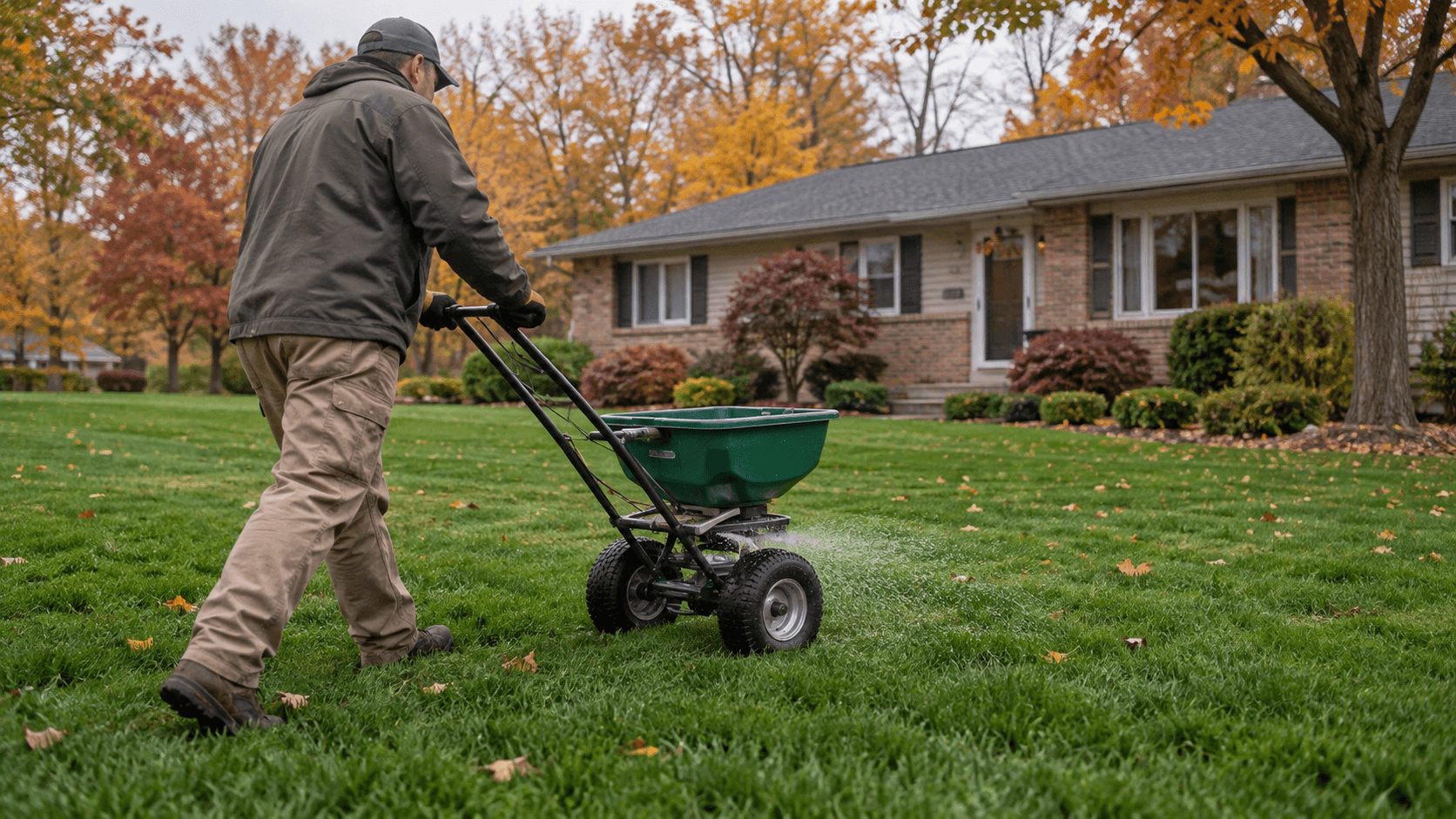
Spreader applying pre-emergent herbicide to lawn

What Are the Best Pre-Emergent Herbicides for Crabgrass?

The most effective pre-emergent herbicides for crabgrass control contain active ingredients like prodiamine (Barricade), pendimethalin (Scotts Halts), or dithiopyr (Dimension), which create a chemical barrier in the soil that kills germinating seedlings before they emerge. Product choice depends on your specific needs—some offer longer residual control, while others allow for later application with some post-emergent activity.

Top Pre-Emergent Active Ingredients

Active IngredientTrade NamesStrengthsConsiderations
ProdiamineBarricadeLongest residual (6+ months), excellent controlMust apply before germination
PendimethalinScotts Halts, PendulumWidely available, effectiveShorter residual, may need reapplication
DithiopyrDimensionSome post-emergent activity on young crabgrassMore expensive
IsoxabenGalleryControls broadleaf weeds tooLess effective on grassy weeds

Product Selection Guide

For Maximum Prevention:

  • Choose prodiamine (Barricade)
  • Apply at first timing window
  • Best for lawns with heavy crabgrass history
  • One application often sufficient

For Flexibility:

  • Choose dithiopyr (Dimension)
  • Can apply slightly late and still get control
  • Kills very young crabgrass seedlings
  • Good for unpredictable springs

For Convenience:

  • Choose combination products (fertilizer + pre-emergent)
  • Apply during normal spring feeding
  • Products like Scotts Turf Builder with Halts
  • Good for homeowners wanting simplicity

Application Best Practices

  1. Water in properly - Most pre-emergents need 0.5 inch rain or irrigation within 24-48 hours
  2. Apply uniformly - Gaps in coverage = crabgrass opportunities
  3. Check label rates - Over-application can damage turf
  4. Mark calendar - Note application date for proper timing next year
  5. Store properly - Opened products can degrade

What Should You Do If Pre-Emergent Missed the Window?

If you missed the pre-emergent window, you have two options: apply a post-emergent herbicide to kill young crabgrass plants once they appear, or focus on cultural practices like proper mowing height and watering to outcompete crabgrass while accepting some presence this year. Post-emergent herbicides work best on young crabgrass (1-3 tillers) and become less effective as plants mature.

Post-Emergent Herbicide Options

Quinclorac (Drive XLR8):

  • Most effective post-emergent for crabgrass
  • Works on young and mature plants
  • Also controls other grassy weeds
  • Safe for most cool-season grasses
  • May require 2 applications

Fenoxaprop (Acclaim Extra):

  • Excellent for young crabgrass
  • Less effective on mature plants
  • Safe for Kentucky bluegrass and fescue
  • NOT safe for fine fescue

MSMA (Restricted in many states):

  • Traditional post-emergent
  • Check local regulations
  • Being phased out
  • Professional use only

Post-Emergent Application Timing

Crabgrass StageTillersControl DifficultyBest Product
Seedling1-2EasyAny labeled product
Young3-5ModerateQuinclorac preferred
Mature5+DifficultQuinclorac, may need 2 apps
SeedingManyVery difficultOften best to wait for frost

Cultural Management If You Missed Treatment

If chemical control isn’t preferred or effective:

  1. Raise mowing height - 3.5-4 inches shades crabgrass
  2. Maintain healthy turf - Thick grass crowds out weeds
  3. Water deeply and infrequently - Favors deep-rooted turf
  4. Avoid fertilizing - Don’t feed the crabgrass
  5. Hand-pull small patches - Before seed production
  6. Plan for next year - Mark calendar for pre-emergent

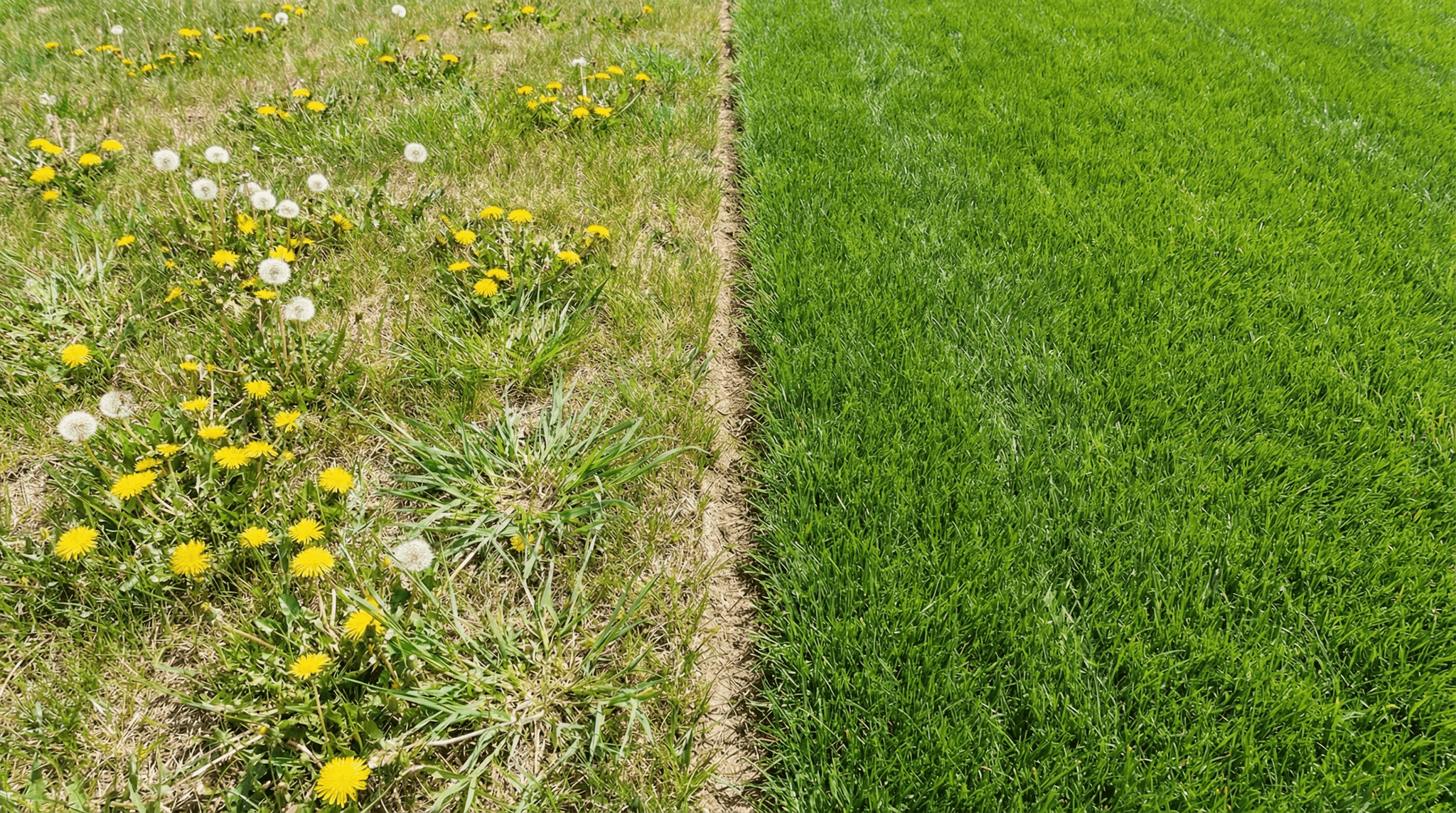
Lawn showing difference between treated and untreated areas

How Does a Thick, Healthy Lawn Prevent Crabgrass?

A thick, healthy lawn is your best long-term crabgrass defense because crabgrass seeds require sunlight and bare soil to germinate. Dense turf shades the soil, blocks light from reaching weed seeds, and leaves no room for opportunistic weeds to establish. Lawns maintained at 3+ inches with good density rarely develop significant crabgrass problems even without herbicides.

How Turf Density Affects Crabgrass

Lawn ConditionCrabgrass RiskWhy
Thin, patchyVery highBare soil and light reach seeds
Moderate densityModerateSome openings for establishment
Dense, thickLowNo light reaches soil surface
Scalped/low cutVery highGrass stressed, soil exposed

Building a Crabgrass-Resistant Lawn

Mowing Practices:

  • Maintain 3-3.5 inch height minimum
  • Never remove more than 1/3 of blade
  • Keep blades sharp for clean cuts
  • Mow frequently during rapid growth

Watering Practices:

  • Deep watering (1 inch per week)
  • Infrequent applications (not daily)
  • Early morning timing
  • Encourage deep root growth

Fertilization Practices:

  • Follow proper schedule for Fort Wayne climate
  • Avoid excess nitrogen in summer
  • Fall fertilization builds root reserves
  • Balanced nutrition supports density

Overseeding:

  • Thicken thin areas each fall
  • Quality seed appropriate for site
  • September is ideal in Fort Wayne
  • Maintains dense turf naturally

Addressing Problem Areas

High-risk areas that need extra attention:

  • Lawn edges - Often thin, extra vulnerable
  • Slopes - Water runs off, grass stressed
  • High traffic areas - Compaction creates openings
  • Areas near pavement - Heat stress thins grass
  • Shade-to-sun transitions - Grass struggles in between

What Causes Crabgrass to Return Year After Year?

Crabgrass returns annually because each mature plant produces up to 150,000 seeds that remain viable in soil for years, waiting for the right conditions to germinate. Even one plant that goes to seed before dying ensures next year’s crop. Breaking the cycle requires several consecutive years of perfect prevention—one missed year restarts the cycle with a fresh seed bank.

The Seed Bank Problem

Seed Viability:

  • Crabgrass seeds can survive 3+ years in soil
  • Seeds at various depths germinate over multiple years
  • One season of control doesn’t empty the seed bank
  • 3-5 years of prevention needed to significantly reduce seed bank

Seed Production:

  • Single plant: up to 150,000 seeds
  • Small patch: millions of seeds
  • Heavy infestation: astronomical seed production
  • Seeds spread by wind, water, mowing, traffic

Breaking the Cycle

YearActionExpected Result
Year 1Perfect pre-emergent timingNo new seeds produced
Year 2Pre-emergent, remaining seeds germinateMuch reduced pressure
Year 3Pre-emergent, seed bank depletingMinimal crabgrass
Year 4Pre-emergent, mostly cleanVery few new plants
Year 5+Maintenance preventionLong-term control

Common Reasons for Failure

  1. Skipped a year - One miss restarts the cycle
  2. Late application - Seeds germinated before product applied
  3. Spotty coverage - Gaps in application allow germination
  4. No watering in - Product never activated
  5. Wrong product - Used post-emergent thinking it was pre-emergent
  6. Adjacent infestation - Seeds blow in from neighbor’s lawn

Crabgrass going to seed in late summer

Can You Seed Your Lawn and Apply Crabgrass Preventer?

Traditional pre-emergent herbicides prevent all seed germination, including desirable grass seed, so you cannot seed and apply most pre-emergents at the same time. However, some products like Tenacity (mesotrione) allow simultaneous seeding and crabgrass prevention. For most homeowners, the solution is strategic timing—seed in fall when pre-emergent isn’t needed, or wait 2-3 months after spring pre-emergent to overseed.

The Conflict

Standard Pre-Emergents:

  • Kill any germinating seed
  • Include grass seed you plant
  • Must wait 2-4 months after application
  • Or skip pre-emergent where seeding

The Dilemma:

  • Spring = crabgrass prevention time
  • Fall = overseeding time
  • What about bare spots needing repair in spring?

Solutions for Seeding

Option 1: Fall Seeding (Recommended)

  • Seed in September
  • No pre-emergent conflict
  • Best germination conditions
  • Apply pre-emergent the following spring

Option 2: Tenacity (Mesotrione)

  • Labeled for use at seeding
  • Provides crabgrass control
  • Allows grass seed germination
  • Professional product, may need applicator license

Option 3: Skip Bare Areas

  • Apply pre-emergent to established lawn
  • Avoid bare spots needing seed
  • Hand-treat any crabgrass in those spots
  • Seed bare areas in fall

Option 4: Accept the Trade-off

  • Choose seeding over prevention
  • Be prepared for some crabgrass
  • Use post-emergent if needed
  • Plan better timing next year

Timing After Pre-Emergent Application

ProductWait Time Before Seeding
Prodiamine (Barricade)4+ months
Pendimethalin (Halts)2-3 months
Dithiopyr (Dimension)2-3 months
TenacitySeed at application

What Are the Most Common Crabgrass Control Mistakes?

The most common crabgrass control mistake is applying pre-emergent too late, after soil temperatures have already warmed enough for germination to begin. Other frequent errors include applying too early (product degrades before crabgrass season), uneven application leaving gaps, failing to water in the product, and expecting pre-emergent to kill existing plants.

Top 10 Crabgrass Control Mistakes

  1. Applying pre-emergent too late - Most common mistake
  2. Applying too early - Product breaks down before needed
  3. Not watering in product - Pre-emergent never activates
  4. Uneven application - Gaps allow crabgrass through
  5. Expecting it to kill existing plants - Pre-emergent only prevents
  6. Using wrong product rate - Under-application fails
  7. Forgetting second application - One treatment may not last all season
  8. Aerating after application - Breaks the barrier
  9. Not maintaining healthy turf - Chemical alone isn’t enough
  10. Giving up after one failure - Multi-year effort required

Understanding Product Limitations

Pre-Emergent Limitations:

  • Only prevents germination
  • Won’t kill existing crabgrass
  • Requires activation (water)
  • Limited residual (varies by product)
  • Broken by aeration or soil disturbance

Post-Emergent Limitations:

  • Less effective on mature plants
  • May require multiple applications
  • Can stress desirable grass if misused
  • Doesn’t prevent future germination
  • Dead crabgrass still looks bad

Professional lawn care technician applying crabgrass treatment

Should You Handle Crabgrass Control Yourself or Hire a Professional?

DIY crabgrass control works well for homeowners who can commit to precise timing, proper application technique, and consistent annual treatment, while professional service makes sense for those who want guaranteed results without the hassle of monitoring soil temperatures and storing products correctly. The key to success with either approach is consistency year after year.

When DIY Makes Sense

  • You have time to monitor soil temperature
  • Small to medium lawn size
  • Willing to research and learn
  • Can commit to annual timing
  • Want to save on service costs
  • Enjoy lawn care as a hobby

When Professional Service Makes Sense

  • Busy schedule limits attention to timing
  • Heavy crabgrass history requiring expertise
  • Want guaranteed results
  • Prefer commercial-grade products
  • Large property or complex landscape
  • Multiple lawn issues need addressing

Professional Service Advantages

FactorDIYProfessional
TimingMust monitor yourselfTechnician tracks conditions
ProductsConsumer-gradeProfessional-grade available
EquipmentHomeowner spreaderCommercial calibrated equipment
ExpertiseLearning curveTrained technicians
GuaranteeNoneOften guaranteed
CostLower (if successful)Monthly service fee

At Minnick Lawn & Landscaping, our lawn care services include professional crabgrass prevention programs timed perfectly for Fort Wayne’s spring conditions.


Take Control of Your Crabgrass Problem

Winning the battle against crabgrass requires commitment to prevention rather than reaction. Start with properly timed pre-emergent applications, maintain a thick healthy lawn, and stay consistent year after year. Within a few seasons, you can dramatically reduce or eliminate crabgrass from your Fort Wayne lawn.

Need help developing a crabgrass control strategy for your property? We’re here to help.

Request a Free Quote or call us at (260) 450-4676 to discuss professional crabgrass prevention.


Frequently Asked Questions

Is crabgrass bad for my lawn?

Crabgrass itself doesn’t harm existing grass directly, but it aggressively competes for water, nutrients, and space. More importantly, it dies each winter leaving ugly bare patches, and each plant produces thousands of seeds ensuring worse problems next year.

Will crabgrass go away on its own?

Crabgrass dies with the first frost each year, but it doesn’t “go away.” The seeds it produced remain in the soil and germinate the following spring. Without prevention, crabgrass populations typically increase year over year.
Can I pull crabgrass by hand?

You can pull individual plants, but it’s labor-intensive and must be done before seed production (typically August). Pulling is practical for small patches or isolated plants but not for significant infestations.

Why did my pre-emergent fail?

Common reasons include: applying too late, not watering in product, uneven application, wrong product rate, or conditions that caused rapid product breakdown. Also ensure you actually used pre-emergent and not a different type of herbicide.

Is crabgrass the same as quackgrass?

No. Crabgrass is an annual that dies each winter. Quackgrass is a perennial that spreads by underground rhizomes and survives year to year. They require different control strategies.

Does overseeding help control crabgrass?

Overseeding helps long-term by thickening your lawn, which naturally suppresses crabgrass. However, you cannot overseed and apply most pre-emergents simultaneously. The best approach is fall overseeding followed by spring pre-emergent application.

How long does pre-emergent last in the soil?

Residual control varies by product: prodiamine (Barricade) provides 4-6+ months, pendimethalin (Halts) provides 2-4 months, and dithiopyr (Dimension) provides 3-4 months. Split applications can extend protection.

Can crabgrass spread from my neighbor’s yard?

Yes, crabgrass seeds can spread via wind, water, mowing equipment, and foot traffic. Even with perfect control in your yard, seeds from neighboring properties can cause new infestations. This is why long-term prevention and thick turf are essential.


Sources


Adam Minnick is the owner of Minnick Lawn & Landscaping, serving Fort Wayne, Auburn, and Northeast Indiana since 2018. With years of experience in professional lawn care, Adam and his team help hundreds of local homeowners achieve beautiful, healthy lawns.