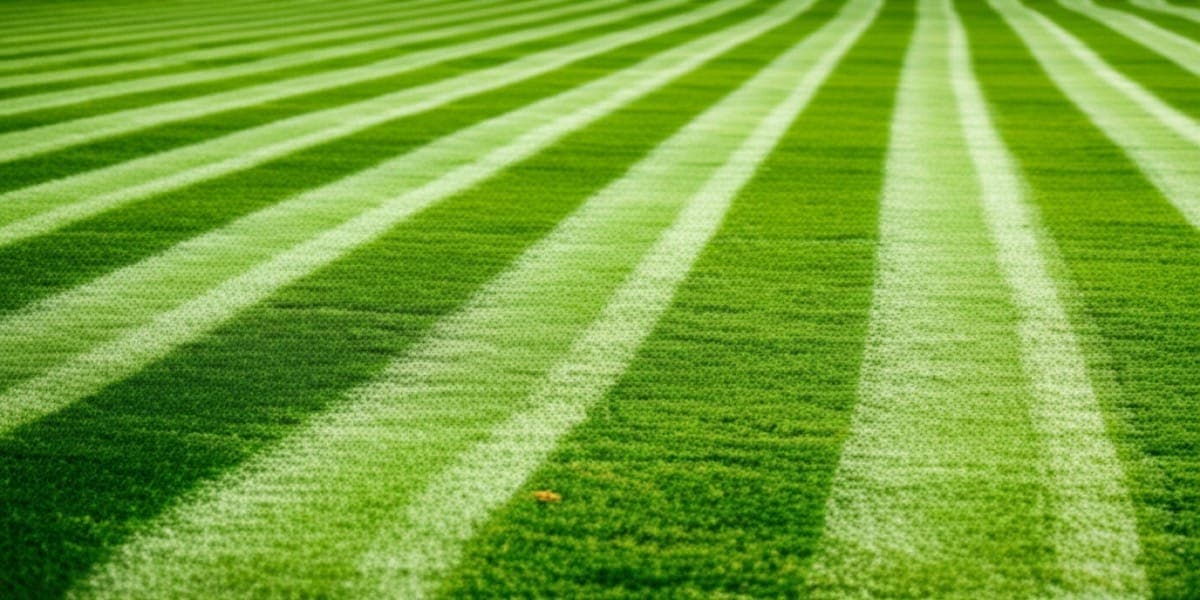
Beautiful lawn with professional striping pattern on Fort Wayne residential property

Those stunning striped patterns you see on professional sports fields and golf courses aren’t just for the pros. With the right technique and equipment, any Fort Wayne homeowner can create eye-catching lawn stripes that make their property stand out in the neighborhood. The secret isn’t complicated—it’s simply about bending grass blades in different directions to create light and dark contrasts.

In this comprehensive guide, I’ll walk you through everything you need to know about lawn striping, from the basic science behind why it works to advanced patterns that will have your neighbors asking for your secrets. Whether you’re using a basic push mower or a professional-grade zero-turn, you can achieve beautiful results with these proven techniques.

Lawn mower creating stripe pattern on healthy green grass

What Causes Lawn Stripes and How Does Striping Work?

Lawn stripes are created by bending grass blades in opposite directions as you mow. When grass blades bend toward you, they appear darker because you’re seeing the shadowed side of the blade. When grass blades bend away from you, they appear lighter because sunlight reflects off the top of the blades. This simple light-and-shadow effect creates the contrasting stripes that make striped lawns so visually appealing.

The key to effective striping is consistency. Every pass with your mower must bend the grass uniformly in the direction you’re traveling. Most mowers naturally create some striping effect, but adding a lawn roller or stripe kit dramatically enhances the contrast by pressing the grass down more firmly.

The Science Behind Stripe Visibility

Several factors affect how visible your stripes appear:

  • Grass height - Taller grass (3+ inches) bends more easily and creates better contrast
  • Grass type - Cool-season grasses like Kentucky bluegrass stripe best
  • Sun angle - Stripes are most visible when viewed with the sun behind you
  • Moisture - Well-watered grass is more pliable and stripes better
  • Mowing frequency - Regular mowing keeps grass healthy for better stripes

Best Grass Types for Striping in Northeast Indiana

Not all grasses stripe equally well. Here’s how common Fort Wayne grass types rank:

Grass TypeStriping QualityNotes
Kentucky BluegrassExcellentThe gold standard for striping
Perennial RyegrassExcellentFine blades stripe beautifully
Tall FescueGoodStiffer blades require more effort
Fine FescueGoodWorks well in shade areas
ZoysiaFairCoarser texture limits contrast

What Equipment Do You Need for Professional-Looking Stripes?

To create professional-looking lawn stripes, you need a sharp mower blade, consistent mowing speed, and ideally a lawn striping kit or roller attachment. While any mower can create basic stripes, adding a dedicated striping attachment increases contrast by 30-50% and makes patterns more defined and longer-lasting.

At minimum, you need a well-maintained mower with sharp blades. Dull blades tear grass rather than cutting it cleanly, which reduces stripe quality and stresses your lawn. Beyond that, the right striping equipment can transform your results.

Lawn Striping Kit Options

Roller Attachments - The most effective option

  • Heavy rollers (40-100 lbs) attach behind the mower deck
  • Press grass firmly in the direction of travel
  • Create the most defined, longest-lasting stripes
  • Available for most mower brands

Brush or Flap Kits - Budget-friendly alternative

  • Rubber flaps or bristle brushes bend grass
  • Lighter weight and easier to install
  • Good results on healthy, tall grass
  • May need more frequent replacement

DIY Options - For the budget-conscious

  • PVC pipe filled with sand or concrete
  • Weighted roller attached with chains
  • Can be effective but may void mower warranty
  • Requires careful construction for safety
Mower TypeBest Striping OptionApproximate Cost
Push MowerBrush attachment or DIY roller$30-80
Self-PropelledTow-behind roller$100-200
Riding MowerDedicated stripe kit$150-400
Zero-TurnCommercial stripe kit$200-600

Close-up of lawn striping kit attached to riding mower

How Do You Create Basic Lawn Stripes Step by Step?

Creating basic lawn stripes starts with mowing your first pass along the longest straight edge of your property, then making subsequent passes parallel to the first, alternating directions with each row. The key is maintaining consistent speed and straight lines throughout the entire mowing session, which creates the uniform stripe pattern you’re looking for.

Here’s the step-by-step process for creating professional-looking stripes:

Step 1: Prepare Your Lawn

Before you start striping, ensure your lawn is ready:

  1. Mow at the right height - Set your mower to 3-3.5 inches
  2. Water the day before - Well-hydrated grass bends better
  3. Remove debris - Clear sticks, toys, and obstacles from the lawn
  4. Plan your pattern - Decide which direction your stripes will run

Step 2: Mow the Perimeter First

Create a clean border by mowing two passes around the entire perimeter of your lawn. This gives you turning room at the end of each stripe and creates a finished edge. Always mow the perimeter in the same direction to avoid visible circular patterns.

Step 3: Start Your First Stripe

Position your mower at one end of the lawn, aligned with a fixed reference point:

  • Fence line or property boundary
  • Edge of driveway or sidewalk
  • House wall or foundation
  • Stakes placed at each end for guidance

Mow in a straight line at consistent speed, keeping your eye on a point at the far end of the lawn rather than looking down at the mower.

Step 4: Create Alternating Passes

At the end of each pass:

  1. Lift the mower deck (if possible) or slow down in the turn
  2. Make a wide Y-turn into the next row
  3. Align your wheel with the edge of the previous pass
  4. Mow back in the opposite direction

The alternating directions are what create the stripe contrast. Grass bent toward you appears dark; grass bent away appears light.

Step 5: Finish with Perimeter Passes

After completing all stripes, make one or two final passes around the perimeter to clean up turn marks and create a polished edge.

What Are the Best Striping Patterns for Different Yard Sizes?

The best striping pattern for your yard depends on its size, shape, and any obstacles present. Straight parallel stripes work best for small to medium yards, while larger properties can handle more complex patterns like checkerboards, diamonds, or waves that showcase the expansive lawn area.

Patterns for Small Yards (Under 3,000 sq ft)

Small yards benefit from simple patterns that don’t overwhelm the space:

Basic Stripes - Clean, professional look

  • Run stripes parallel to the longest edge
  • Creates illusion of length
  • Easy to maintain week after week

Diagonal Stripes - Adds visual interest

  • Cut corner to corner at 45 degrees
  • Makes yard appear larger
  • Slightly more challenging to execute

Patterns for Medium Yards (3,000-10,000 sq ft)

Medium-sized lawns can handle more variety:

Checkerboard - Classic sports field look

  • Mow straight stripes in one direction
  • Make second pass perpendicular to first
  • Creates alternating light/dark squares

Double-Cut Stripes - Enhanced contrast

  • Mow stripes twice in same direction
  • Second pass reinforces grass bend
  • More defined appearance

Patterns for Large Yards (Over 10,000 sq ft)

Large properties can showcase advanced patterns:

Diamond Pattern - Stunning visual effect

  • First pass: diagonal stripes at 45 degrees
  • Second pass: opposite diagonal (90 degrees to first)
  • Creates diamond/argyle appearance

Curved Waves - Artistic statement

  • Requires careful planning and skill
  • Follow natural contours or create flowing curves
  • Most impressive when viewed from elevation

Aerial view of checkerboard lawn striping pattern

How Often Should You Mow to Maintain Great Stripes?

For the best-looking stripes, mow your Fort Wayne lawn every 5-7 days during peak growing season (April through June), and every 7-10 days during slower growth periods. Consistent mowing keeps grass at optimal height for bending and prevents the overgrowth that makes stripes look uneven or disappear entirely.

The frequency depends on several factors:

Factors Affecting Mowing Frequency

  • Season - Spring and fall growth is fastest in Northeast Indiana
  • Rainfall - More moisture means faster growth
  • Fertilization - Recently fertilized lawns grow more quickly
  • Grass type - Kentucky bluegrass grows faster than fescue
  • Shade - Shaded areas grow slower than full sun

Mowing Schedule for Optimal Stripes

SeasonGrowth RateMowing Frequency
Early Spring (April)ModerateEvery 6-7 days
Peak Spring (May-June)FastEvery 4-5 days
Summer (July-August)SlowEvery 7-10 days
Fall (September-October)ModerateEvery 5-7 days
Late Fall (November)Very SlowEvery 10-14 days

The One-Third Rule Applies

Never remove more than one-third of the grass blade at any mowing. If you’ve missed a week and grass is too tall:

  1. Raise the mower height for the first cut
  2. Wait 3-4 days
  3. Lower height and mow again
  4. Resume normal schedule

Cutting too much at once stresses grass and ruins stripe appearance.

Should You Change Your Stripe Direction Each Week?

Yes, you should rotate your mowing pattern by 90 degrees every 2-4 weeks to prevent soil compaction, grass grain, and wear patterns from developing. Alternating directions also encourages grass to grow more upright rather than leaning permanently in one direction, which improves overall lawn health and stripe quality.

Benefits of Rotating Patterns

Prevents Soil Compaction

  • Mower wheels traveling the same path compact soil
  • Compacted soil reduces root growth and water absorption
  • Rotation distributes weight across different areas

Eliminates Grass Grain

  • Repeated mowing in one direction causes grass to lean
  • Leaning grass produces uneven cuts and patchy appearance
  • Rotation encourages upright growth

Reduces Rut Formation

  • Heavy mowers can create visible wheel tracks
  • Rotation prevents permanent ruts from forming
  • Maintains smooth, even lawn surface
WeekPattern Direction
Week 1-2North-South stripes
Week 3-4East-West stripes
Week 5-6Diagonal (NE-SW)
Week 7-8Diagonal (NW-SE)
RepeatStart cycle again

Lawn showing stripe pattern rotation for healthy grass growth

What Mistakes Should You Avoid When Striping Your Lawn?

The most common lawn striping mistake is mowing too fast, which creates uneven grass height, inconsistent bending, and jagged stripe edges. Other frequent errors include mowing at inconsistent heights, using dull blades, striping when grass is too short, and making sharp turns that tear turf. Taking your time and maintaining equipment prevents most striping problems.

Top 10 Lawn Striping Mistakes

  1. Mowing too fast - Reduces cut quality and stripe definition
  2. Dull mower blades - Tears grass, causing brown tips
  3. Cutting grass too short - Short grass doesn’t bend well
  4. Inconsistent mowing height - Creates uneven stripe contrast
  5. Sharp turns on turf - Tears grass and creates bare spots
  6. Mowing wet grass - Clumps and uneven cuts
  7. Skipping perimeter cleanup - Messy turn marks visible
  8. Not maintaining straight lines - Wobbly stripes look amateur
  9. Same pattern every week - Causes grass grain and compaction
  10. Ignoring lawn health - Unhealthy grass won’t stripe well

How to Fix Common Problems

Stripes aren’t visible enough?

  • Raise mowing height to 3.5 inches
  • Add a heavier roller attachment
  • Ensure grass is well-watered
  • Check that you’re alternating directions

Stripes fade quickly?

  • Use a weighted roller for more bend
  • Mow more frequently to reinforce pattern
  • Consider overseeding with Kentucky bluegrass

Uneven stripe width?

  • Maintain consistent speed throughout
  • Use a reference point to keep lines straight
  • Overlap previous pass by 1-2 inches

Can You Stripe Any Lawn, or Are There Limitations?

While any healthy lawn can be striped to some degree, certain conditions make it challenging or impractical. Lawns with severe slopes, extensive shade, drought stress, or predominantly warm-season grass types may not produce satisfying stripe results regardless of technique or equipment used.

Conditions That Limit Striping Success

Slope and Terrain

  • Steep slopes (over 15%) are dangerous to mow in straight lines
  • Uneven terrain creates inconsistent stripe appearance
  • Terraced lawns may need pattern modification

Shade Coverage

  • Heavy shade produces thin, weak grass
  • Thin grass doesn’t bend uniformly
  • Consider shade-tolerant seed mixes if striping is important

Grass Health Issues

  • Drought-stressed lawns have brittle blades that break rather than bend
  • Disease-affected areas create brown patches in stripe patterns
  • Weed-heavy lawns have inconsistent texture and color

Grass Type Limitations

  • Warm-season grasses (Bermuda, Zoysia) have stiffer blades
  • Coarse-textured grasses don’t show contrast as well
  • Mixed grass species create inconsistent results

When to Skip Striping

It’s better to focus on basic lawn health rather than striping when:

  • Lawn is recovering from drought or disease
  • You’ve recently overseeded or renovated
  • Grass hasn’t reached optimal height yet
  • Extreme heat or cold stress is present

Professional landscaper creating stripes on Fort Wayne lawn

How Do Professional Lawn Services Achieve Perfect Stripes?

Professional lawn care companies achieve perfect stripes through a combination of commercial-grade equipment, precise technique, and consistent maintenance schedules. At Minnick Lawn & Landscaping, we use heavy-duty stripe kits on all our mowers, maintain blade sharpness weekly, and follow strict mowing protocols that ensure every stripe is straight and evenly spaced.

Professional Equipment Advantages

Commercial Mowers

  • Higher blade tip speeds for cleaner cuts
  • Heavier construction for better stripe impression
  • More powerful engines maintain consistent speed

Professional Stripe Kits

  • Weighted rollers designed for specific mower models
  • Durable construction for daily commercial use
  • Adjustable height and pressure settings

Regular Maintenance

  • Blades sharpened or replaced weekly
  • Deck leveling checked regularly
  • All components inspected before each use

Professional Techniques

  1. Pre-mow planning - Scout property for obstacles and plan pattern
  2. Consistent speed - Maintain exact same pace throughout
  3. Reference points - Use fixed objects to keep lines straight
  4. Quality checking - Walk property after mowing to verify results

If you want professional-looking stripes without the work, our lawn mowing services include precision striping on every visit.


Ready for a Professionally Striped Lawn?

Creating beautiful lawn stripes is achievable for any Fort Wayne homeowner willing to invest time in proper technique and equipment. Start with basic parallel stripes, master the fundamentals, and gradually work up to more complex patterns as your skills develop.

If you’d prefer to enjoy a perfectly striped lawn without doing the work yourself, we’re here to help.

Request a Free Quote or call us at (260) 450-4676 to discuss professional lawn care with precision striping.


Frequently Asked Questions

Do lawn stripes damage the grass?

No, properly executed lawn striping does not damage grass. The grass blades are simply bent, not broken, and will return to upright position within a day or two. In fact, the consistent mowing required for good stripes promotes overall lawn health.

How long do lawn stripes last?

Lawn stripes typically remain visible for 3-5 days after mowing, depending on grass type, weather conditions, and foot traffic. Regular mowing every 5-7 days maintains the pattern continuously throughout the growing season.

Can I stripe my lawn with a push mower?

Yes, you can create stripes with a push mower, though the results may be less pronounced than with a riding mower or zero-turn. Adding a push-behind roller or brush attachment significantly improves stripe visibility with walk-behind mowers.

What’s the best time of day to mow for stripes?

The best time to mow for stripes is mid-to-late morning (9-11 AM) after dew has dried. Wet grass doesn’t bend as uniformly, and afternoon heat stresses both grass and the person mowing. Stripes are most visible when viewed in morning or evening light.

Will striping work on my shaded lawn?

Striping can work on shaded lawns, but results are typically less dramatic. Shade-grown grass tends to be thinner and more delicate, which limits how well it holds a bent position. Focus on maintaining healthy grass density before attempting complex patterns.

How do I fix crooked stripes?

Crooked stripes can be fixed on your next mowing by focusing on a fixed point at the far end of the lawn rather than watching the mower. Using stakes at each end as reference points also helps maintain straight lines.

Does grass type matter for striping?

Yes, grass type significantly affects striping results. Kentucky bluegrass and perennial ryegrass produce the best stripes due to their fine texture and flexibility. Tall fescue works adequately, while warm-season grasses like Bermuda are more challenging to stripe.

Can I stripe my lawn if it has brown patches?

You can technically stripe a lawn with brown patches, but the pattern will highlight the damage rather than hide it. It’s better to address the underlying cause of brown patches (disease, drought, or insect damage) before focusing on aesthetic striping.


Sources


Adam Minnick is the owner of Minnick Lawn & Landscaping, serving Fort Wayne, Auburn, and Northeast Indiana since 2018. With years of experience in professional lawn care, Adam and his team help hundreds of local homeowners achieve beautiful, healthy lawns.