Yes, a layer of mulch in late fall is one of the simplest ways to protect perennial beds in Fort Wayne through winter. It evens out soil temperature swings, slows the freeze-thaw cycles that can push plant crowns upward, and holds moisture around roots when the ground is cold. In Northeast Indiana's USDA Zone 5b, where heavy clay soil and repeated winter thaws are the norm, a well-timed mulch layer helps your perennials come back stronger in spring.
Why Does Winter Mulch Matter for Perennial Beds in Fort Wayne?
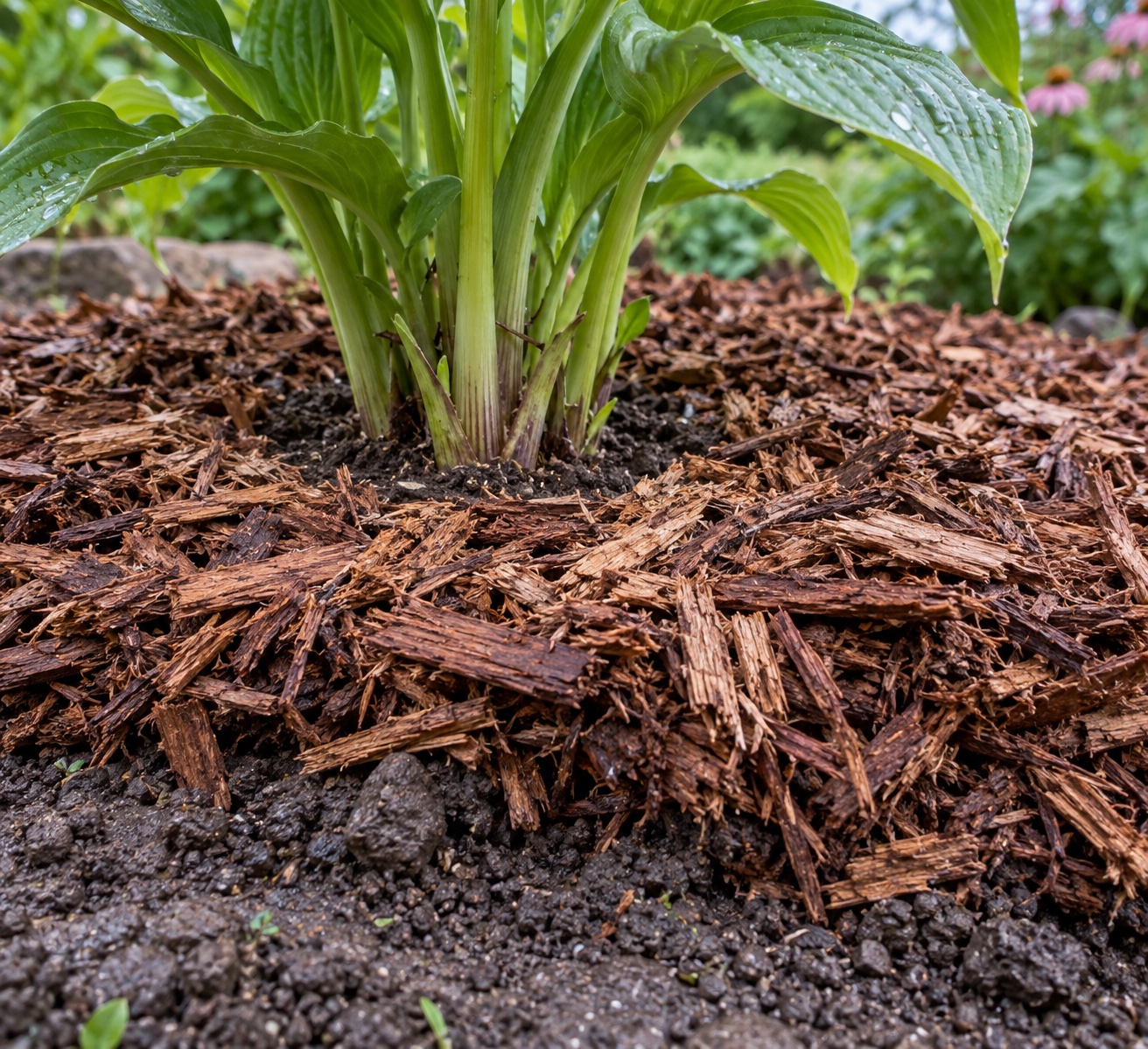
Perennials survive winter underground, so what matters most is the soil around their roots and crowns. Northeast Indiana often swings between freezing nights and mild afternoons in the same week. Clay-heavy soil holds water, and that water freezes, thaws, and freezes again, a pattern that can lift shallow-rooted plants and expose their roots to cold, drying air.
Mulch works as a blanket that keeps the soil temperature steadier instead of warming it. Rather than protecting plants from cold, its real job is to slow down the swings that cause damage.
Mulch won't keep your garden warm. It keeps the soil steady, and steady soil is what perennials need to survive a Fort Wayne winter.
When Is the Right Time to Mulch Perennial Beds in Northeast Indiana?
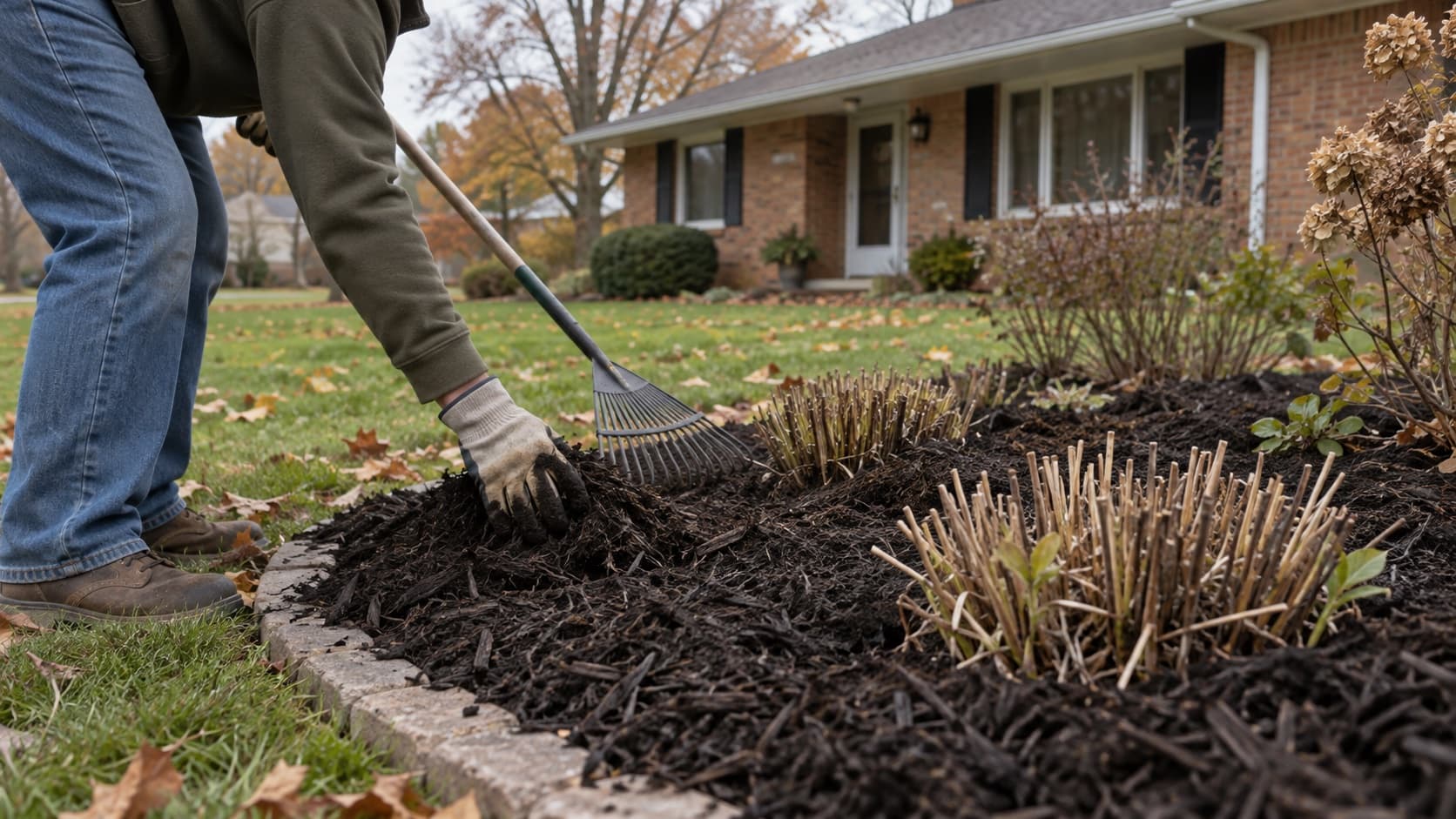
Timing is the part most homeowners get wrong. Mulching too early, while the soil is still warm, can create a cozy shelter for mice and voles and keep plants from hardening off. A common rule of thumb is to wait until after a few hard frosts, when the top layer of soil has started to cool and perennial foliage has died back. In the Fort Wayne area, that often means sometime in November, though it varies year to year with the weather.
- Wait for cool soil: Let the ground cool down before covering it.
- Watch the foliage: Many perennials signal readiness when the leaves yellow and collapse.
- Finish before deep freeze: Aim to wrap up before the ground freezes solid, so the work is easy and the mulch settles in evenly.
How Deep Should Mulch Be Over Perennials?
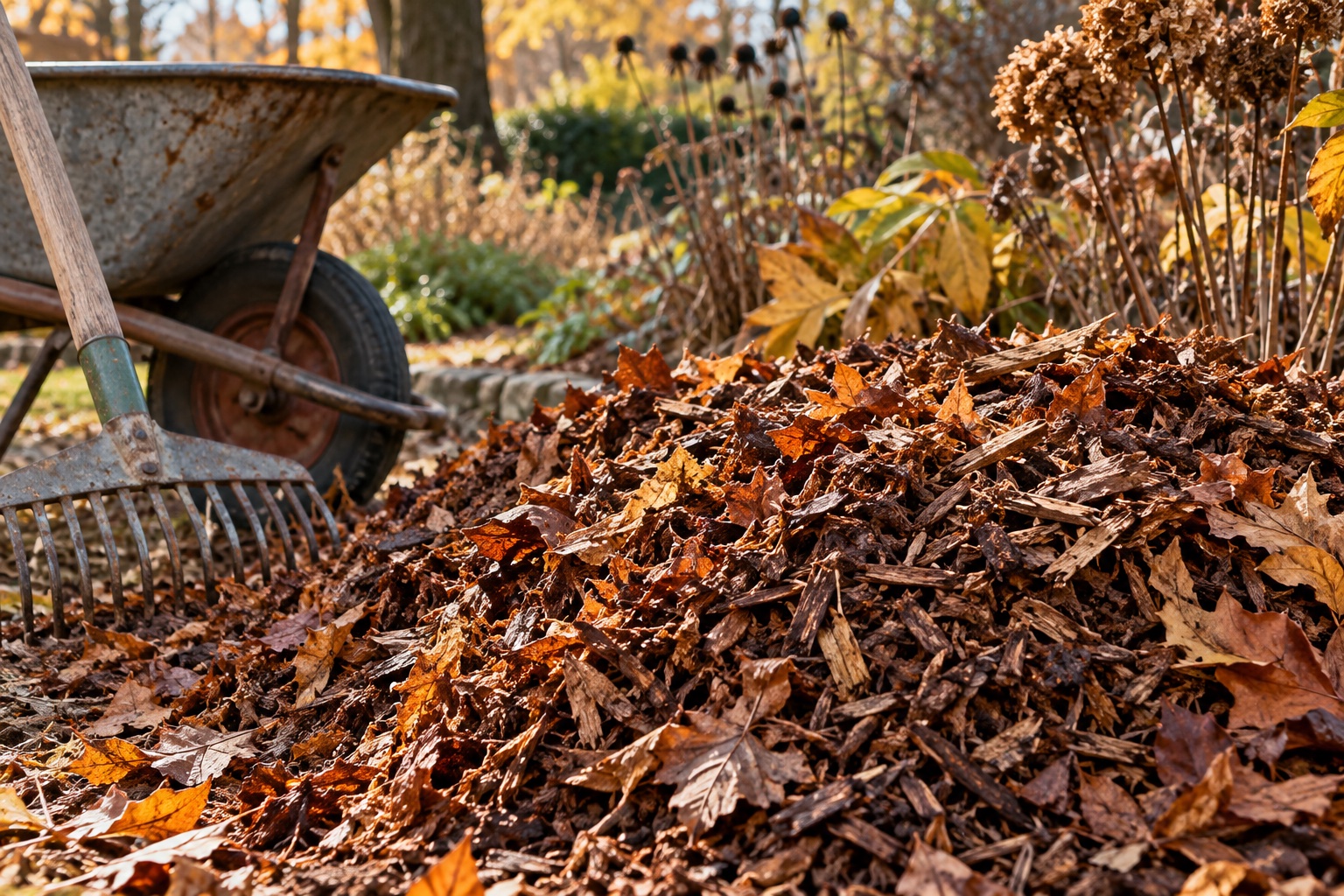
For most perennial beds, a layer of roughly 2 to 3 inches is typically the right range. Thinner layers give little insulation, while very thick layers can hold too much moisture against the plants, which matters in clay soil that already drains slowly.
Keep mulch from piling up directly against stems and crowns. Leave a small gap around each plant so air can circulate and the crown stays dry. Heaped mulch against a plant, sometimes called a mulch volcano, is a common cause of rot and pest trouble.
- Beds with tender perennials: Err toward the thicker end of the range.
- Hardy, established plants: A moderate layer is usually enough.
- Existing mulch: If last year's layer is still there, top it off rather than starting over.
What Type of Mulch Works Best for Winter Protection in Fort Wayne?
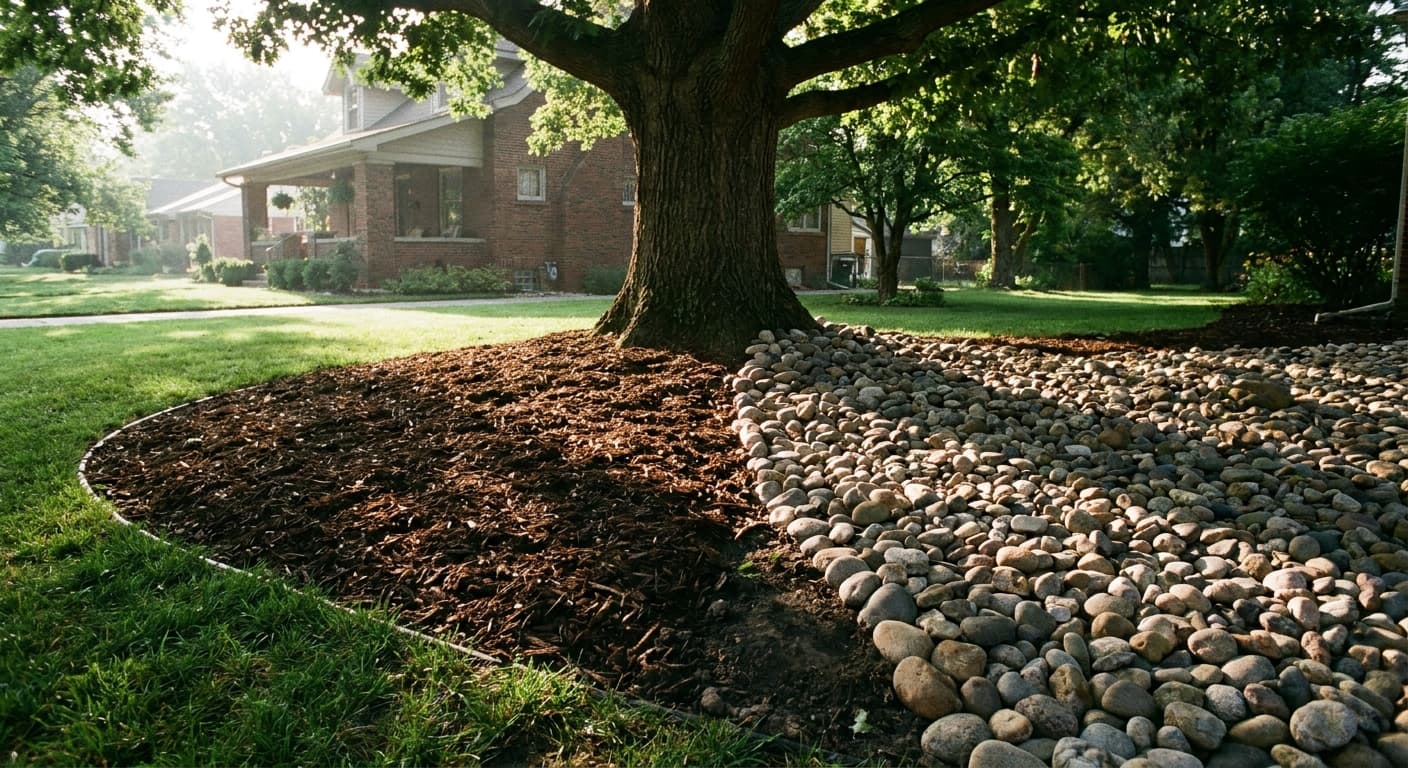
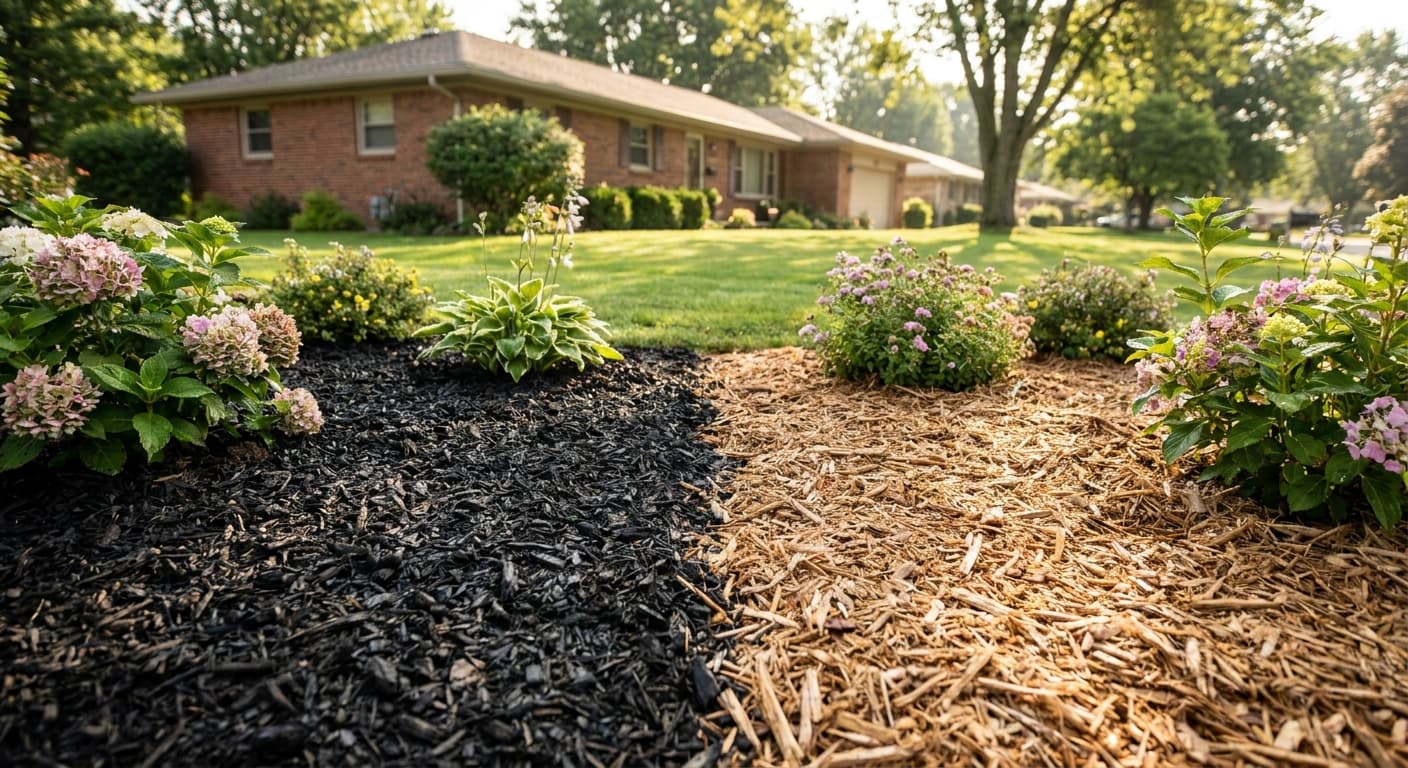
Most wood-based mulches work well, and the best choice often comes down to what your beds already have and how they look. Shredded hardwood mulch knits together and stays in place through wind and snowmelt. Shredded leaves are a budget-friendly option many homeowners already have on hand, and they break down to feed the soil. Straw and pine needles are lighter and sometimes used over more delicate plantings.
Whatever you choose, use clean, well-aged material and avoid products with a thick, matted texture that can trap water against plants. If you are unsure which is right for your beds, our mulch delivery services can help you match the material to your landscape.
Which Perennials Benefit Most From a Fall Mulch Layer?
Almost any perennial bed gets some benefit, but a few situations deserve extra attention. Newly planted perennials, especially those added this fall, have not built up deep roots yet and are the most vulnerable to heaving. Plants that are borderline hardy for Zone 5b, or those in exposed, windy spots, also tend to appreciate the added insulation.
- Newly planted perennials: Shallow roots are easily pushed up by thawing and refreezing soil.
- Exposed beds: Open areas without shelter from wind lose moisture and warmth faster.
- Shallow-rooted plants: These benefit from the extra moisture retention in cold, dry stretches.
Should You Cut Back Perennials Before Mulching?
It depends on the plant. Many gardeners cut back dead foliage on disease-prone perennials before mulching, which reduces the chance that problems carry over into spring. Others leave seed heads and stems standing for winter interest and to provide food and cover for birds. Either approach is fine; the key is to clear away matted wet leaves that could smother plants and invite rot.
Pulling weeds before you mulch is also worth the effort. A clean bed under a fresh layer means fewer weeds to deal with when spring arrives.
What Should You Do With Winter Mulch in Spring?
Once temperatures settle in spring and new growth starts to push up, gently rake back any heavy mulch from the crowns so shoots can emerge and the soil can warm. You do not need to remove it all; thinned mulch stays in the bed to suppress weeds and hold moisture through summer. Fresh growth tends to be tender, so work carefully around new shoots.
If the thought of a fall cleanup, mulch order, and spring pull-back sounds like a lot, we can take it off your plate. Ready to protect your perennials this winter? Request a free quote from Minnick Lawn & Landscaping this season, and our team will talk through the right mulch plan for your Fort Wayne beds. You can also reach us at (260) 972-5185.