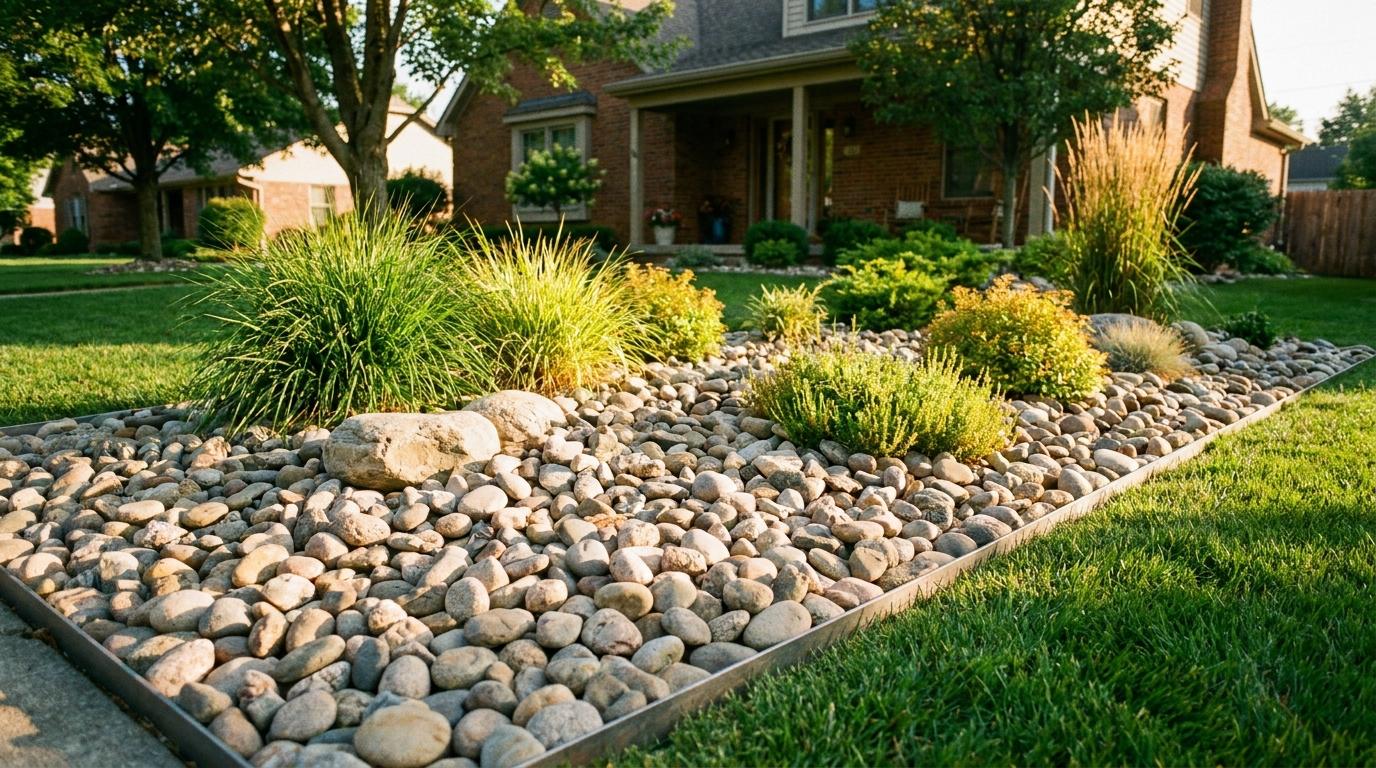
Both stone and mulch serve important roles in Fort Wayne landscaping, but stone offers distinct advantages that make it the better choice for many homeowners and commercial properties in Northeast Indiana. Stone provides superior longevity, requires minimal maintenance, and creates a polished aesthetic that enhances curb appeal for years without the need for annual replacement like traditional mulch does.
What Are the Main Differences Between Stone and Mulch?
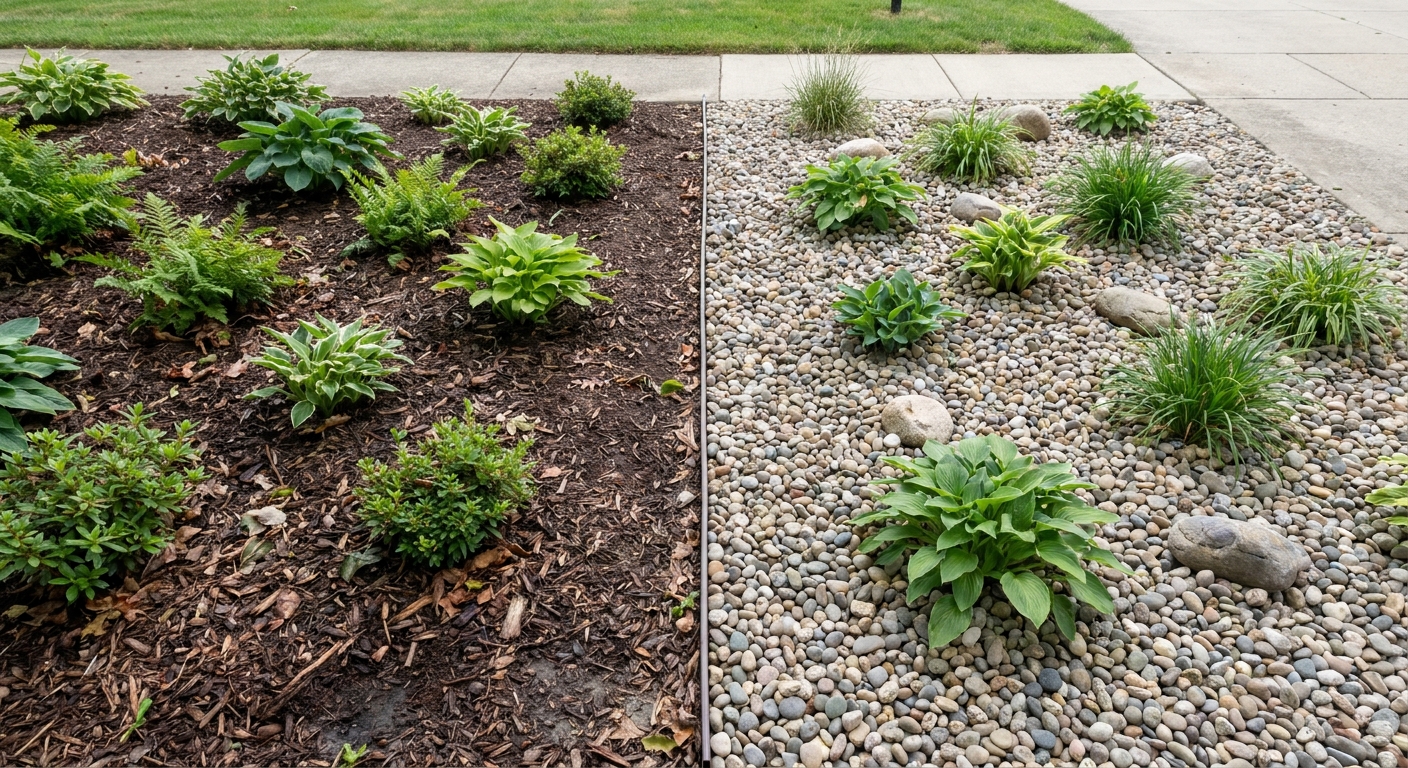
Stone and mulch are both ground cover materials used to suppress weeds and protect soil, but they function differently. Mulch is an organic material that breaks down over time, enriching your soil but requiring annual replenishment. Stone is inorganic and permanent, maintaining its appearance and function season after season in Fort Wayne's variable climate.
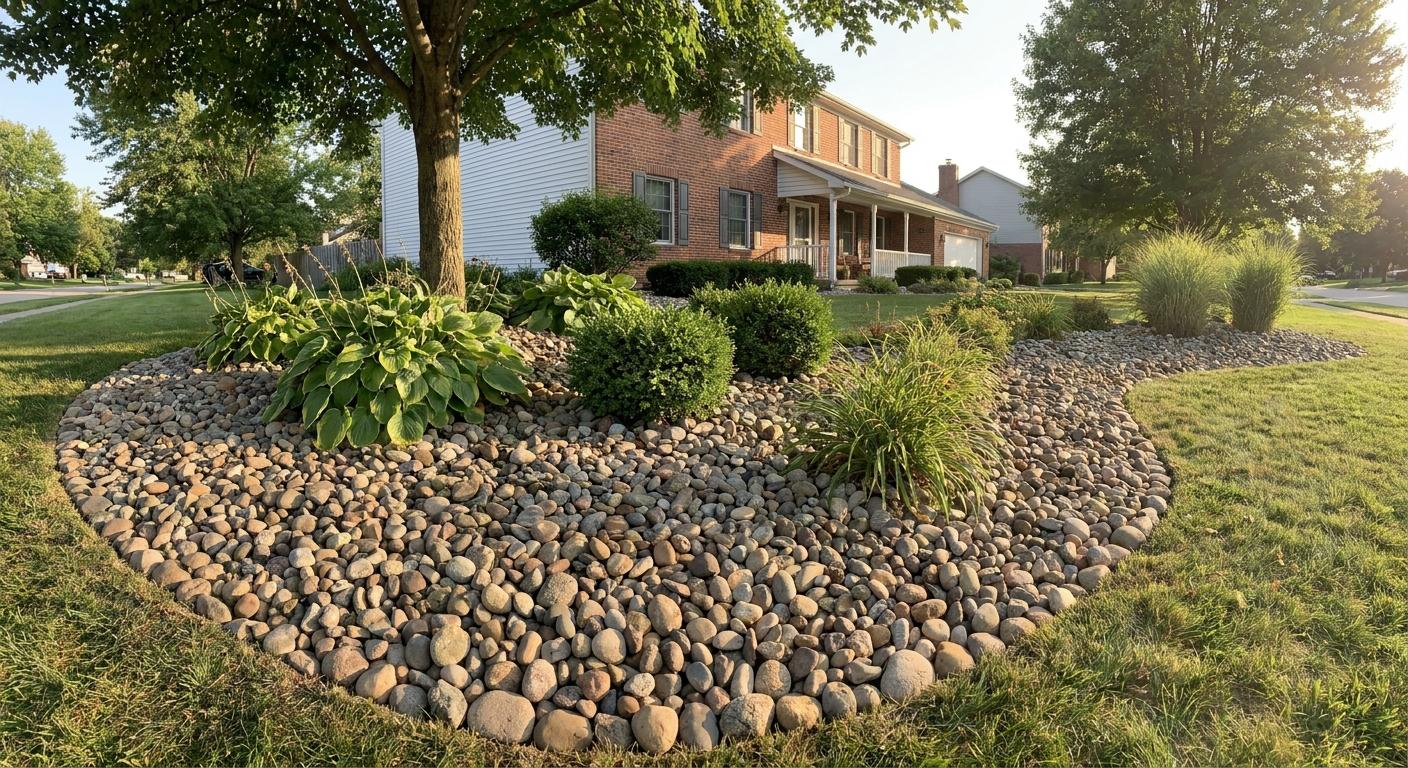
Mulch typically includes wood chips, bark, or shredded hardwood that gradually decompose. Stone covers range from pea gravel and river rock to larger decorative boulders and flagstone. In Northeast Indiana's Zone 5b climate with our clay-heavy soils, stone remains stable through freeze-thaw cycles that can displace or compress mulch layers.
How Long Does Stone Last Compared to Mulch in Fort Wayne?
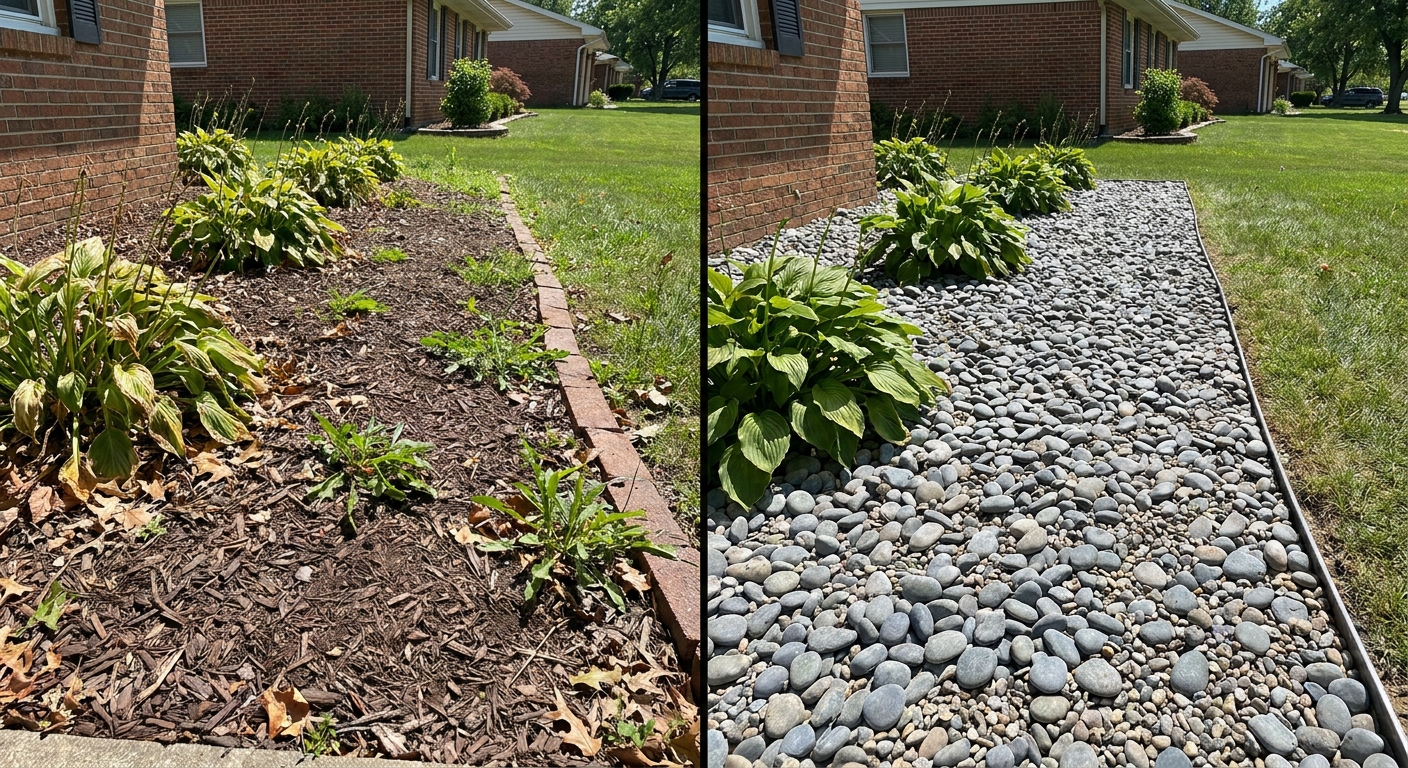
Stone is essentially permanent once installed correctly, lasting 10+ years without replacement in Fort Wayne landscaping projects. Quality mulch typically lasts 1-2 seasons before decomposing and requiring fresh applications each spring. This longevity makes stone a cost-effective investment over time despite potentially higher initial installation costs.
Fort Wayne's freeze-thaw cycles are particularly harsh on organic mulch. Winter temperatures dip well below freezing, and spring thaws cause soil expansion that can displace mulch layers. Stone maintains consistent depth and coverage year-round. Homeowners often find they spend less on stone over a 5-year period than continuously replenishing mulch beds annually.
Stone creates a maintenance-free landscape that looks polished season after season—perfect for Fort Wayne homeowners seeking curb appeal without annual yard work.
What Are the Maintenance Differences Between These Materials?
Stone requires virtually no maintenance beyond occasional raking or power washing to remove debris and dust. Mulch demands regular attention: raking to prevent compaction, monitoring for mold or fungal growth, and annual replacement in Northeast Indiana. If you prefer a low-maintenance landscape, stone wins decisively.
Consider these maintenance tasks:
- Mulch: Annual removal and replacement, raking to prevent matting, fungicide treatment for excessive mold, monitoring for pest harborage
- Stone: Occasional power washing, light raking to redistribute settled material, minimal pest concerns
- Fort Wayne climate factor: Stone handles our heavy spring rains and freeze-thaw cycles better without degradation
- Weed control: Both suppress weeds, but stone prevents new mulch from decomposing into weed-friendly soil
How Does Stone Impact Weed Control and Soil Health?
Stone is superior for weed suppression because it creates a physical barrier that prevents weed seeds from reaching soil. Unlike mulch, stone doesn't decompose into organic matter that can harbor weed seeds or provide growing conditions for opportunistic plants in Fort Wayne yards. However, stone doesn't contribute to soil enrichment like mulch does.
If soil improvement is your priority, mulch wins—it breaks down and adds organic matter that improves clay-heavy Northeast Indiana soils over time. But if your goal is a weed-free, maintenance-free landscape bed, stone provides superior, longer-lasting results. Many Fort Wayne landscapers recommend using both: stone in high-traffic or decorative areas, mulch in garden beds where you want soil enrichment.
Weed Prevention Success Rates
A 3-4 inch stone layer blocks approximately 95% of weed growth when installed over landscape fabric. Mulch at the same depth typically allows 40-60% weed penetration after the first season, increasing as it decomposes. For Fort Wayne properties with persistent weed problems, stone offers more reliable long-term solutions.
What Are the Cost Considerations for Stone vs. Mulch in Fort Wayne?
Stone typically costs $2-5 per square foot for installation in Fort Wayne, while mulch costs $1-3 per square foot initially. However, spreading costs over five years changes the calculation dramatically. Replacing mulch annually in a 200-square-foot bed costs $200-300 every spring—totaling $1,000-1,500 over five years. Stone installed once costs $400-1,000 upfront with minimal additional expense.
Material costs vary by type and location in Northeast Indiana:
- Standard pea gravel or river rock: $2-3 per square foot
- Decorative boulders or flagstone: $4-8+ per square foot
- Quality mulch installation: $1.50-3 per square foot
- Annual mulch replacement: $0.50-1 per square foot
For budget-conscious Fort Wayne homeowners, mulch makes sense for temporary garden beds. For permanent landscape features and curb appeal investments, stone is more economical long-term.
Which Material Works Best for Fort Wayne's Climate and Soil?
Northeast Indiana's clay-heavy soil and freeze-thaw climate favor stone installations. Our winters are cold with frequent temperature fluctuations that break down mulch prematurely. Heavy spring rains can compact mulch layers and encourage fungal growth. Stone remains stable through these harsh seasonal transitions, maintaining consistent soil temperature and moisture regulation without degradation.
Stone is ideal for:
- Landscape beds with shrubs and structural plants
- Driveways, walkways, and hardscape transitions
- Commercial properties prioritizing curb appeal and low maintenance
- Fort Wayne yards with clay soil needing improved drainage
- Properties where annual maintenance isn't feasible
Mulch remains preferable for:
- Annual vegetable gardens
- Newly planted trees requiring soil enrichment
- Temporary garden installations
- Budget-limited projects with short-term goals
The best landscaping approach for many Fort Wayne properties combines both materials strategically, using professional landscaping design to optimize each ground cover's strengths.
How Should You Install Stone for Best Results in Fort Wayne?
Proper installation is crucial for stone's success in Northeast Indiana landscaping. Start with landscape fabric to prevent weed growth from below and maintain clean separation between soil and stone. Apply 3-4 inches of stone for optimal weed suppression and visual appeal. Edges should be clearly defined with border materials or hardscape features to prevent stone migration into lawn areas.
Installation steps for Fort Wayne properties:
- Clear existing vegetation and level the ground
- Install landscape fabric, overlapping seams by 6 inches
- Add 2-3 inches of pea gravel as a base layer
- Spread 2-3 inches of decorative stone on top
- Create clean borders with edging or hardscape materials
- Compact the base layer for stability through freeze-thaw cycles
Professional installation from hardscaping specialists ensures proper drainage, adequate depth, and long-lasting results. Improper installation can lead to stone settling unevenly or washing away during heavy Northeast Indiana spring rains.
Expert installation transforms stone from a simple ground cover into a permanent landscape feature that enhances your Fort Wayne property's value and curb appeal.
Whether you're redesigning your Fort Wayne landscape or refreshing existing beds, choosing between stone and mulch depends on your maintenance preferences, budget timeline, and long-term goals. Stone offers superior durability and low maintenance, making it the practical choice for most Northeast Indiana properties seeking lasting curb appeal.
Ready to transform your landscape with stone or other professional landscaping solutions in Fort Wayne? Request a free quote from Minnick Lawn & Landscaping today. Our team will assess your property and recommend the best ground cover strategy for your specific needs and budget. Call us at (260) 927-5185 to discuss your landscaping project!