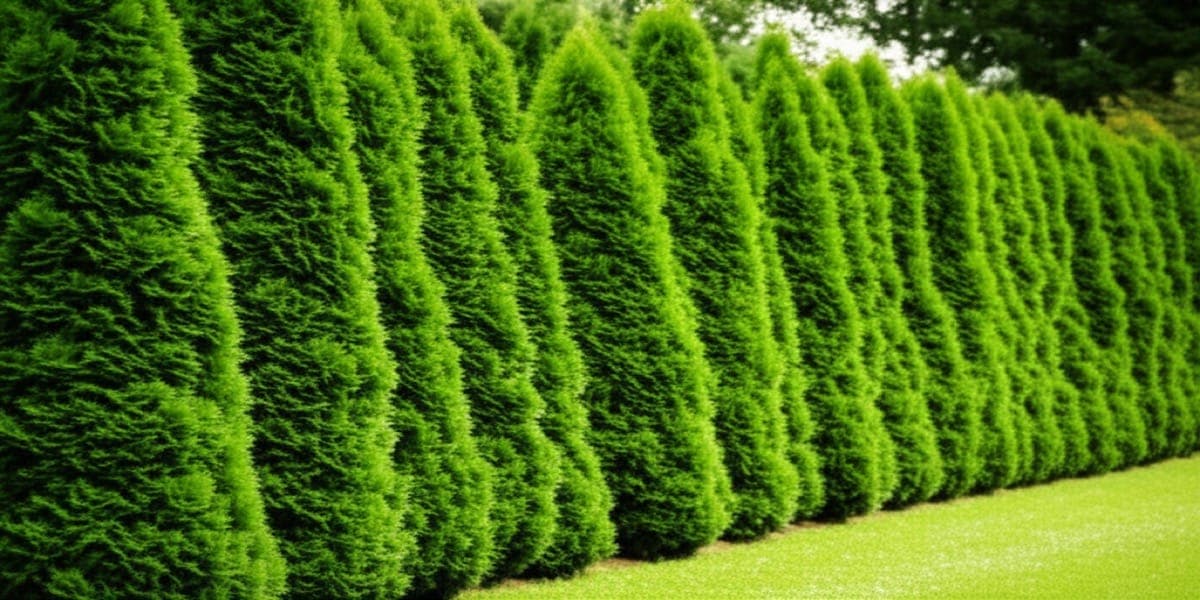
Privacy in your outdoor space dramatically increases how much you actually use and enjoy it. Plant screens and hedges provide that privacy naturally, softening the landscape while blocking views, reducing noise, and creating defined outdoor rooms. Unlike fences, living screens improve with age and offer environmental benefits that hardscape simply can’t match.
This guide covers the best plants for privacy screening in Fort Wayne, design strategies for different situations, and the practical considerations that determine success or failure of your living fence.

What Are the Best Evergreen Plants for Year-Round Privacy?
For year-round privacy in Fort Wayne, the best evergreen options are arborvitae (Thuja), Eastern red cedar, Norway spruce, and holly varieties, providing consistent screening through all four seasons without the bare winter period of deciduous plants. Evergreens cost more and grow slower but deliver the most complete privacy solution.
Top Evergreen Privacy Plants
| Plant | Height | Width | Growth Rate | Notes |
|---|---|---|---|---|
| Green Giant Arborvitae | 40-60 ft | 12-20 ft | Fast (3-5 ft/yr) | Most popular, deer resistant |
| Emerald Arborvitae | 10-15 ft | 3-4 ft | Slow-medium | Smaller properties |
| Norway Spruce | 40-60 ft | 25-30 ft | Medium-fast | Large screens |
| Eastern Red Cedar | 30-50 ft | 8-15 ft | Medium | Native, drought tolerant |
| American Holly | 15-30 ft | 6-10 ft | Slow | Berries, dense |
| Nellie Stevens Holly | 15-25 ft | 8-12 ft | Medium | Fast for holly |
Evergreen Spacing Guidelines
| Plant | Formal Hedge | Natural Screen |
|---|---|---|
| Green Giant | 5-6 ft apart | 8-10 ft apart |
| Emerald | 2-3 ft apart | 4-5 ft apart |
| Norway Spruce | 10-12 ft apart | 15-20 ft apart |
| Holly | 4-5 ft apart | 6-8 ft apart |
Pros and Cons of Evergreens
Advantages:
- Year-round screening
- Consistent appearance
- Wind and noise reduction
- Wildlife habitat
Challenges:
- Higher cost
- Slower initial growth
- More susceptible to winter damage
- Deer browse (some species)
What Deciduous Plants Create Good Privacy?
Deciduous privacy screens using viburnum, privet, ninebark, and lilac provide excellent screening from spring through fall while costing less and growing faster than evergreens. They offer flowers, fall color, and wildlife value, making them excellent choices when full winter privacy isn’t essential.
Top Deciduous Screening Plants
| Plant | Height | Width | Features |
|---|---|---|---|
| Viburnum dentatum | 6-10 ft | 6-10 ft | Native, berries, adaptable |
| Viburnum x rhytidophylloides | 8-10 ft | 6-10 ft | Semi-evergreen |
| Ninebark | 5-8 ft | 5-8 ft | Native, colored foliage |
| Privet | 8-15 ft | 6-10 ft | Dense, fast, tolerates shearing |
| Forsythia | 6-10 ft | 8-10 ft | Yellow spring flowers |
| Lilac | 8-15 ft | 6-12 ft | Fragrant flowers |
| Rose of Sharon | 8-12 ft | 6-10 ft | Summer flowers |
When Deciduous Makes Sense
Choose deciduous when:
- Budget is limited
- Quick growth is priority
- Winter views aren’t a concern
- You want flowers or fall color
- Seasonal variation is desired
Typical timeline:
- Year 1: Light screening
- Year 2-3: Moderate privacy
- Year 4+: Full screening (spring-fall)

How Do You Design an Effective Privacy Screen?
Effective privacy screen design considers sight lines (what you’re blocking), spacing for mature fill-in, height requirements at maturity, depth for density, and layering for visual interest. A single row provides adequate privacy; double or staggered rows create denser screens faster with more natural appearance.
Design Principles
Identify what you’re blocking:
- Neighbor’s window (eye level)
- Second-story views (need height)
- Road noise (need density)
- Entire property line (comprehensive)
Calculate required height:
- Standing sight line: 6 ft minimum
- Sitting on deck: May need less
- Second-floor views: 15-20+ ft
- Consider slope differences
Row Configuration Options
| Configuration | Pros | Cons |
|---|---|---|
| Single row | Lower cost, less space | Slower to fill, gaps visible longer |
| Double row (staggered) | Faster fill, denser | More plants, more space |
| Mixed species | Visual interest, resilience | Varied maintenance |
Staggered Planting Layout
For faster, denser screening:
- Plant two rows
- Offset second row (plants in gaps)
- Rows 3-4 ft apart
- Creates solid mass faster
How Far from Property Lines Should You Plant?
Plant privacy screens at least 3-5 feet from property lines to allow for mature width and maintenance access on your side. Check local setback requirements, as some municipalities have specific rules about hedge placement. Being a considerate neighbor avoids disputes when plants mature and spread.
Setback Considerations
| Factor | Minimum Distance |
|---|---|
| Property line | 3-5 feet |
| Fence | 2-3 feet from fence |
| Neighbor’s garden | Be considerate |
| Sight line triangles | Per local code |
| Utilities | Call 811, keep clear |
Being a Good Neighbor
Best practices:
- Discuss plans with neighbors first
- Choose varieties that won’t overhang
- Maintain your side properly
- Consider shared screening costs
- Plant inside your property line
How Long Does It Take for a Privacy Screen to Fill In?
Filling time depends on plant selection and spacing: fast-growing Green Giant arborvitae can create substantial screening in 2-3 years, while slower-growing species may take 4-6 years. Closer spacing fills faster but costs more; wider spacing takes longer but is more economical.
Fill-In Timeline by Species
| Plant | Time to Basic Screening | Time to Full Privacy |
|---|---|---|
| Green Giant Arborvitae | 2-3 years | 4-5 years |
| Privet | 2 years | 3-4 years |
| Viburnum | 2-3 years | 4-5 years |
| Norway Spruce | 4-5 years | 6-8 years |
| Holly | 4-5 years | 6-8 years |
| Emerald Arborvitae | 4-5 years | 6-8 years |
Accelerating Fill-In
Faster screening strategies:
- Choose fast-growing species
- Plant larger specimens
- Use closer spacing
- Double-row/staggered planting
- Proper watering and care

What Maintenance Do Privacy Screens Require?
Most privacy screens require minimal maintenance once established: watering during drought, annual fertilization for faster-growing species, and periodic pruning for formal hedges. Natural-form screens need occasional shaping while formal sheared hedges require 2-4 trimmings per year to maintain crisp lines.
Maintenance by Style
| Style | Pruning Frequency | Other Care |
|---|---|---|
| Natural/informal | 0-1× per year | Minimal |
| Semi-formal | 1-2× per year | Light |
| Formal (sheared) | 2-4× per year | Moderate |
Formal Hedge Maintenance
Shearing schedule:
- First trim: Late spring (after growth flush)
- Second trim: Mid-summer (if needed)
- Third trim: Early fall (final shaping)
Shearing technique:
- Keep base wider than top
- Allows light to reach all foliage
- Prevents bare lower sections
Common Problems and Solutions
| Problem | Cause | Solution |
|---|---|---|
| Bare lower sections | Improper shearing | Reshape, allow recovery |
| Deer damage | Browse on new growth | Deer-resistant species, deterrents |
| Winter burn | Desiccation | Proper watering, anti-desiccant |
| Dead plants in row | Root disease, drainage | Replace, improve drainage |
What Privacy Solutions Work for Different Situations?
Different situations call for different solutions: narrow spaces need columnar varieties, wet areas need water-tolerant species, shaded areas need shade-tolerant plants, and rental properties might use containers or fast temporary solutions.
Solutions by Situation
Narrow spaces:
- Columnar evergreens (Sky Pencil holly, columnar juniper)
- Espaliered trees
- Narrow arborvitae varieties
Wet/poor drainage:
- Winterberry holly
- Inkberry holly
- Swamp white oak (for height)
Shade:
- Yew (most shade-tolerant evergreen)
- Hemlock (moist shade)
- Rhododendron
Deer-heavy areas:
- Green Giant arborvitae (deer resistant)
- Boxwood
- Spruce
- Avoid yew, rhododendron
Quick/temporary:
- Fast-growing willow
- Miscanthus grass (dies to ground)
- Bamboo (with caution—contains)

Should You Use Plants or a Fence for Privacy?
Plants and fences both provide privacy, but they serve different needs: fences provide instant privacy with defined property lines, while plants create softer, more natural screening that improves with age, supports wildlife, and doesn’t require permits in most cases. Many properties benefit from combining both.
Comparison
| Factor | Plant Screen | Fence |
|---|---|---|
| Initial privacy | Takes years | Immediate |
| Cost | Lower long-term | Higher upfront |
| Maintenance | Ongoing | Periodic |
| Appearance | Natural, improves | Fixed |
| Wildlife value | High | None |
| Permits | Usually none | Often required |
| Lifespan | Decades-centuries | 15-25 years |
Combining Plants and Fencing
Effective combinations:
- Fence for immediate privacy, plants for beauty
- Low fence with tall plantings
- Fence at property line, plants inside
- Plants soften fence appearance
Our landscaping services include privacy screen design and installation throughout Fort Wayne and Northeast Indiana.
Create Your Private Outdoor Retreat
The right privacy screening transforms your outdoor space into a usable extension of your home. Consider your specific needs, timeline, and budget when selecting your approach, and don’t hesitate to combine strategies for the best result.
Request a Free Quote or call us at (260) 450-4676 to discuss privacy solutions for your property.
Frequently Asked Questions
What’s the fastest-growing privacy plant?
Green Giant arborvitae grows 3-5 feet per year in ideal conditions and is deer-resistant, making it the top choice for fast evergreen screening in Northeast Indiana.
How close together should I plant for quick privacy?
For faster fill-in, plant closer than recommendations (5 ft instead of 8 ft for Green Giant), but be aware this creates competition and may require thinning later as plants mature.
Will arborvitae recover from deer damage?
Minor deer damage usually recovers. Severe damage to the leader (top) can cause permanent disfigurement. Green Giant arborvitae is more deer-resistant than other varieties.
How tall can I grow a hedge legally?
Check local ordinances. Most municipalities don’t regulate hedge height on private property, but some have specific rules near property lines or in front yards.
Can I plant privacy screening in shade?
Yes, but choose shade-tolerant species: yew, hemlock, or shade-tolerant viburnums. Expect slower growth and less dense screening than in full sun.
Sources
- Purdue Extension - Hedges and Screens
- Morton Arboretum - Privacy Plants
- University of Illinois Extension - Shrubs for Screening
Adam Minnick is the owner of Minnick Lawn & Landscaping, serving Fort Wayne, Auburn, and Northeast Indiana since 2018.