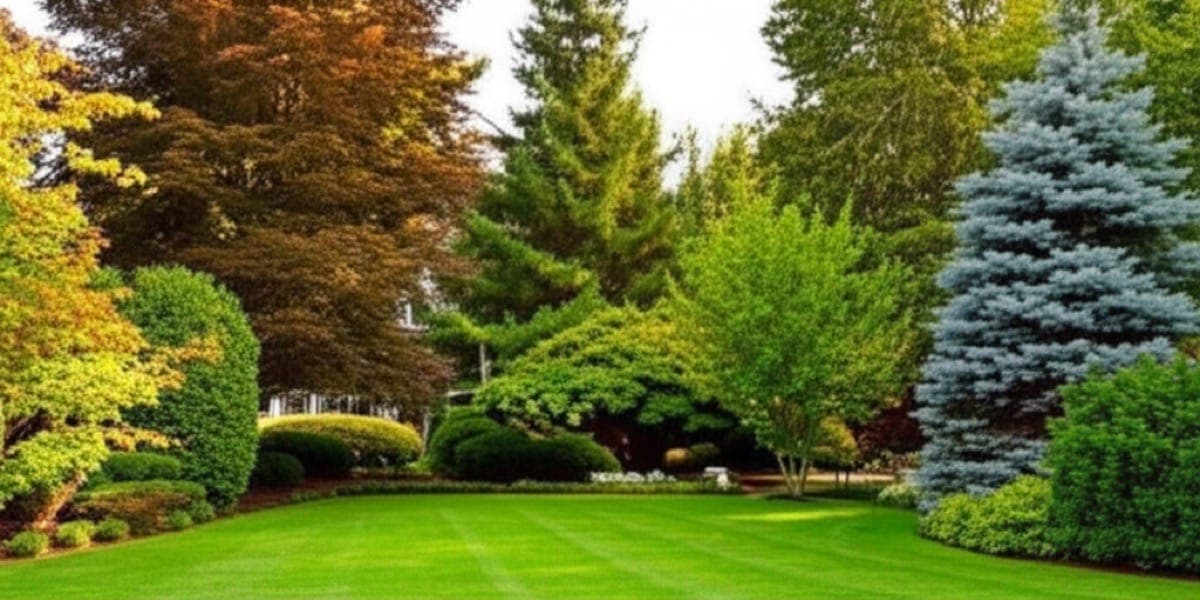
Beautiful mature tree providing shade in Fort Wayne residential yard

Trees are the most significant investment in your landscape—they can take decades to mature and last for generations, or they can become expensive problems requiring removal within years if poorly chosen. Selecting the right tree for your Fort Wayne property involves matching species to site conditions, planning for mature size, and understanding the long-term commitment you’re making.

This guide helps you navigate tree selection by covering the essential questions to ask, the best trees for specific purposes, and the common mistakes that lead to regret years down the road.

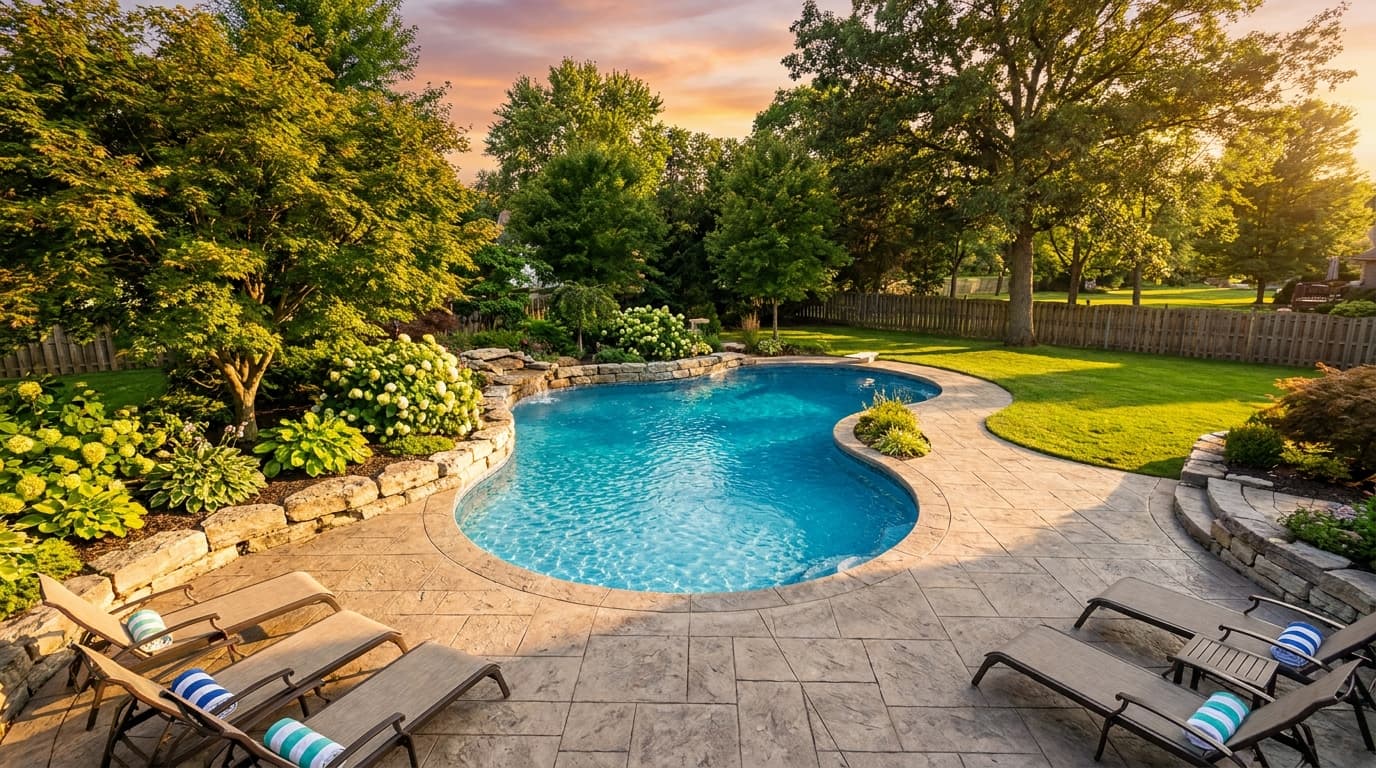
Mature shade tree in Fort Wayne residential landscape

What Questions Should You Ask Before Selecting a Tree?

Before selecting a tree, ask: What’s the mature size and will it fit the space? What are the site conditions (sun, soil, moisture)? What purpose will it serve (shade, privacy, ornamental)? What maintenance will it require? These questions prevent the common scenario of planting a tree that outgrows its location or struggles with site conditions.

Critical Questions Checklist

QuestionWhy It Matters
What’s the mature height and spread?Trees don’t stay small
What are overhead obstructions?Power lines, roof overhangs
What’s below ground?Utilities, septic, foundation
How much sun does the spot get?Species have different needs
What’s the soil drainage like?Wet vs dry tolerant species
What purpose should it serve?Shade, screening, flowers
What maintenance is acceptable?Cleanup, pruning needs
How fast do you need results?Fast vs slow growers

Site Assessment

Above ground:

  • Overhead utility lines
  • Distance to structures
  • Sun exposure throughout day
  • Existing trees (competition)

Below ground:

  • Underground utilities
  • Septic systems
  • Foundation proximity
  • Soil type and drainage

Common “Wrong Tree” Scenarios

ScenarioProblemResult
Large tree under utility linesGrowth into wiresUtility pruning, deformed tree
Silver maple near foundationAggressive rootsFoundation/plumbing damage
Large tree in small yardOverwhelms spaceCostly removal
Shade tree in shadePoor growthWeak, struggling tree

What Are the Best Shade Trees for Fort Wayne?

The best shade trees for Fort Wayne properties are oaks (especially white oak, swamp white oak, and red oak), maples (sugar, red), hackberry, and tulip poplar. These species tolerate our climate extremes, resist common pests and diseases, and provide decades of shade, fall color, and wildlife value when properly sited.

Top Shade Trees for Northeast Indiana

TreeMature SizeGrowth RateFeatures
White Oak50-80 ftSlowLong-lived, fall color
Swamp White Oak50-60 ftMediumAdaptable, tolerates wet
Red Oak60-75 ftMediumFast for oak, fall color
Sugar Maple40-80 ftSlow-mediumBest fall color
Red Maple40-60 ftFastAdaptable, fall color
Tulip Poplar70-90 ftFastLarge, unique flowers
Hackberry40-60 ftMediumVery adaptable
Bald Cypress50-70 ftMediumUnique texture, wet tolerant

Trees to Avoid

TreeReason
Silver MapleWeak wood, aggressive roots, messy
Bradford PearWeak structure, invasive
WillowWeak wood, water-seeking roots
Lombardy PoplarDisease-prone, short-lived
CottonwoodMessy, weak, huge

Shade tree varieties comparison in landscape

What Small Trees Work Best for Residential Properties?

Small trees (under 30 feet at maturity) like serviceberry, redbud, Japanese maple, dogwood, and crabapple fit residential scale while providing flowers, fall color, and ornamental interest without overwhelming the property. These trees work near buildings, under utility lines, and in smaller yards where large shade trees aren’t appropriate.

Best Small Trees for Fort Wayne

TreeMature SizeFeaturesBest Use
Serviceberry15-25 ftFlowers, berries, fall colorNative, multi-use
Redbud20-30 ftPink spring flowersNative, understory
Japanese Maple10-25 ftFoliage, formSpecimen, Asian gardens
Dogwood (Flowering)15-25 ftFlowers, berriesShade, specimen
Crabapple15-25 ftFlowers, fruitDisease-resistant varieties
Paperbark Maple20-30 ftExfoliating barkSpecimen
American Hornbeam20-30 ftBark, fall colorNative, understory

Small Trees Under Utility Lines

Safe for under lines (under 25 ft):

  • Serviceberry
  • Japanese maple
  • Crabapple
  • Redbud
  • Star Magnolia

Contact utility company:

  • Many offer free or discounted small trees
  • They prefer you plant appropriate species

How Do You Select Trees for Specific Purposes?

Different landscape goals require different tree characteristics. Selecting trees for specific purposes—fast shade, privacy screening, wildlife habitat, or ornamental beauty—narrows your choices to species that actually meet your needs rather than picking based solely on what catches your eye at the nursery.

Trees by Purpose

For Fast Shade:

  • Red maple (fast)
  • Tulip poplar (very fast)
  • River birch (fast)
  • Sycamore (fast)

For Privacy Screening:

  • Arborvitae (evergreen)
  • Eastern red cedar (evergreen)
  • Norway spruce (evergreen)
  • Hornbeam (dense)

For Wildlife:

  • Oak species (500+ insect species)
  • Serviceberry (berries)
  • Cherry (birds)
  • Crabapple (fruit)

For Fall Color:

  • Sugar maple (orange-red)
  • Black gum (brilliant red)
  • Sweet gum (multi-color)
  • Oak species (red-brown)

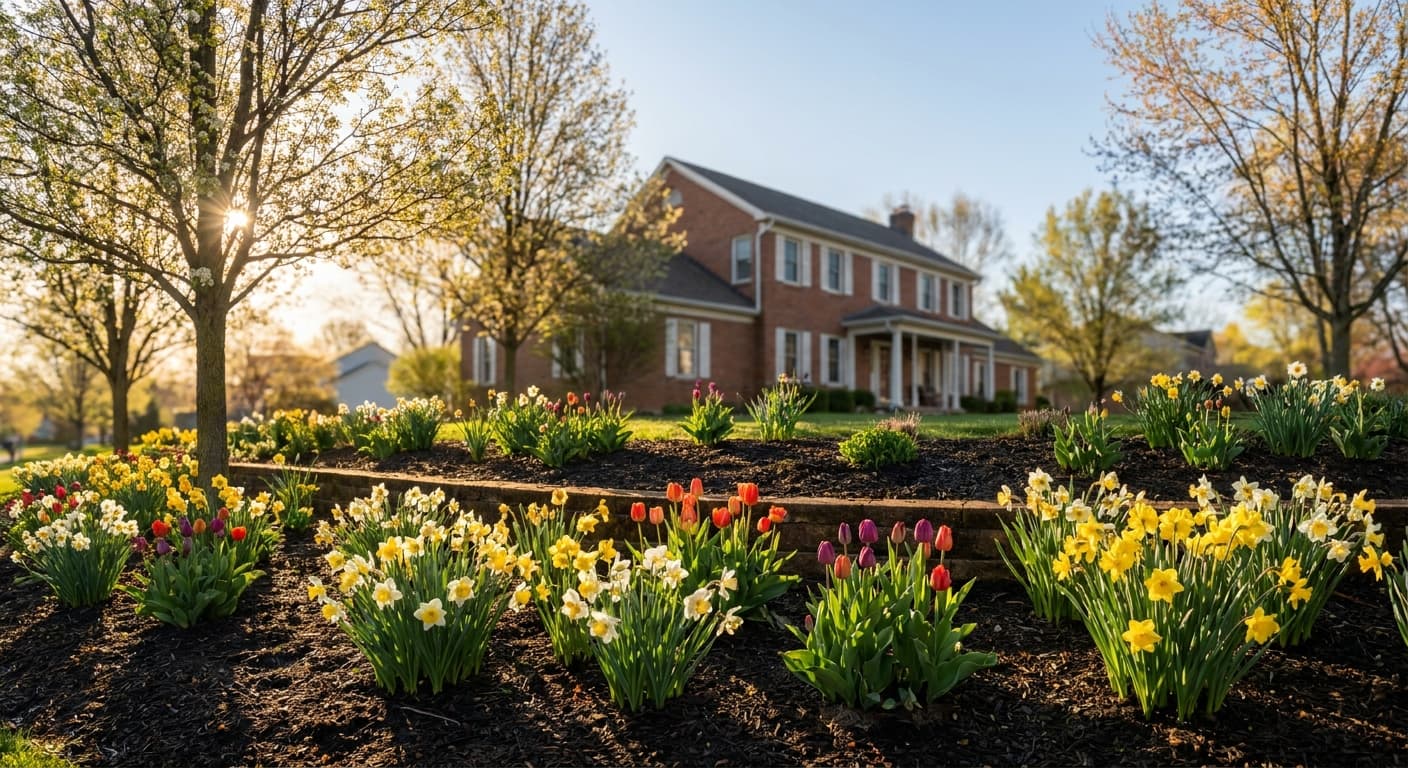
For Spring Flowers:

  • Serviceberry (white)
  • Redbud (pink)
  • Crabapple (pink/white)
  • Dogwood (white/pink)

Multi-Purpose Trees

TreeShadeWildlifeFlowersFall Color
Oak speciesYesExcellentNoYes
ServiceberryPartialExcellentYesYes
Black GumYesGoodNoExcellent
CrabapplePartialGoodExcellentFair

Various tree species showing different forms and purposes

How Far Should Trees Be Planted from Structures?

Plant trees at least half their mature spread (width) away from structures—a tree with 40-foot mature spread should be 20+ feet from buildings. This allows full canopy development without constant pruning, prevents root interference with foundations, and avoids branches rubbing against roofs and siding.

Planting Distance Guidelines

Tree Mature SizeDistance from BuildingDistance from Drive
Large (60+ ft spread)30+ feet15+ feet
Medium (40-60 ft spread)20-30 feet10-15 feet
Small (20-40 ft spread)10-20 feet8-10 feet

Considerations

Near foundations:

  • Roots can damage foundations
  • Some trees worse than others (willows, silver maples)
  • Most trees fine at appropriate distance

Near septic systems:

  • Keep trees 50+ feet from drain fields
  • Roots seek moisture and nutrients
  • Can clog pipes, damage fields

Near utilities:

  • Call 811 before digging
  • Check overhead clearances
  • Contact utility for recommendations

How Do You Choose Between Fast and Slow-Growing Trees?

Fast-growing trees (2+ feet/year) provide quicker results but often have weaker wood, shorter lifespans, and more problems, while slow-growing trees (under 12 inches/year) are typically stronger, longer-lived, and lower maintenance. The best strategy often combines both: fast-growers for immediate impact, slow-growers for long-term value.

Growth Rate Comparison

CharacteristicFast-GrowingSlow-Growing
Annual growth2-3+ feetUnder 12 inches
Lifespan20-50 years100+ years
Wood strengthOften weakUsually strong
Root problemsMore commonLess common
Storm damageMore vulnerableMore resistant
ExamplesSilver maple, tulip poplarOak, sugar maple

Strategy: Plant Both

Suggested approach:

  1. Plant fast-growers for quick shade
  2. Plant slow-growers nearby
  3. As slow-growers mature, remove fast-growers
  4. End result: Long-lived, high-quality trees

What Time of Year Should You Plant Trees?

The best time to plant trees in Fort Wayne is fall (September through November) when soil is warm, air is cool, and trees can establish roots before winter dormancy. Spring (late March through May) is the second-best option. Summer planting is possible but requires more watering to overcome heat stress.

Planting Season Comparison

SeasonRatingAdvantagesChallenges
FallBestWarm soil, cool air, root growthLess selection
SpringGoodFull selection, time to establishCompetition with growth
SummerAcceptableAvailable inventoryHeat stress, watering
WinterPoorDormantFrozen ground

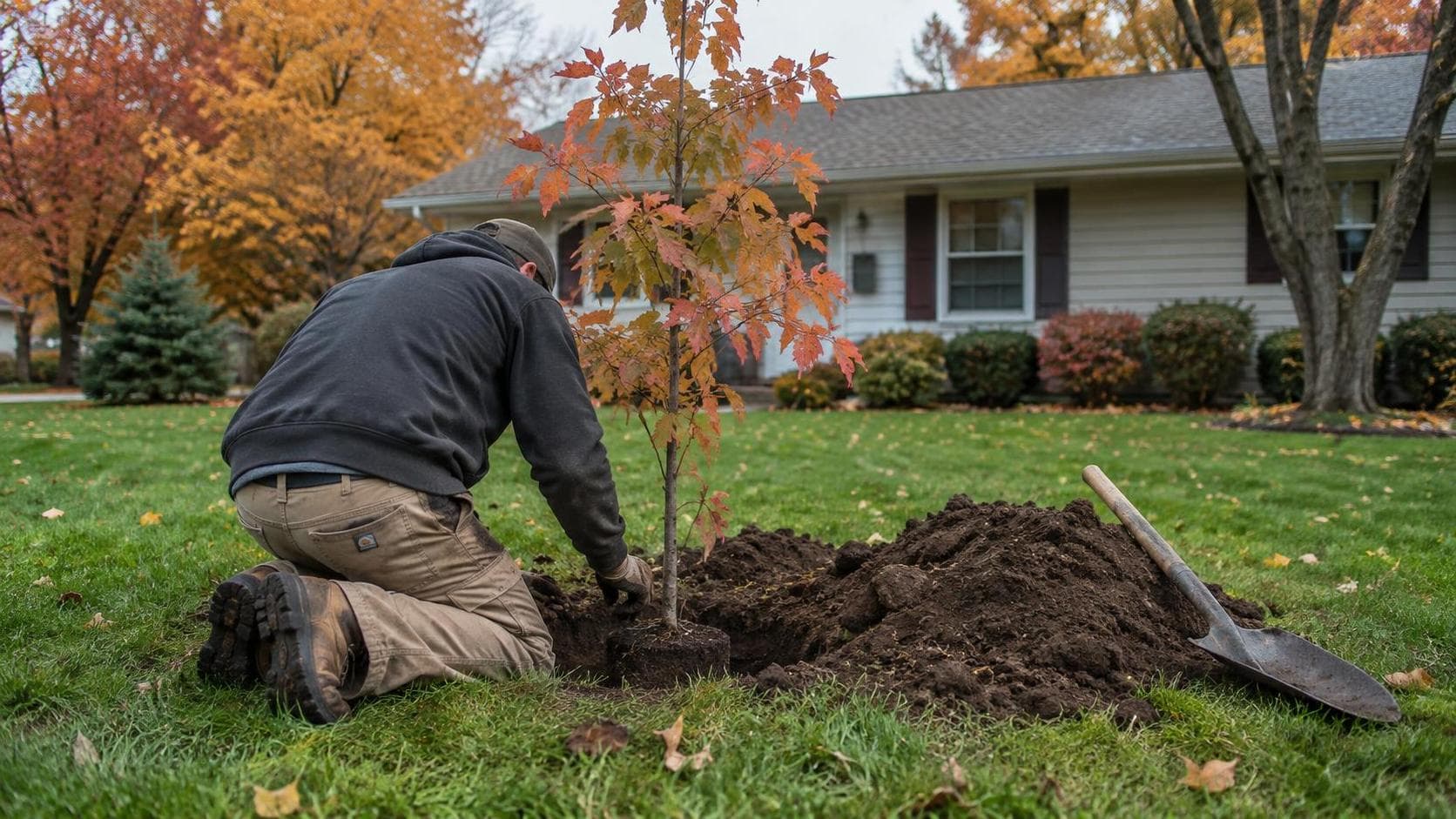
Planting Best Practices

Do:

  • Plant at same depth as nursery
  • Remove container/burlap from top
  • Water deeply at planting
  • Mulch 2-4 inches (not against trunk)
  • Stake only if necessary

Don’t:

  • Plant too deep
  • Leave wire baskets on
  • Create mulch “volcanoes”
  • Stake unnecessarily long

Tree being properly planted in landscape

How Much Should You Expect to Pay for Trees?

Tree prices vary widely based on size and species: small container trees ($30-100), larger B&B (balled and burlapped) trees ($150-500+), and specimen/mature trees ($500-5,000+). Smaller trees often establish faster and catch up to larger transplants, making them a better value for patient homeowners.

Tree Pricing Guide

SizeTypePrice RangeNotes
3-5 galContainer$30-75Fastest establishment
7-15 galContainer$75-200Good balance
1.5-2" caliperB&B$200-400Common landscape size
2-3" caliperB&B$400-800Instant impact
3"+ caliperB&B$800-2,000+Specimen grade

Value Considerations

Smaller trees often better because:

  • Establish faster
  • Less transplant shock
  • Catch up within 3-5 years
  • Lower cost, lower risk
  • Easier to plant yourself

Larger trees worth it when:

  • Immediate impact critical
  • Budget allows
  • Professional installation
  • Site conditions ideal

Our landscaping services include tree selection, delivery, and professional installation.


Choose Trees That Will Last Generations

The trees you plant today will outlive you if chosen well. Take time to match species to site, plan for mature size, and select quality specimens. Your investment in proper selection pays dividends for decades.

Request a Free Quote or call us at (260) 450-4676 to discuss tree selection and planting for your property.


Frequently Asked Questions

How long before a new tree provides shade?

Fast-growing trees may provide useful shade in 5-10 years. Medium-growth trees take 10-15 years. Slow-growing oaks may take 15-20 years but provide shade for 100+ years. Consider this trade-off in your planning.

Should I buy the biggest tree I can afford?

Not necessarily. Smaller trees often establish faster and catch up to larger transplants within 3-5 years. Larger trees are worth the premium for immediate impact if professionally installed with proper aftercare.

Can I plant trees in clay soil?

Yes, many trees tolerate clay. Avoid creating a “bowl” that holds water. Plant slightly high, amend soil around (not in) the hole, and choose clay-tolerant species like oaks, hackberry, and river birch.

How do I know if a tree is healthy at the nursery?

Look for full canopy, good color, wound-free bark, firm root ball, and appropriate leaf drop timing. Avoid trees with dead branches, trunk wounds, circling roots, or signs of stress.


Sources


Adam Minnick is the owner of Minnick Lawn & Landscaping, serving Fort Wayne, Auburn, and Northeast Indiana since 2018.