Proper drainage behind a retaining wall is the difference between a structure that lasts decades and one that fails within years. In Fort Wayne's clay-heavy soil and variable weather, installing drainage tile behind your retaining wall isn't optional—it's essential to prevent water buildup, soil pressure, and catastrophic wall failure. At Minnick Lawn & Landscaping, we've built countless walls that stand the test of time because we understand Northeast Indiana's unique drainage challenges.
What Does Drainage Tile Do Behind a Retaining Wall?
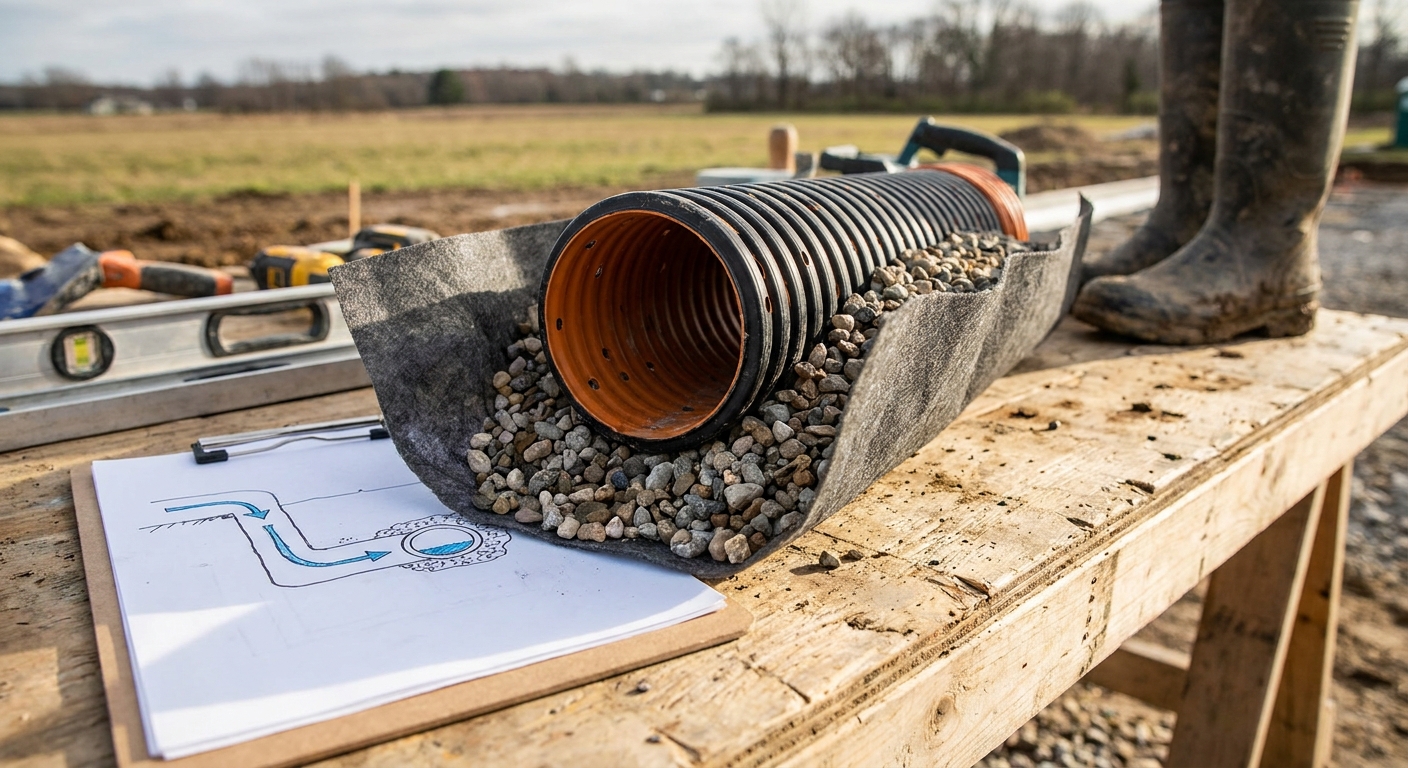
Drainage tile (also called perforated pipe or French drain) collects groundwater and surface water that accumulates behind your retaining wall and safely directs it away from the structure. Without drainage, water pressure builds behind the wall, pushing outward and destabilizing the entire system. In Fort Wayne's USDA Zone 5b climate with frequent spring snowmelt and heavy rains, this water pressure becomes especially dangerous.
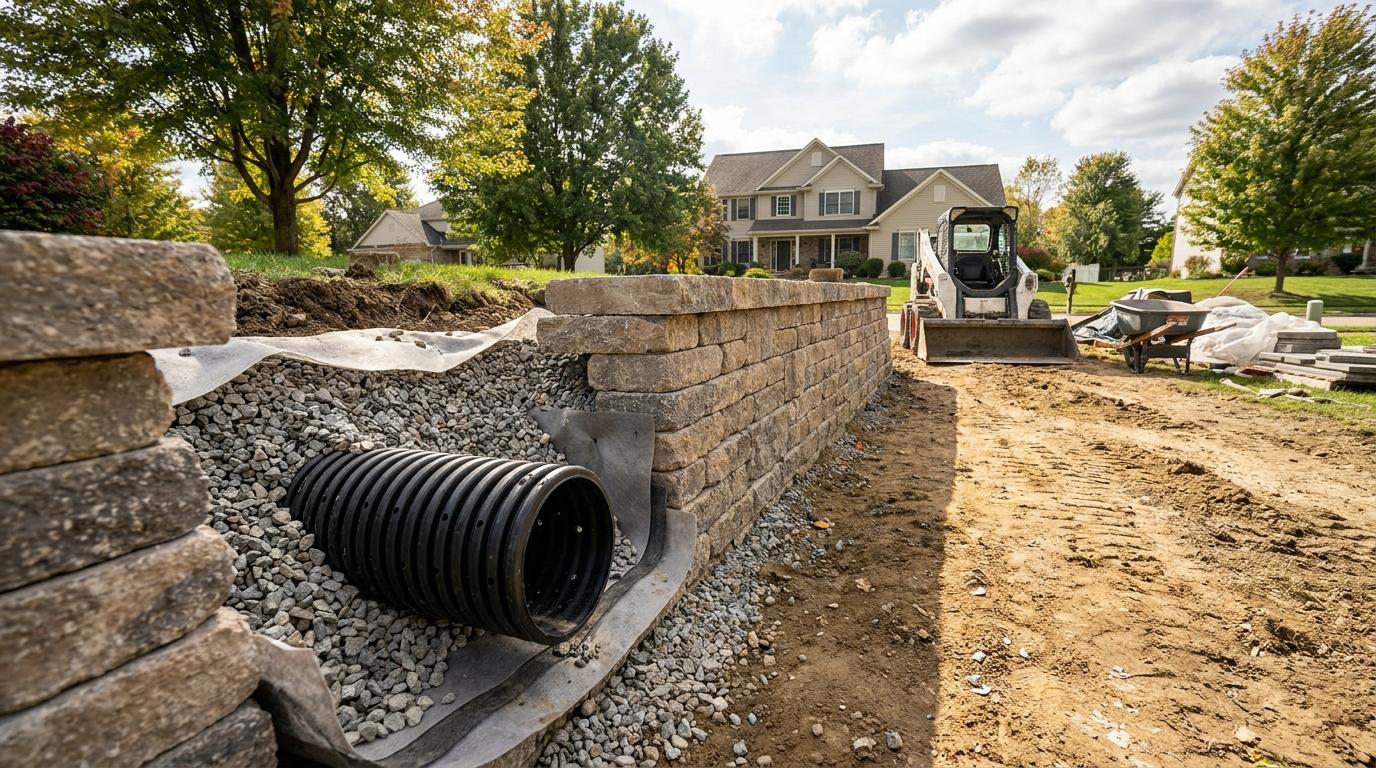
The tile sits at the base of the wall, surrounded by gravel and filter fabric, creating a protected channel for water to escape. As water seeps through the backfill, it enters the perforated pipe and flows downslope or to a daylight outlet, preventing hydrostatic pressure from accumulating against your wall.
How Does Water Pressure Damage Retaining Walls?
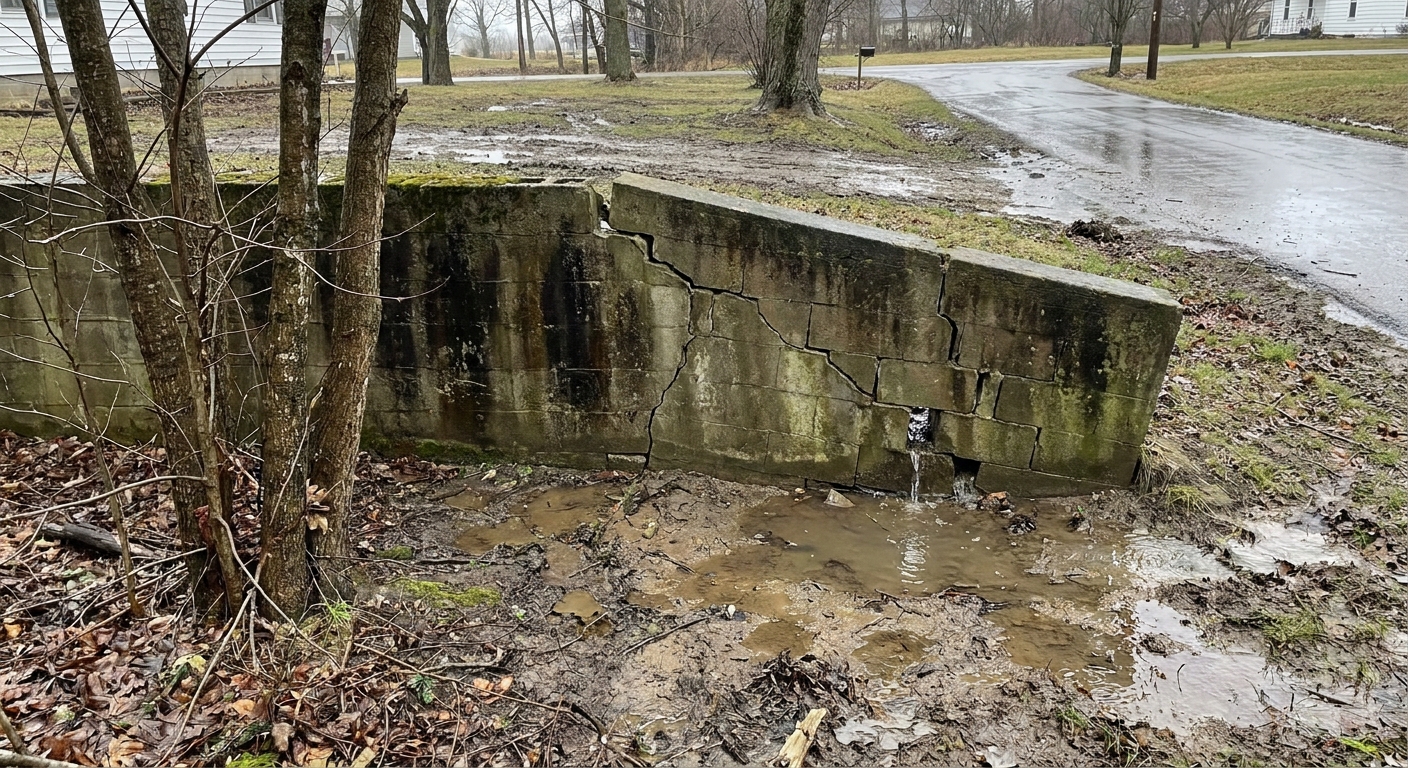
Hydrostatic pressure—the force of water pushing against the wall—is one of the leading causes of retaining wall failure. When water has nowhere to go, it creates immense lateral force that can crack the wall, bend structural components, or cause the entire structure to bow outward. In Fort Wayne's clay soils, water drains slowly, making this problem even more critical.
- Freeze-thaw cycles in Northeast Indiana amplify the problem: water freezes, expands, and exerts even greater pressure
- Spring snowmelt floods the area behind your wall with thousands of gallons of water in just weeks
- Poor site grading or roof gutters directing water toward the wall can overwhelm even well-designed systems
- Dense clay soil native to Fort Wayne prevents natural water dispersal, trapping moisture against your wall
What Happens Without Proper Drainage Tile?
Retaining walls without drainage tile experience predictable failure patterns. Water accumulates, pressure mounts, and the wall eventually gives way—sometimes suddenly. In Fort Wayne, we've seen beautiful hardscaping projects collapse within 3-5 years due to inadequate drainage planning.
Common failures include:
- Horizontal cracks at stress points where hydrostatic pressure concentrates
- Bulging or bowing of the wall face as water pressure forces it outward
- Separation at wall joints where blocks no longer fit tightly together
- Complete toppling of the wall, especially on slopes or steep grades
- Damage to adjacent structures, landscaping, or property below the wall
These failures require expensive removal and reconstruction—costs that exceed the original installation by 40-60%. Proper drainage tile during initial construction is far cheaper than replacement.
How Should Drainage Tile Be Installed Behind Your Retaining Wall?
Professional installation of drainage tile involves layering multiple components to form a complete drainage system. This isn't something to cut corners on—each layer serves a specific purpose in Northeast Indiana's challenging soil conditions.
The Complete Drainage Assembly
- Perforated drain pipe (typically 4-inch diameter) placed at the base of the wall
- Geotextile filter fabric wrapped around the pipe to prevent soil from clogging the perforations
- Coarse gravel backfill (3/4-inch clean stone, not Fort Wayne clay) surrounding the pipe to allow water flow
- Filter fabric layer between gravel and native soil to separate drainage material from backfill
- Proper slope and outlet ensuring water flows away from the wall structure
In Fort Wayne, we slope drainage tile at minimum 1% gradient toward either a daylight outlet (where it exits naturally downslope) or a dry well if site conditions don't allow gravity drainage. Every installation is customized to your property's topography and soil conditions.
How Long Will a Properly Drained Retaining Wall Last in Fort Wayne?
With proper drainage tile installation, a well-built retaining wall in Northeast Indiana lasts 40-75+ years depending on materials and construction quality. Segmental retaining wall blocks with adequate drainage routinely outlast their owners. Without drainage, the same wall may fail within 5-10 years.
Drainage tile isn't an upgrade—it's the foundation of any retaining wall that will survive Fort Wayne's weather. Water is the silent enemy of hardscaping, and proper drainage is your best defense.
The investment in quality drainage is minimal compared to the wall's lifespan. For a typical 100-foot wall, drainage tile and installation adds perhaps 10-15% to the project cost but extends the wall's life by 30+ years. In Fort Wayne, that's one of the smartest hardscaping decisions you can make.
What Maintenance Does Drainage Tile Require?
One advantage of properly installed drainage tile is minimal maintenance. The system operates passively—water flows through without requiring intervention. However, annual inspection of outlet areas ensures water is still flowing freely and no debris is blocking the exit point.
In Fort Wayne's fall season, leaves and debris can accumulate around drainage outlets, especially if located near trees. A quick check and clearing each October keeps water moving. Beyond that, a well-installed system requires no special attention. The filter fabric and gravel continue protecting your wall year after year through Northeast Indiana's freeze-thaw cycles, heavy spring rains, and clay soil conditions.
Ready to Build a Retaining Wall That Lasts?
At Minnick Lawn & Landscaping, every retaining wall project in Fort Wayne includes proper drainage tile design and installation. We understand how Northeast Indiana's soil, climate, and drainage patterns demand careful planning. Whether you're adding a wall to stabilize a slope, create usable space, or enhance your landscape design, we'll ensure water management protects your investment for decades.
Don't let poor drainage compromise your hardscaping. Request a free quote today and let our team design a wall system built to last. Call Minnick Lawn & Landscaping at (260) 927-5185 or visit our contact page to discuss your Fort Wayne retaining wall project.