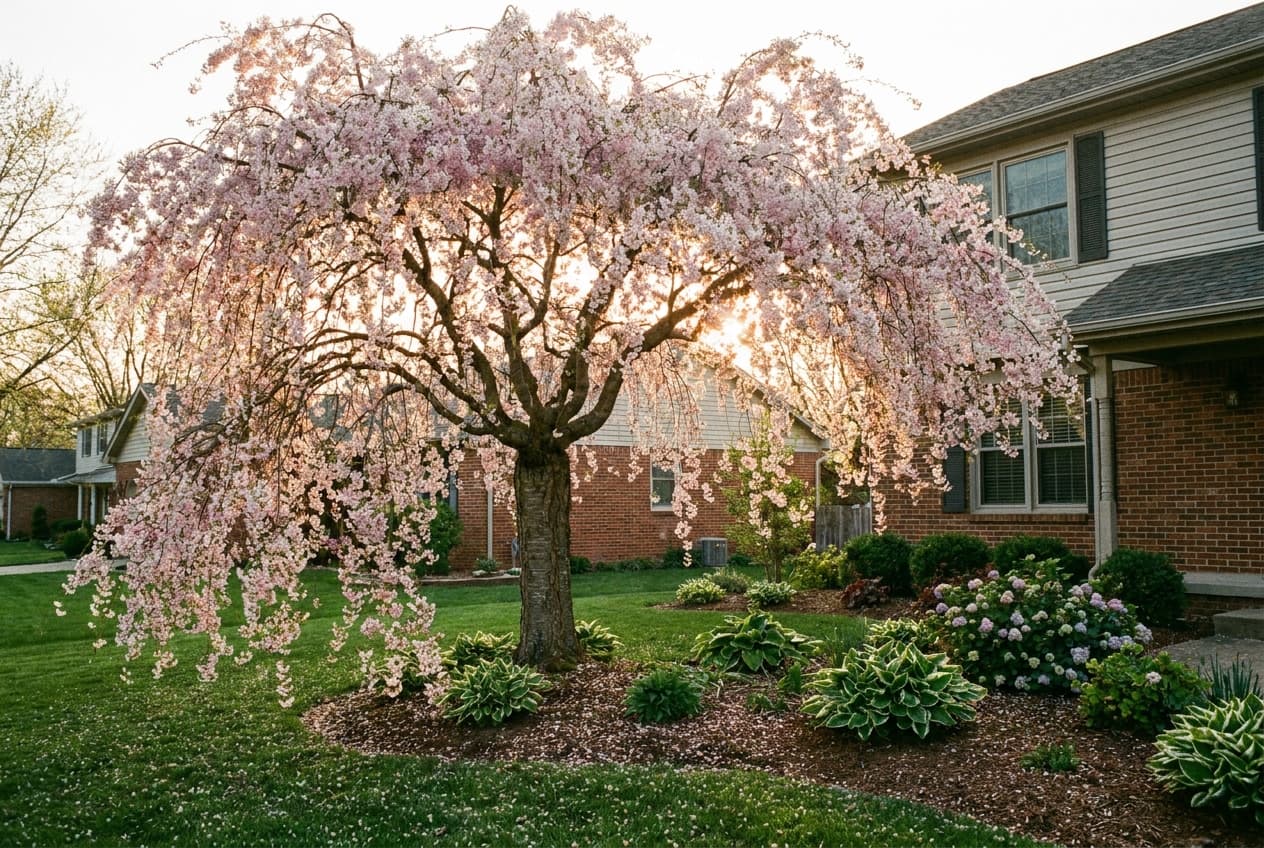
Weeping cherry trees are prized ornaments throughout Fort Wayne and Northeast Indiana, but knowing when to trim them is crucial for maintaining their health and distinctive cascading form. The best time to prune weeping cherries is immediately after they finish blooming in late spring, typically late May through early June in our USDA Zone 5b climate. Pruning at this window allows the tree to heal quickly, minimizes disease risk, and encourages proper growth without removing next year's flower buds.
Why Timing Matters for Weeping Cherry Pruning?
Pruning at the wrong time can devastate your weeping cherry's appearance and health. If you cut too late in summer or fall, you risk triggering new tender growth that winter frost will kill back. Pruning in dormant season removes flower buds that formed the previous summer, leaving you with a leafy tree but no blooms. Fort Wayne's unpredictable spring weather and clay-heavy soil make proper timing even more critical—wounds must close before our hot, humid summers arrive.
The ideal window is the four to six weeks immediately after flowering ends. At this point:
- The tree has energy reserves restored after blooming
- Wounds heal quickly in warming weather
- New growth has time to harden before winter
- Disease-causing spores are less active
- You can see the branch structure clearly without flowers obscuring it
What Happens If You Prune at the Wrong Time?
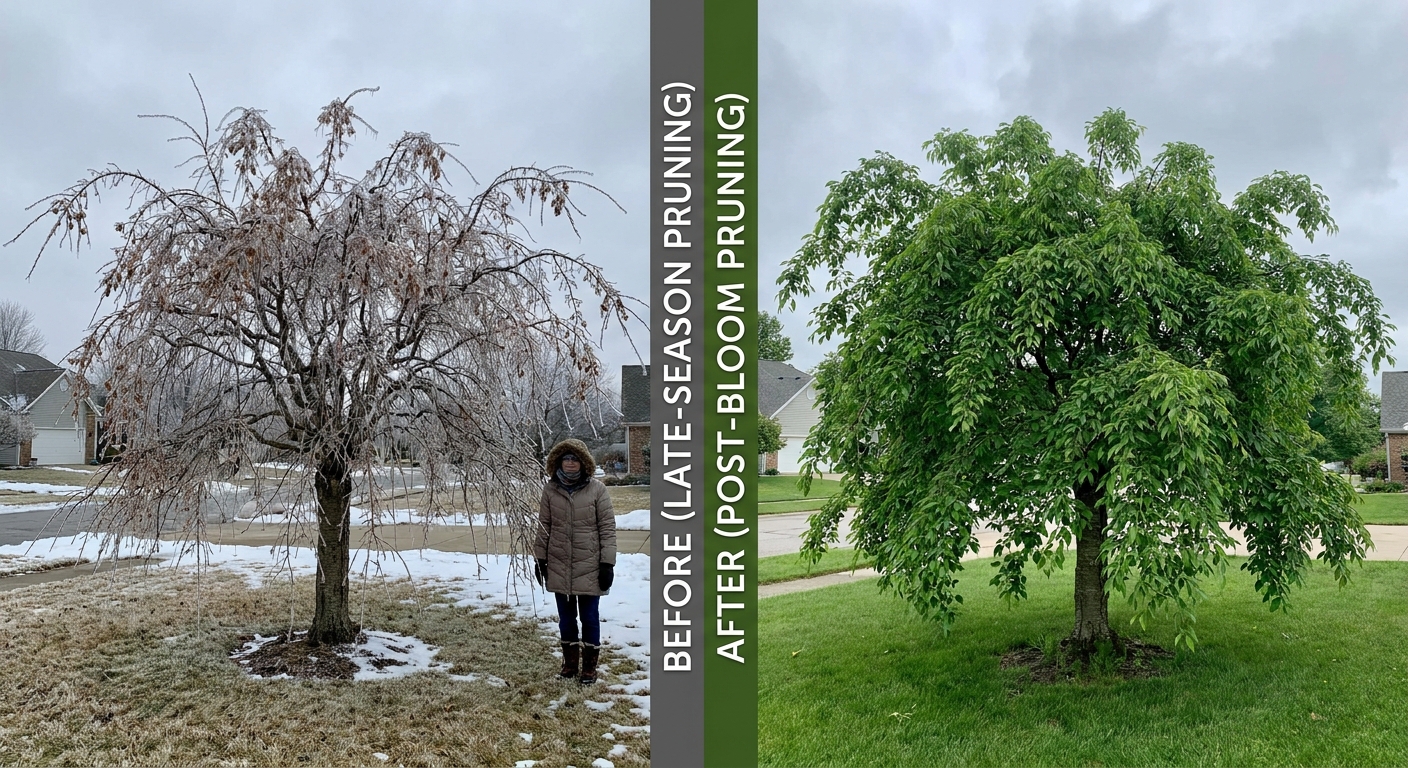
Pruning weeping cherries in fall or winter removes dormant flower buds that developed the previous year, resulting in a full canopy but no pink or white blooms the following spring. Late summer pruning stimulates tender new growth that our Northeast Indiana frost easily damages. Early spring pruning before blooms finish wastes the tree's energy and creates unnecessary wounds.
Additionally, weeping cherries are susceptible to fungal diseases like black knot and silver leaf disease. Pruning wounds made during wet conditions or when the tree is stressed increase infection risk. Our Fort Wayne area's humid summers mean wounds left open too long become entry points for pathogens.
Prune weeping cherries within four to six weeks after blooming ends to maximize flowering next year while minimizing disease risk and winter injury.
How Should You Approach the Initial Pruning?
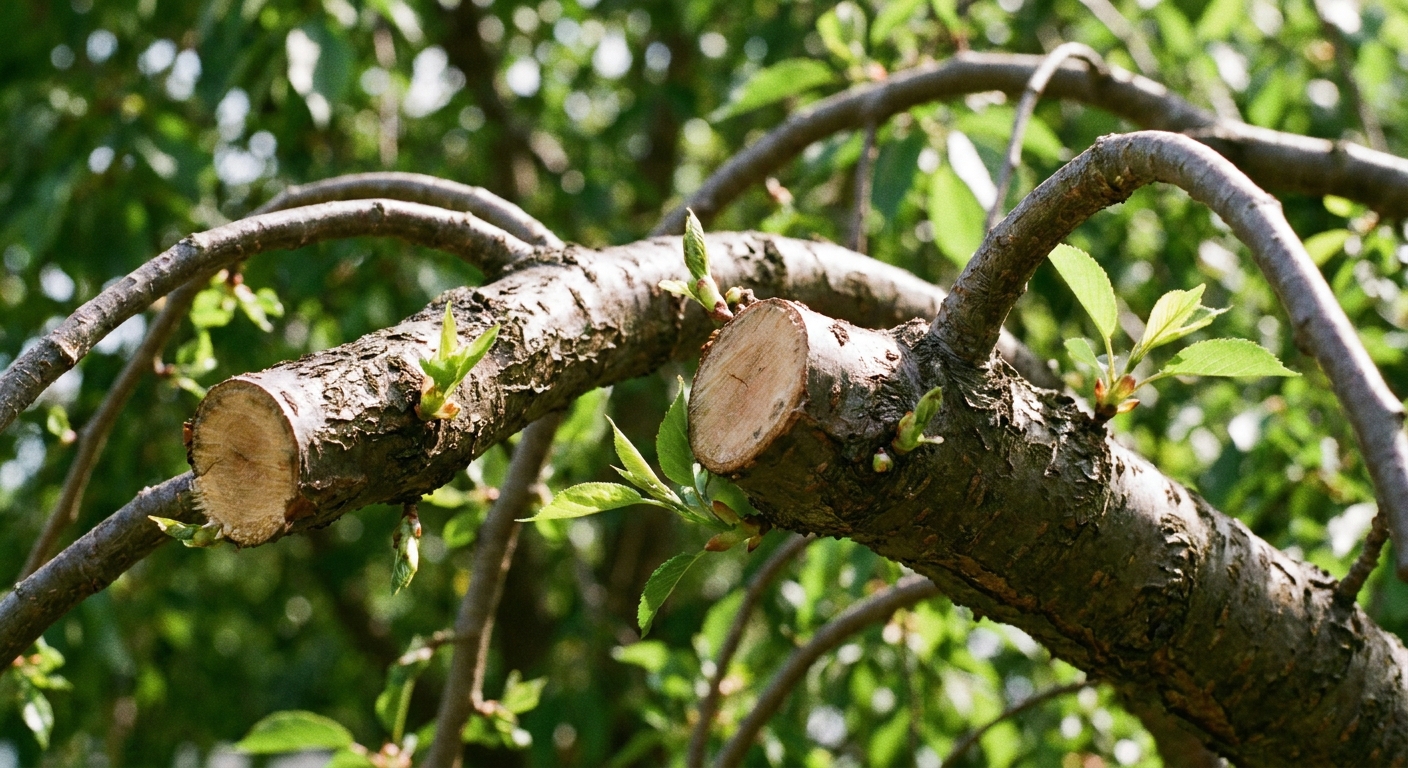
Start with selective removal of dead, diseased, or damaged branches. These should be cut completely back to the branch collar—never leave stubs. Next, remove any crossing or rubbing branches that create wounds through friction. The iconic weeping form develops naturally, so resist over-pruning; you're shaping, not reshaping.
When making cuts on your weeping cherry:
- Use sharp, clean pruning tools (bypass pruners for branches under ¾ inch, loppers for thicker wood)
- Make cuts just outside the branch collar at a slight angle
- Never apply wound dressing—trees seal wounds naturally and heal better without it
- Remove no more than 10-15% of the canopy in any one year
- Step back frequently to assess the overall shape
For Fort Wayne properties, consider the tree's mature size—most weeping cherries reach 20-30 feet wide. Overpruning now won't slow them down much later, so err on the side of caution if you're unsure.
When Should You Call a Professional Arborist?
If your weeping cherry has become overgrown, shows signs of disease like black knots or cankers, or requires removal of branches larger than 2 inches in diameter, professional tree care is your best investment. Our Northeast Indiana climate creates unique challenges—ice damage in winter, disease pressure from humidity in summer—that require an experienced eye.
Minnick Lawn & Landscaping has been serving Fort Wayne since 2017 and specializes in proper tree trimming and care tailored to Zone 5b conditions. Improper pruning can degrade your tree's shape permanently or weaken its structure, making professional help worthwhile for specimen trees that anchor your landscape.
What Maintenance Comes After the Initial Pruning?
Once you've completed your post-bloom pruning, light maintenance becomes your annual rhythm. Each year after flowering, remove any obviously dead wood and thin out crossing branches. This prevents the tree from becoming dense and matted, which reduces air circulation and invites fungal disease in our humid Fort Wayne summers.
Monitor for these common pests and diseases in Northeast Indiana:
- Black knot (dark, warty growths on branches)—prune out affected branches immediately
- Cherry leaf spot (brown holes in leaves)—remove diseased leaves and improve air circulation
- Spider mites (fine webbing on leaves)—increase humidity with deep watering
- Japanese beetles (skeletonized leaves)—handpick or use targeted spray in early summer
Established weeping cherries in Fort Wayne need minimal fussing if pruned correctly. Deep watering during dry spells and light annual pruning keep them blooming beautifully for decades.
Should You Prune Weeping Cherry Limbs That Touch the Ground?
The cascading branches touching or sweeping the ground are part of the weeping cherry's appeal, but they should never be left permanently wet or buried in mulch. If limbs rest on soil where moisture pools, thin them slightly to improve air circulation. Never prune them flush just to be neat—the graceful form is what makes the tree special.
In Fort Wayne yards with dense clay soil, branch dieback from root rot risk is real if drainage is poor. If you notice dying lower branches, improve soil drainage first before assuming the pruning schedule is wrong. Landscape drainage improvements often solve these problems better than pruning alone.
Your weeping cherry is an investment in your Fort Wayne property's beauty. Understanding that late May through early June is your pruning window—and sticking to it—ensures decades of spectacular spring color. If you're uncertain about timing or your tree shows signs of disease or damage, our certified arborists are ready to help. Request a free estimate and let's keep your weeping cherry thriving.