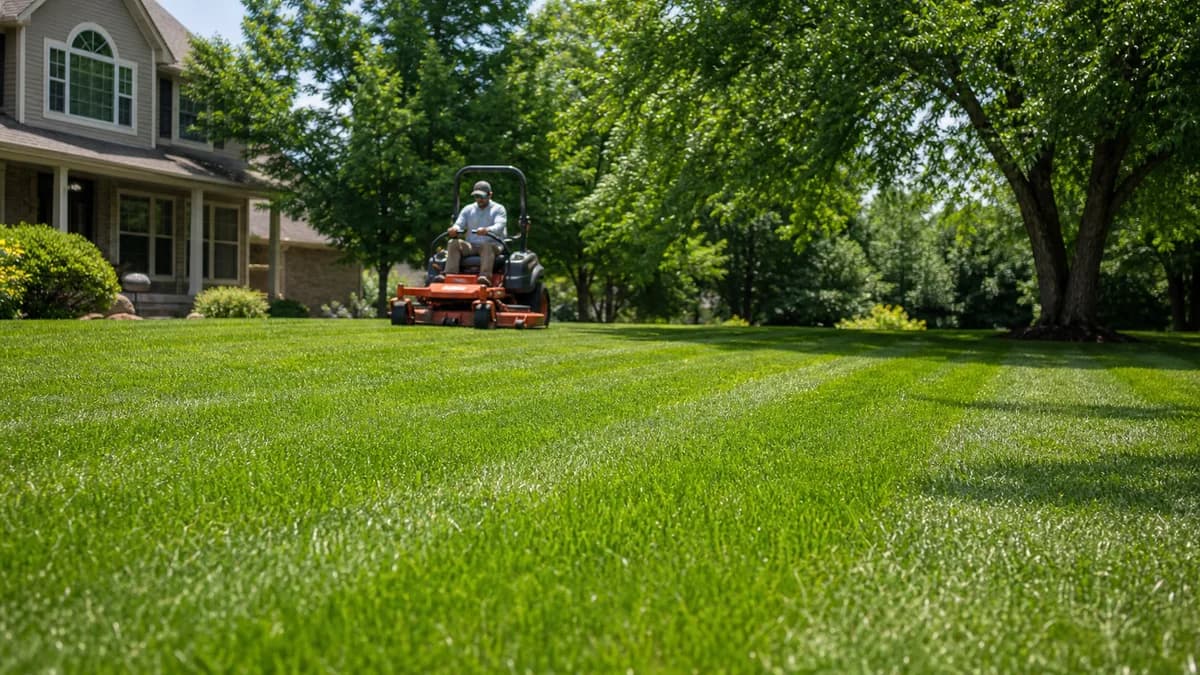
Yes, raising your mower blade during Fort Wayne's hot summer months is one of the most effective ways to keep your lawn healthy and resilient. Taller grass blades create deeper root systems, reduce water loss, and shield the soil from intense sun exposure. During Northeast Indiana's peak heat season (July and August), mowing at a higher setting isn't optional—it's essential lawn care.
Why Does Grass Height Matter During Summer Heat?
Grass height directly affects your lawn's ability to survive summer stress. When you cut grass too short during hot weather, you remove the leaf surface that captures sunlight for energy production. Shorter grass also exposes soil to intense UV radiation, raising soil temperature and increasing water evaporation. Fort Wayne lawns cut at standard heights during summer are more susceptible to stress, disease, and brown patches.
The relationship is straightforward: taller grass shades the soil, keeps it cooler, and retains moisture longer between waterings. This means your lawn requires less supplemental irrigation and recovers faster from heat stress.
What's the Ideal Mowing Height for Summer in Northeast Indiana?
For cool-season grasses common in Fort Wayne and Northeast Indiana, summer mowing height should be 3 to 3.5 inches tall. This is significantly higher than spring and fall heights (2 to 2.5 inches). If your lawn is primarily Kentucky bluegrass or perennial ryegrass—the standard for our region—these taller settings provide optimal summer protection.
Here's a practical breakdown for Fort Wayne lawns throughout the year:
- Spring (March–May): 2 to 2.5 inches
- Early Summer (June): 2.75 to 3 inches
- Peak Summer (July–August): 3 to 3.5 inches
- Fall (September–October): 2.5 to 3 inches
- Late Fall–Winter: 2.5 inches or slightly lower
Adjust these heights based on recent rainfall and your lawn's condition. If you've had dry periods, lean toward the higher end of the range.
How Does Taller Grass Reduce Watering Needs?
Taller grass blades act as a natural mulch layer over the soil surface, dramatically reducing water evaporation. A lawn mowed at 3.5 inches loses significantly less moisture during Fort Wayne's hot afternoons than one cut at 2 inches. This means you can reduce watering frequency during summer, saving water and money.
The soil temperature difference is measurable. Research shows that soil under 2-inch grass can reach 75°F on a sunny day, while soil under 3.5-inch grass stays closer to 65°F. In Northeast Indiana's USDA Zone 5b climate, this 10-degree difference translates directly to reduced plant stress and less disease pressure.
Raising your mower blade during summer isn't just cosmetic—it's a strategic defense against heat stress, drought, and disease. Fort Wayne lawns that follow seasonal mowing heights are visibly healthier by August.
Will Taller Summer Mowing Make Your Lawn Look Unkempt?
Many Fort Wayne homeowners worry that 3.5-inch grass looks wild or neglected. In reality, properly maintained taller grass looks full, dense, and attractive—actually healthier than short summer lawns. The key is consistent, regular mowing. Cutting every 5 to 7 days prevents the lawn from looking overgrown and maintains a neat appearance while still providing summer protection.
Taller grass also appears darker green because more leaf surface captures and reflects sunlight. Your neighbors may actually compliment your lawn's appearance once they see the results. The professional lawn care services in Fort Wayne routinely use this exact strategy for their most prestigious properties.
What Happens If You Don't Raise Your Mower Blade in Summer?
Fort Wayne lawns mowed short all summer face multiple problems. Low cutting removes too much leaf tissue, reducing the plant's photosynthetic capacity. The exposed soil becomes a heat sink, accelerating water loss and stressing root systems. Disease pathogens like brown patch fungus thrive in the heat and humidity around short, stressed turf. You'll likely see dead patches, thin areas, and increased weed invasion by August.
Short summer grass also requires more frequent watering to compensate for moisture loss, increasing your water bill and environmental impact. Many Fort Wayne homeowners find themselves in a cycle of damage control—treating disease, watering daily, and replanting bare spots—all because they didn't adjust their mowing height seasonally.
When Should You Start Raising Your Mower Blade?
Begin transitioning to higher mowing heights in early June, as temperatures start climbing consistently above 75°F. By mid-June in Fort Wayne, your blade should be set to 3 to 3.5 inches. Maintain this height through August, then gradually lower back to 2.5 inches in September as temperatures cool. Avoid the mistake of waiting until July when heat stress is already damaging your lawn.
Monitor local weather forecasts in Northeast Indiana. If an extended heat wave is predicted, you might raise your blade even higher—up to 4 inches—for that specific period. Conversely, if June stays unusually cool and wet, you can stay at 2.75 inches until genuine summer heat arrives.
Your Fort Wayne lawn's summer survival depends on simple adjustments like blade height. Ready to see the difference professional care makes? Request a free quote from Minnick Lawn & Landscaping, and let our team handle your seasonal mowing strategy while you enjoy a healthier, more resilient yard all summer long.