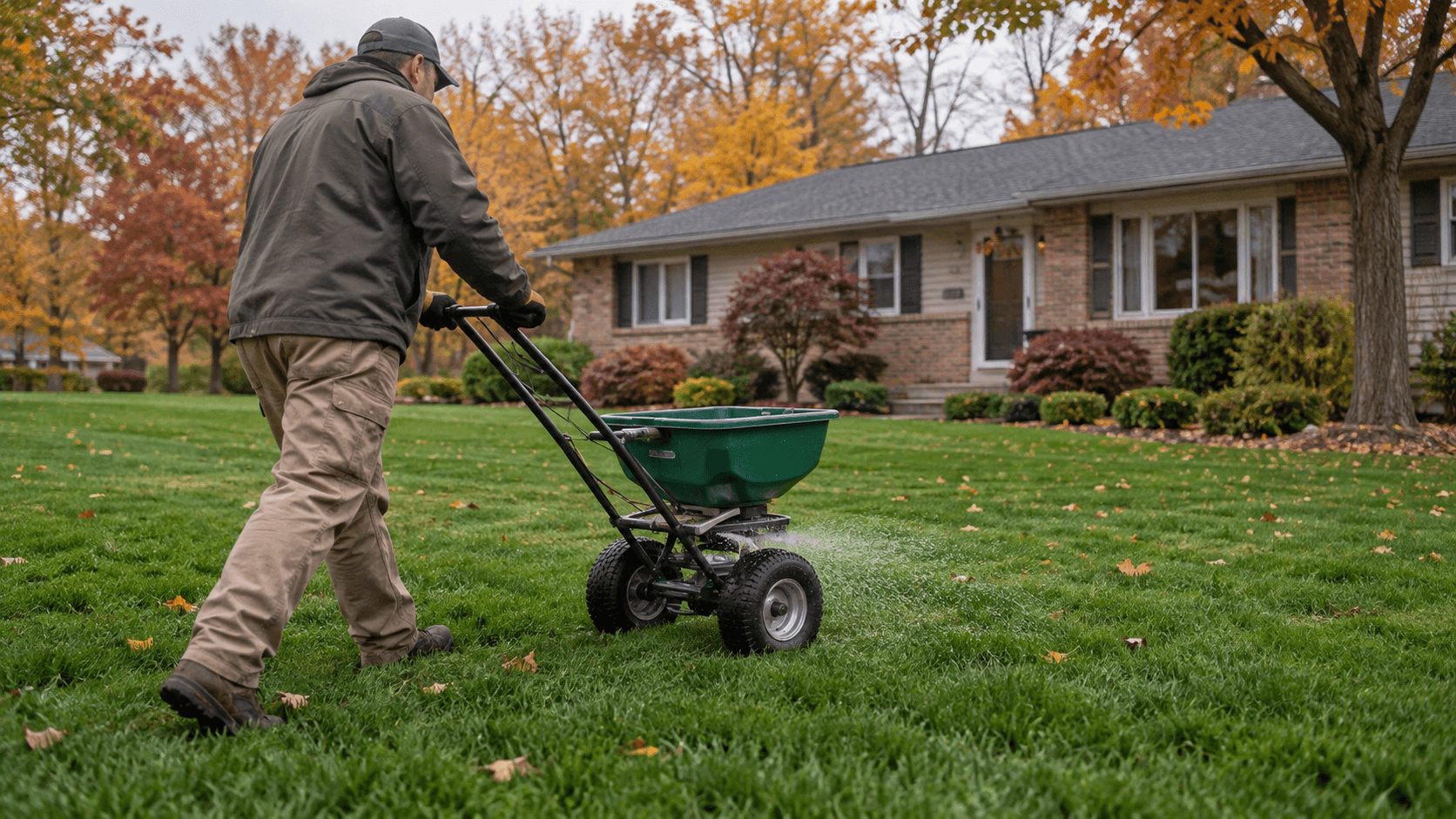
The best time to fertilize a Fort Wayne lawn in fall is between early September and mid-October, while grass roots are still actively growing but top growth has slowed. Getting this window right does more for a northeast Indiana lawn's health than any other feeding of the year, because the nutrients go straight into root development and winter storage instead of leaf growth that just gets mowed off.
Why Does Fall Fertilization Matter More Than Spring Feeding?
Cool-season grasses common in Fort Wayne yards — Kentucky bluegrass, perennial ryegrass, tall fescue — shift their energy underground as temperatures drop. Fall nitrogen gets converted into root mass and stored carbohydrates rather than rapid blade growth, which is exactly what a lawn needs to survive a northeast Indiana winter and green up fast the following spring.
- Stronger roots: Nutrients applied in fall feed root systems instead of top growth that just gets cut
- Faster spring green-up: Stored carbohydrates fuel early spring growth before soil has fully warmed
- Better winter survival: Well-fed turf resists winter desiccation and disease better than a lawn fed only in spring
When Exactly Should You Apply Fall Fertilizer in Fort Wayne?
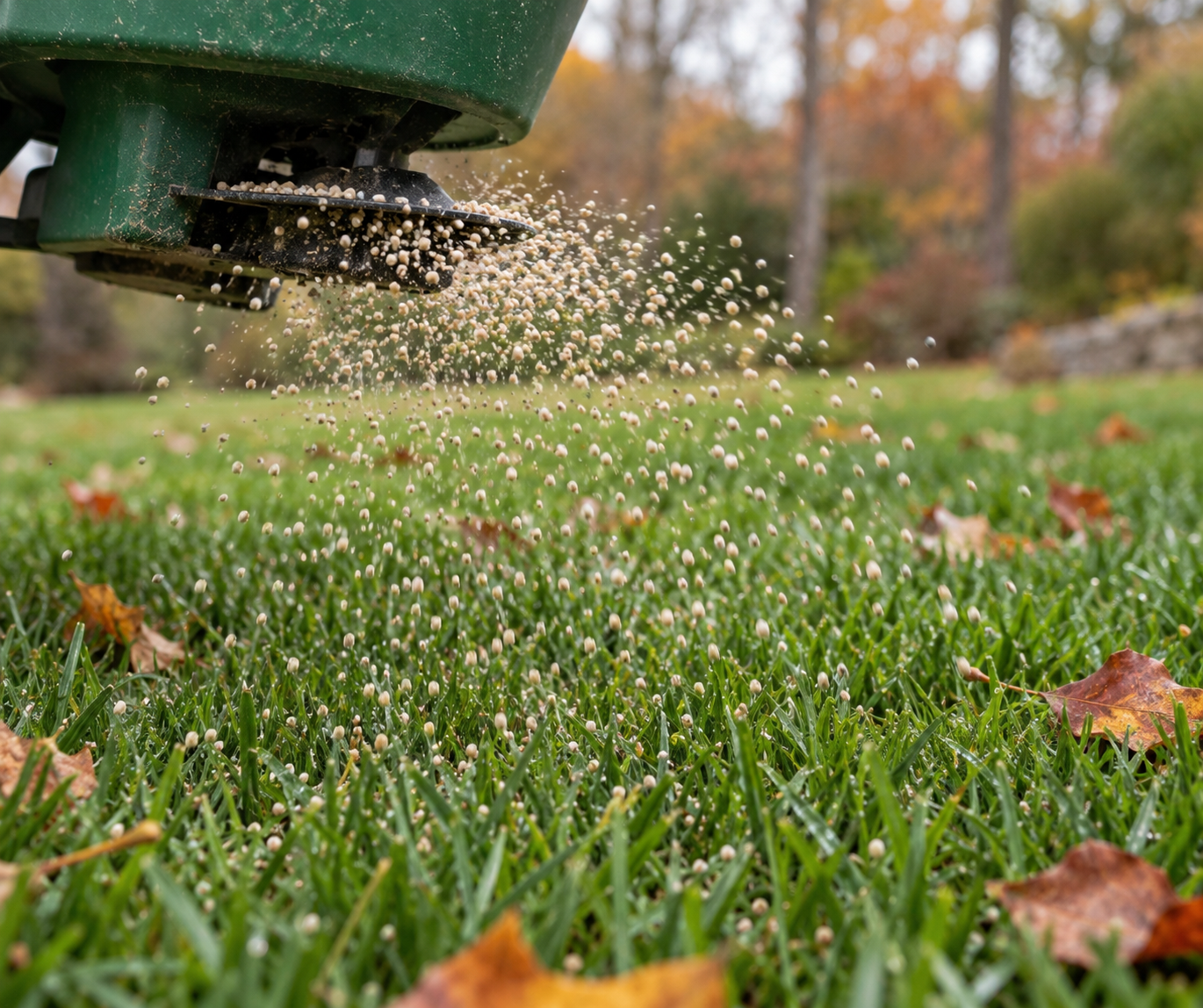
Northeast Indiana's USDA Zone 5b climate supports two fall applications for most lawns: one in early-to-mid September and a "winterizer" application in late October to early November, timed for just before the ground freezes. The September round should still contain balanced nitrogen; the late-fall winterizer shifts toward higher potassium to build cold and disease tolerance.
What Nutrients Should a Winterizer Fertilizer Contain?
A good winterizer isn't about making the lawn greener right now — it's about banking the nutrients your grass needs to survive winter and wake up strong in April.
Look for a fertilizer with a higher potassium ratio than your summer blend — potassium strengthens cell walls and improves cold tolerance. Phosphorus should stay modest unless a soil test shows a deficiency, since excess phosphorus mostly washes into local waterways rather than helping the lawn. Nitrogen should be present but at a moderate, slow-release rate rather than a fast green-up spike.
- Potassium: Builds winter hardiness and disease resistance
- Slow-release nitrogen: Feeds roots gradually through fall rather than forcing late top growth
- Modest phosphorus: Only increase if a soil test confirms your lawn care program needs it
Should Fall Fertilizing Be Paired With Aeration and Overseeding?
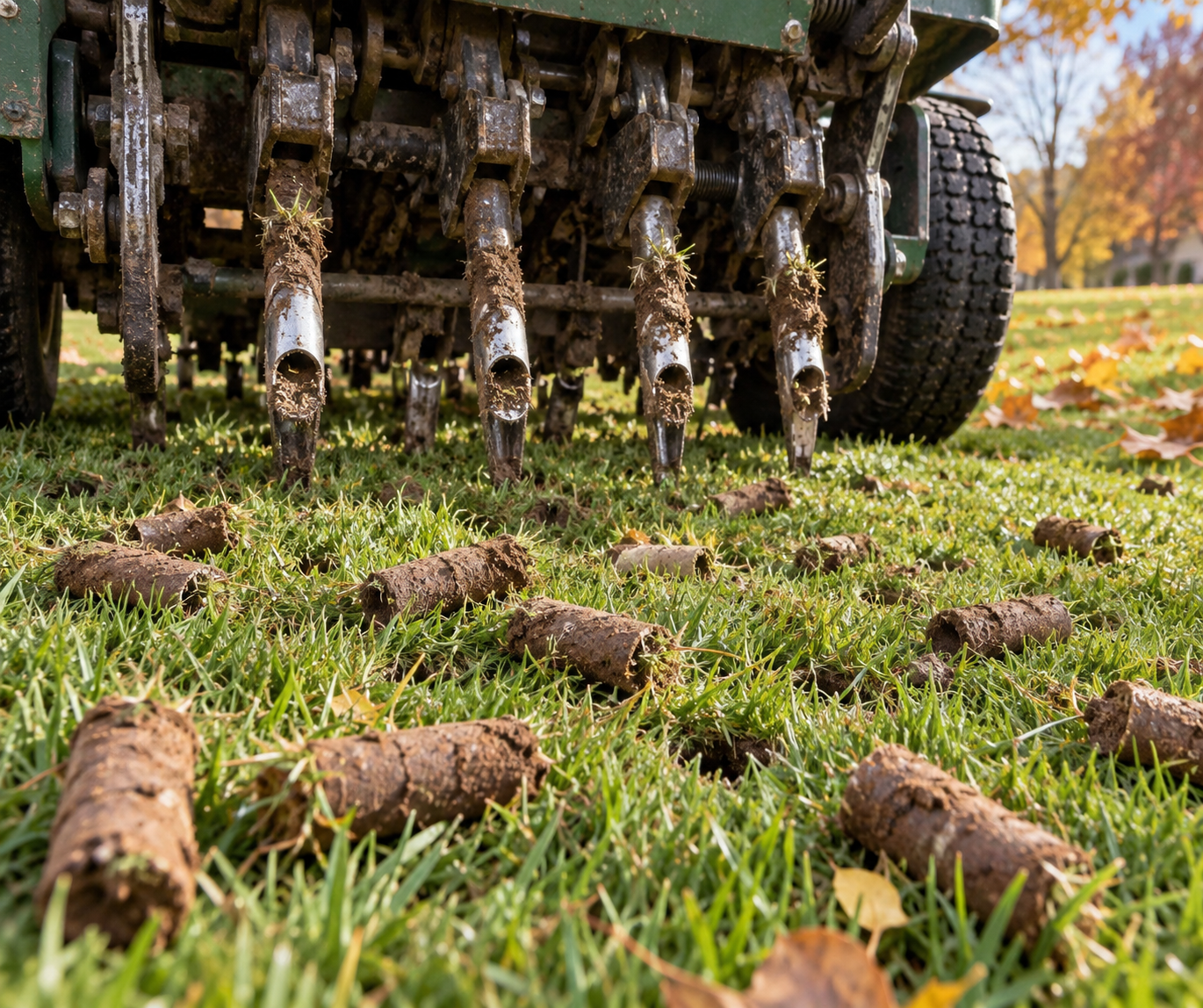
Yes — fall is the best season in Fort Wayne to pair fertilization with core aeration and overseeding. Aerating before you fertilize lets nutrients and water reach the root zone through Northeast Indiana's clay-heavy soil instead of running off compacted turf. If you're overseeding thin or bare patches, apply a starter fertilizer at seeding time, then follow with the standard fall feeding once new grass has germinated.
What Happens If You Fertilize Too Late in the Season?
Applying fertilizer after the ground has frozen or grass has gone fully dormant wastes the product — frozen soil can't absorb nutrients, and much of it runs off with winter precipitation instead of feeding your lawn. As a rule of thumb for Fort Wayne, the final application should go down before Thanksgiving, once mowing has essentially stopped for the season but before a hard, sustained freeze sets in.
How Much Does Fall Fertilization Cost in Fort Wayne?
A single fall fertilizer application for an average Fort Wayne residential lawn typically runs $50–$100 as a standalone service, while a full fall program — early-September feeding, late-fall winterizer, and aeration — typically falls in the $150–$350 range depending on lawn size and whether overseeding is included. Lawns enrolled in a season-long lawn care program usually see fall applications bundled into their existing plan at a lower incremental cost than one-off service calls.
Can You Fertilize a Fort Wayne Lawn Yourself, or Should You Hire a Professional?
DIY fall fertilizing works fine for homeowners willing to soil-test, calculate the right product ratio, and calibrate a spreader correctly. The most common mistakes are applying too much nitrogen too late, skipping a soil test and guessing at phosphorus needs, or missing the September window entirely because fall schedules fill up fast. A professional lawn care program builds fall feeding into a full-season plan so the timing, product, and rate are handled automatically.
Ready to get your Fort Wayne lawn on a proper fall fertilization schedule? Request a free quote from Minnick Lawn & Landscaping. Our team will assess your lawn's condition, recommend the right fall and winterizer applications, and make sure your grass goes into winter strong and comes out green in spring.