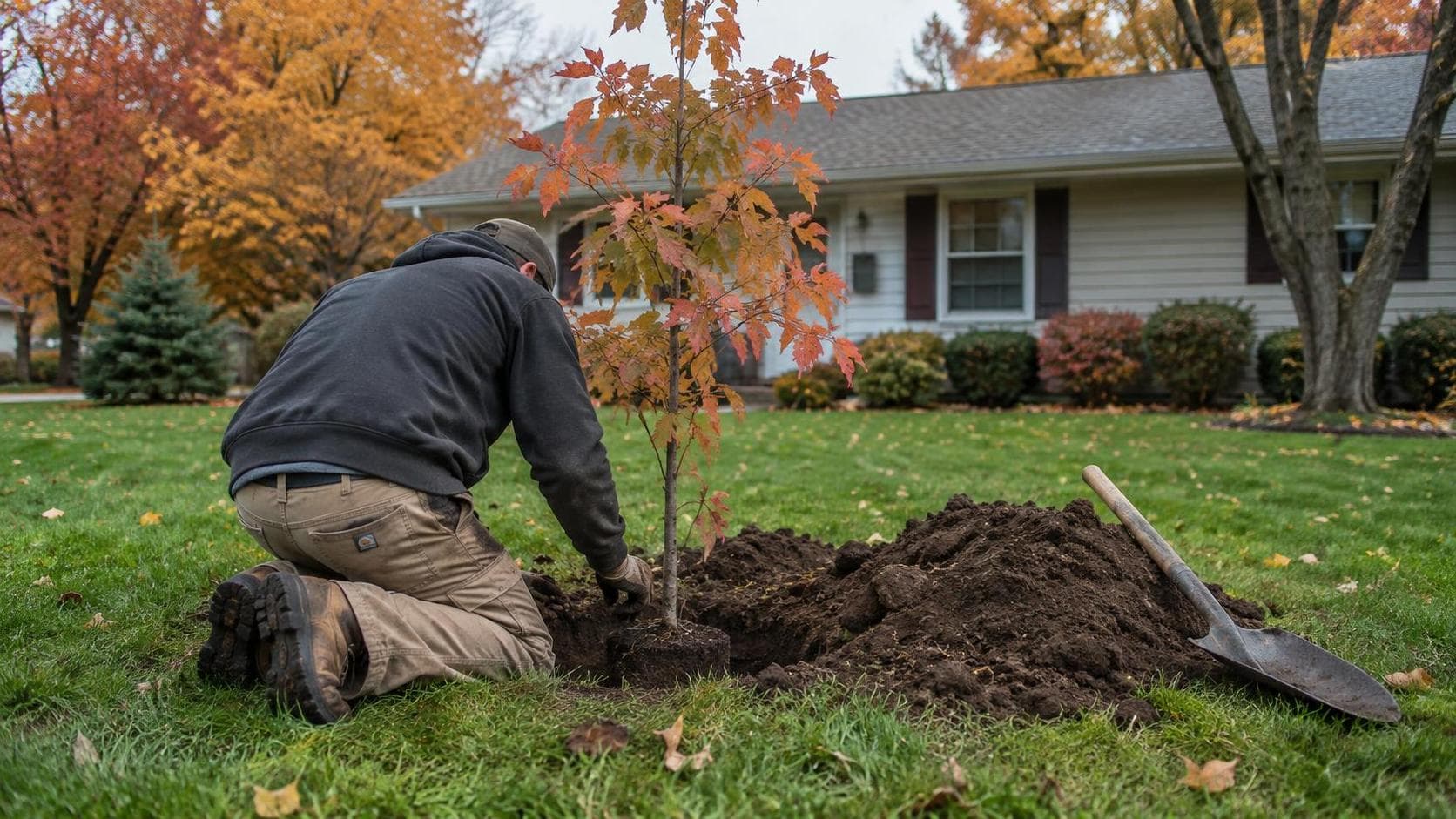
You protect new plantings through a northeast Indiana winter by watering deeply until the ground freezes, adding a layer of mulch, and shielding trunks and branches from sun, wind, and hungry wildlife. Trees and shrubs planted this year have not grown the deep root systems that established plants rely on, so the first winter is the most vulnerable one. In Fort Wayne's Zone 5b climate, a few simple steps in November can make a real difference come spring.
Why Are New Plantings More Vulnerable to Winter in Fort Wayne?
A tree or shrub planted this season is still building roots into the surrounding soil. Until those roots spread out, the plant depends on the small root ball it came with, and that root ball sits close to the surface where temperature swings hit hardest. Fort Wayne's clay-heavy soil adds to the challenge because it holds water, freezes hard, and can shift during repeated freeze and thaw cycles.
Northeast Indiana winters also bring drying winds, bright sun on cold days, and heavy, wet snow. Each of these puts stress on young plants in a different way, which is why protection works best as a combination of small steps rather than one fix.
Should You Keep Watering New Trees and Shrubs in Late Fall?
Yes. Plants that go into winter with moist soil around their roots generally handle cold and wind better than plants that enter winter dry. Evergreens are especially sensitive because their needles keep losing moisture all winter long.
- Water deeply, not often: A slow, thorough soaking reaches the root zone better than a quick sprinkle.
- Keep going until the ground freezes: Fall can turn dry in Northeast Indiana, so check the soil rather than relying on the calendar.
- Skip saturated soil: Clay drains slowly, so push a finger a few inches down and water only when it feels dry.
- Drain hoses before a hard freeze: Disconnect and store them so they do not crack or damage the spigot.
A new planting that heads into winter well watered, well mulched, and well protected is far more likely to leaf out strong in spring.
How Much Mulch Do New Plantings Need Before Winter?
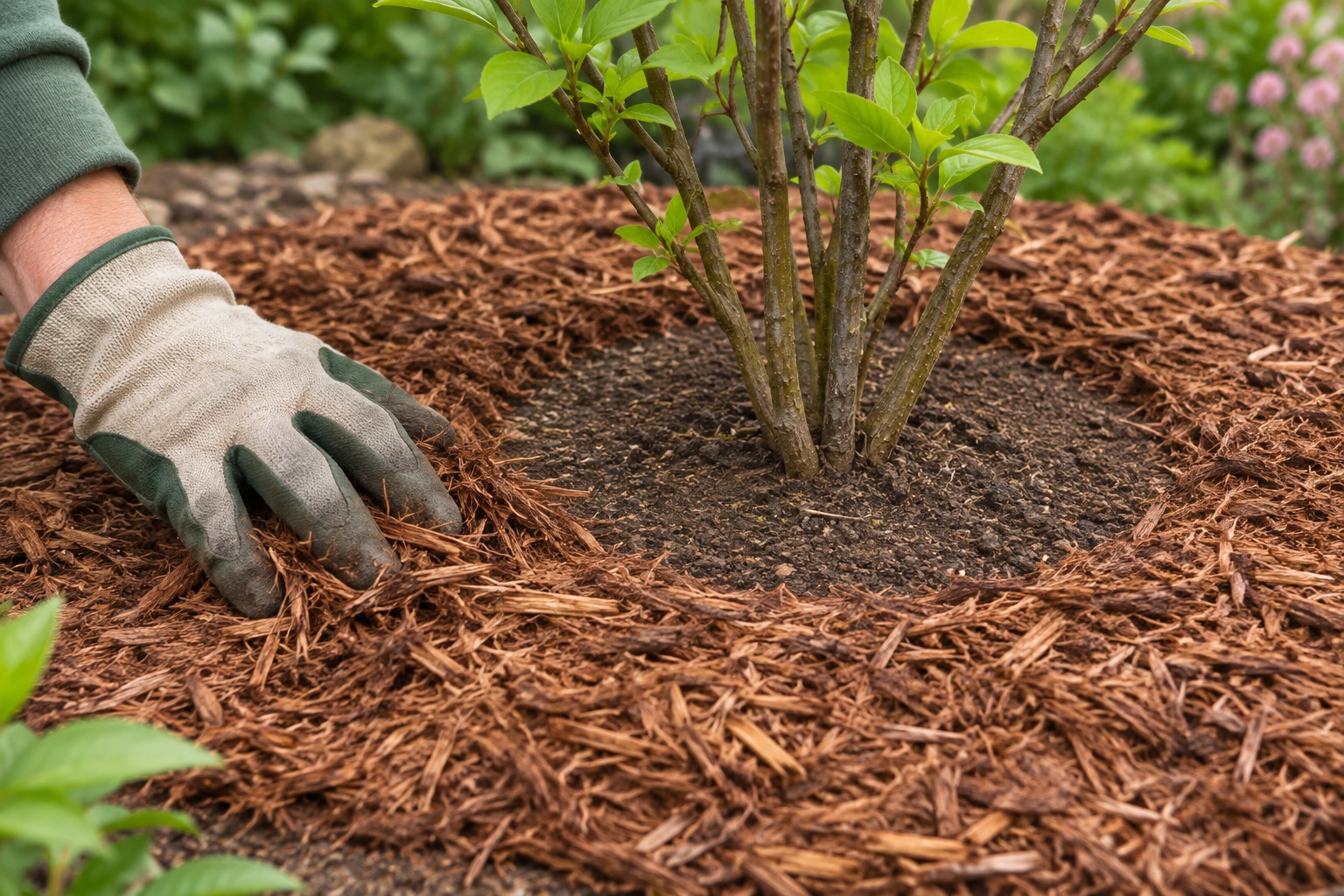
A layer of mulch about 2 to 3 inches deep helps even out soil temperatures and slows the freeze and thaw swings that can push young roots upward. Shredded hardwood or similar organic mulch works well and breaks down to feed the soil over time.
Keep mulch pulled back a few inches from the trunk or stems. Mulch piled against the bark holds moisture and gives mice and voles a cozy place to hide. A flat, wide ring is better than a tall cone. If you need mulch for several beds, our mulch delivery service can help.
How Do You Protect Young Trees From Sunscald and Wildlife?
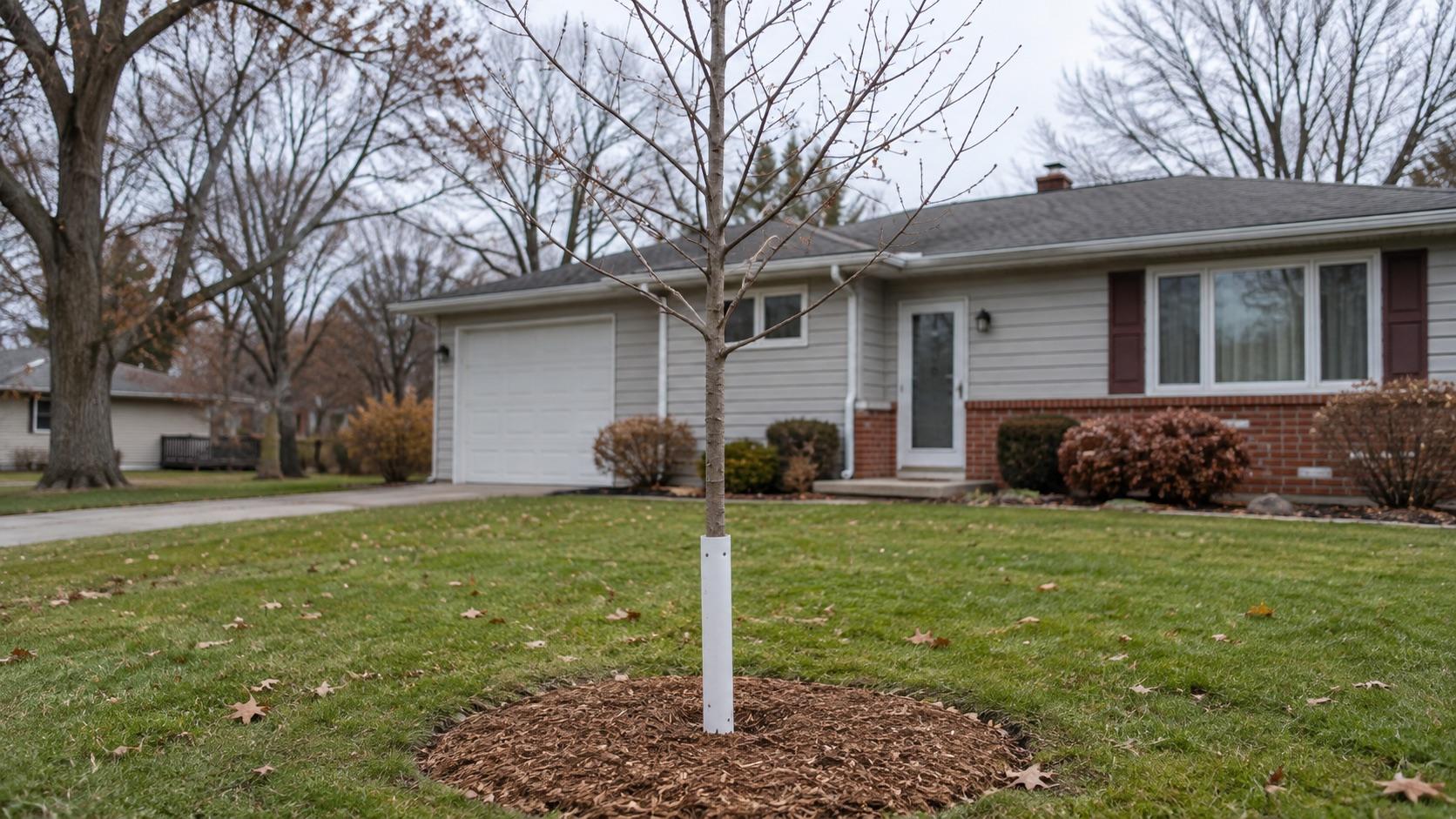
Thin-barked young trees can be damaged on cold, sunny days when the sun warms one side of the trunk and the temperature then drops sharply after sunset. Deer, rabbits, and voles can also chew bark and tender stems when other food gets scarce.
- Trunk guards or wrap: A loose wrap or plastic guard around young trunks is typically applied in late fall and removed in spring.
- Hardware cloth cylinders: A wire mesh cylinder set a little away from the trunk helps keep rabbits and voles from gnawing the bark.
- Deer protection: Fencing or netting around small shrubs can help in areas where deer browse regularly.
- Remove guards in spring: Leaving them on year round can trap moisture and pests against the bark.
What Should You Do About Wind and Heavy Snow on Evergreens?
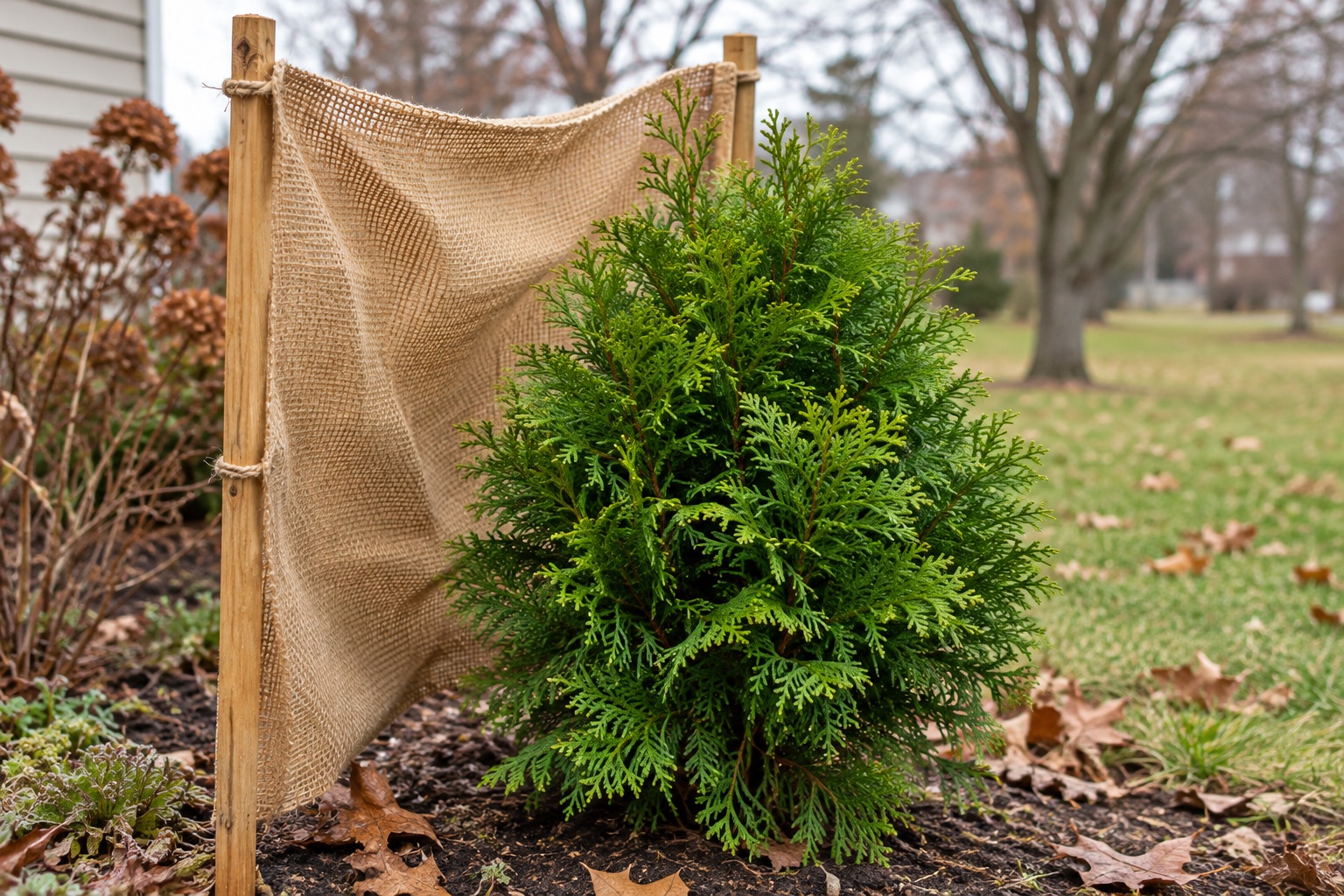
Wind and winter sun can dry out evergreen needles faster than the roots can replace moisture, leaving brown, scorched foliage by late winter. A burlap screen set up on the windward side of a young evergreen, without wrapping it tightly, can soften the wind while still letting air move through.
Heavy, wet snow can bend or split branches on upright shrubs. Gently brushing snow off with an upward sweep is usually safer than shaking the branches, and avoid hitting frozen limbs, which can snap. For upright evergreens that fan open under snow load, a loose tie around the branches can help, as long as it is done carefully.
Do Road Salt and Late-Season Pruning Hurt New Plantings?
They can. Salt spray and salty runoff from driveways and sidewalks can burn foliage and harm roots, so plan where you pile treated snow and consider planting salt-sensitive shrubs away from the street edge in the future. Rinsing is not practical in winter, so prevention is the main tool.
Hold off on heavy pruning and fertilizing late in the season. Both can encourage tender new growth that does not have time to harden before a hard freeze. Dead or broken branches can be removed any time, but wait for the dormant season for shaping cuts. Our post on planting trees and shrubs in Northeast Indiana in the fall explains how a good start in the ground sets up winter success.
When Should You Check New Plantings During Winter and Early Spring?
Walk the yard after thaws and big storms. Freeze and thaw cycles in Fort Wayne's clay soil can heave smaller plants slightly out of the ground, exposing roots. If you notice that, gently press the root ball back into place and add mulch once the soil is workable.
In early spring, remove trunk guards, pull back any extra mulch that has settled against bark, and wait until new growth shows before deciding whether a branch is truly dead. Many plants leaf out later than you might expect. If you would rather have a pro handle it, explore our landscaping services for planting and seasonal care.
Ready to give your new plantings the best chance this winter? Request a free quote from Minnick Lawn & Landscaping this season, and our team will recommend practical protection steps for your yard.