Proper slope and grading around your Fort Wayne property is one of the most overlooked foundations of outdoor health—literally and figuratively. When water doesn't drain away from your home, it finds its way into basements, damages foundations, erodes landscaping, and creates expensive problems. In Northeast Indiana's clay-heavy soil and seasonal rainfall, correct grading isn't a luxury—it's essential maintenance that protects your investment.
Why Does Slope and Grading Matter for Your Property?
Slope and grading direct water away from your home's foundation and across your yard toward natural drainage points or storm systems. Without proper grading, water pools around your foundation, seeps into basements, and weakens structural integrity. In Fort Wayne's USDA Zone 5b climate with significant spring snowmelt and summer storms, grading mistakes become expensive quickly. A properly graded property also prevents soil erosion, supports healthy landscaping, and extends the life of hardscaping features like patios and driveways.
- Foundation protection from hydrostatic pressure and moisture intrusion
- Prevents basement flooding and water damage
- Reduces soil erosion and landscape settling
- Extends driveway and hardscape lifespan
- Improves yard usability and prevents soggy spots
- Reduces pest and mosquito breeding grounds
What's the Ideal Slope for Water Drainage?
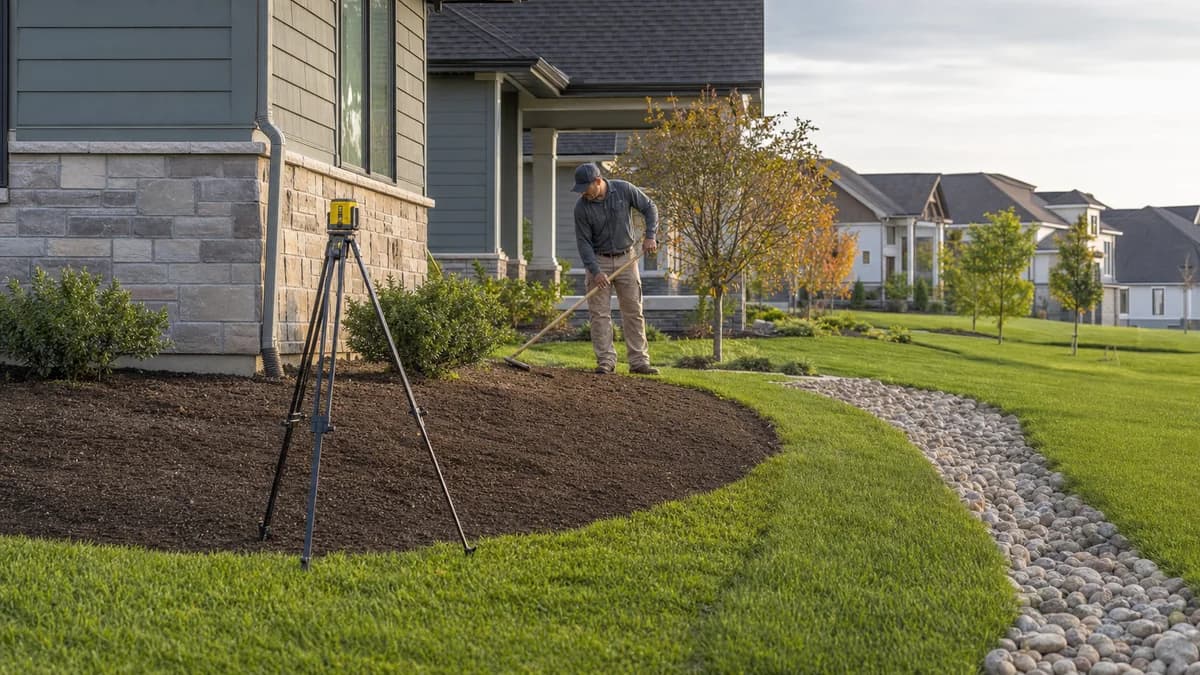
The rule of thumb for residential grading in Fort Wayne is a minimum slope of 1 inch of drop per 8 feet of horizontal distance extending at least 6 feet from your foundation. This gentle slope is barely noticeable to the eye but highly effective at moving water. For clay soil common in Northeast Indiana, this slope prevents water from pooling while being achievable without making your yard feel tilted.
Beyond the first 6 feet from your home, the slope can gradually level out, but should never slope back toward the foundation. If your current grading slopes toward your home, water will collect around your foundation year-round, particularly problematic during Fort Wayne's wet springs. Some properties need steeper slopes (up to 1:4 ratio) in certain areas, especially near low spots or near downspouts where concentrated water flow occurs.
How Does Northeast Indiana's Clay Soil Affect Grading?
Allen County and surrounding Northeast Indiana areas have predominantly clay-heavy soil that doesn't absorb water as quickly as sandy or loamy soil. This means proper slope is even more critical—water won't percolate down quickly, so it must move horizontally away from your foundation. Clay soil also settles and compacts over time, which can flatten your carefully graded yard within 2-3 years if not addressed with proper soil amendment.
When Minnick Lawn & Landscaping grades properties in Fort Wayne, we account for this clay reality by:
- Bringing in high-quality topsoil or amended fill to ensure long-term stability
- Creating slopes slightly steeper than minimum to account for future settling
- Installing drainage solutions like French drains or swales where clay prevents natural drainage
- Avoiding pure clay fill, which compacts and becomes impermeable
Improper grading costs homeowners thousands in foundation repairs, basement waterproofing, and landscape replacement. Getting it right the first time—or fixing it now—is one of the smartest investments in your Fort Wayne property.
What Are Common Grading Problems in Fort Wayne Homes?
After years of serving Auburn, New Haven, Huntertown, and throughout Northeast Indiana, we've identified recurring grading failures that cause property damage. The most common issues stem from new construction where builders prioritize speed over proper drainage, tree removal that leaves depressions, or settling of poorly compacted fill soil.
Specific problems we address in Fort Wayne properties include:
- Foundation swales that are too shallow or non-existent – water collects against the foundation wall
- Downspout discharge onto adjacent grade – concentrated water erosion in one spot
- Low spots in the yard – typically from tree stump removal or settling, creating mosquito breeding pools
- Reverse slope toward the home – often from old flower beds filled without proper compaction
- Driveway and sidewalk settlement – water pools, accelerates cracking, creates tripping hazards
How Can You Fix or Improve Your Property's Grading?
If your Fort Wayne property has drainage problems, fixes range from simple to comprehensive depending on the extent of the issue. Start with a visual inspection: walk your yard after rain and notice where water collects. Look for foundation puddles, soggy lawn areas, erosion channels, and basement moisture. These are grading red flags that need attention.
For minor grading issues, landscaping solutions like adjusting topsoil elevation or installing a swale can redirect water effectively. For moderate problems involving foundation swales or widespread low spots, you may need fill soil import and regrading. Severe cases—where water is entering your basement or foundation is compromised—often require hardscaping solutions like French drains, sump systems, or retaining walls to manage water movement.
Professional grading assessment in Northeast Indiana should account for:
- Existing drainage patterns and seasonal water movement
- Soil composition and drainage capacity (critical with our clay soil)
- Foundation elevation and surrounding landscape features
- Long-term settling and maintenance of the slope
- Integration with hardscaping like patios, driveways, and retaining walls
When Should You Call a Professional Grading Contractor?
DIY grading is tempting but rarely successful without proper equipment and expertise. Fort Wayne properties often require precise calculations, quality fill material, and compaction to code. If you notice foundation puddles, basement moisture, eroding landscape, or soggy yard areas, professional assessment is worth the investment. Water damage repairs cost far more than preventive grading.
Contact Minnick Lawn & Landscaping for a free evaluation of your property's slope and drainage. We'll assess your current grading, identify problem areas, and recommend solutions tailored to Northeast Indiana's clay soil and climate. Whether you need minor adjustments or comprehensive regrading with landscape installation, we'll design a solution that protects your foundation and improves your property's health for years to come.
Don't let poor grading compromise your home's foundation. Request a free quote from Minnick Lawn & Landscaping today and get your Fort Wayne property's drainage working the way it should.