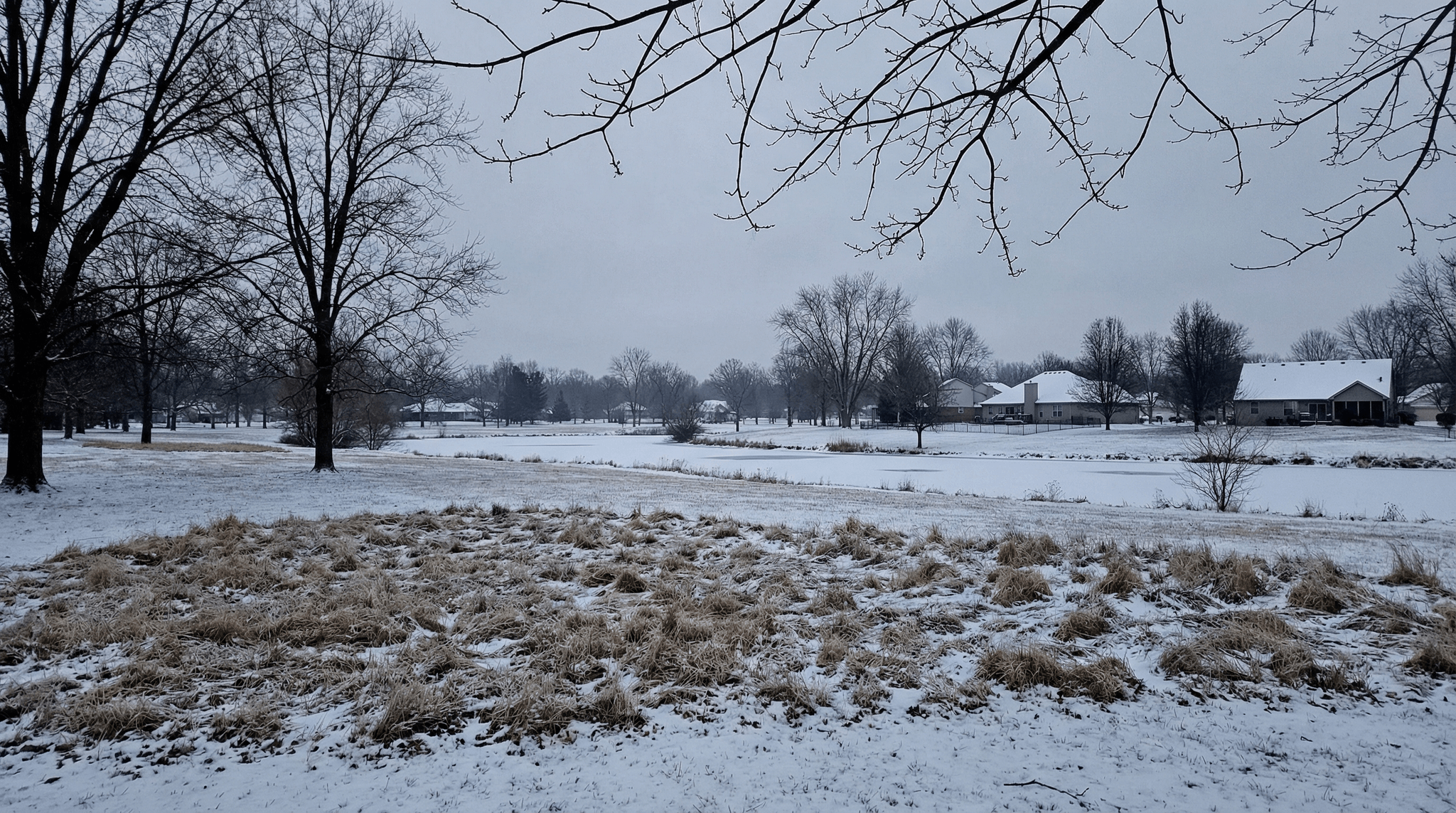
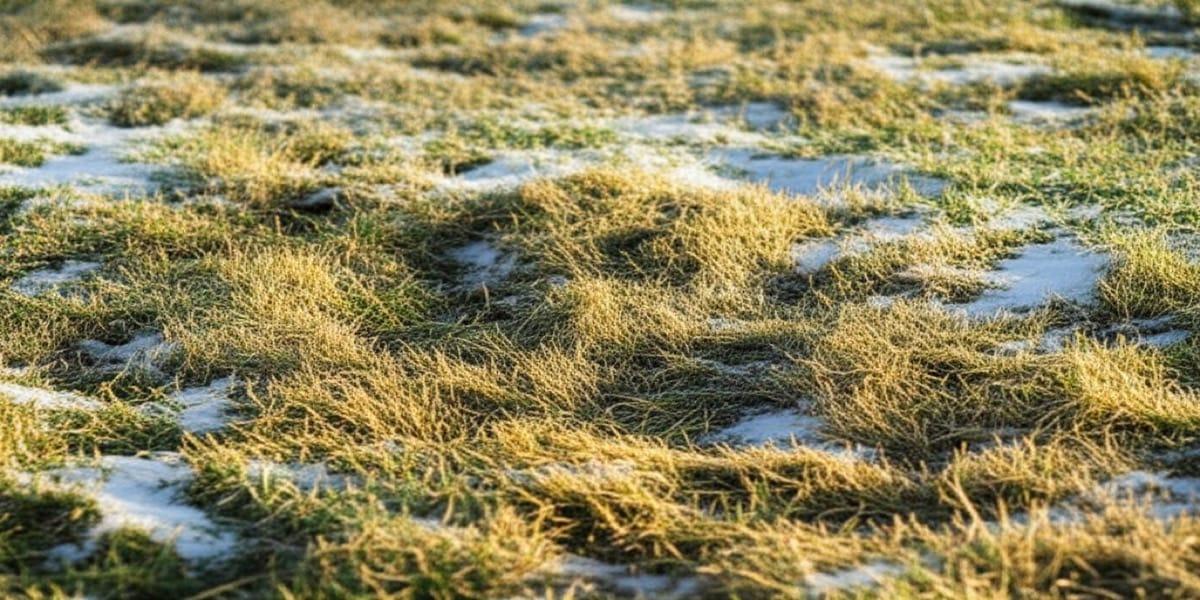
Fort Wayne winters challenge lawns in multiple ways: heavy snow smothers grass, de-icing salt burns turf edges, foot traffic compacts frozen soil, and freeze-thaw cycles cause frost heaving. Understanding these threats helps you prevent damage and plan for spring recovery.

What Winter Conditions Damage Lawns?
Winter lawn damage comes from snow coverage (smothering and disease), salt exposure (chemical burn), traffic (compaction), ice (physical damage), and vole/rodent activity. Different damage types require different prevention and treatment approaches.
Winter Damage Types
| Cause | Damage Type | Prevention |
|---|---|---|
| Snow smothering | Dead patches, snow mold | Proper fall prep |
| Salt exposure | Brown edges, dead strips | Barrier, alternatives |
| Foot traffic | Compaction | Redirect traffic |
| Ice cover | Suffocation | Break up when possible |
| Voles/rodents | Surface tunnels | Fall control |
How Does Salt Damage Lawns?
Salt draws moisture from grass blades and roots through osmosis, essentially drying them out. High salt concentrations in soil also prevent roots from absorbing water. Damage appears as brown, dead strips along walks, driveways, and areas where snow is piled.
Salt Damage Characteristics
- Brown/dead grass along hardscapes
- Sharp line between damaged and healthy areas
- Damage extends into lawn from edges
- Worst where snow piles accumulate
Salt Accumulation Sources
| Source | Contribution |
|---|---|
| Direct application | Major |
| Spray from plows | Moderate |
| Runoff from hardscapes | Moderate |
| Snow pile melt | Concentrated |
How Do You Prevent Salt Damage?
Use salt alternatives where grass meets hardscape, apply deicers sparingly, and create barriers between salt applications and lawn areas. Choosing gentler products near grass significantly reduces damage.
Salt Damage Prevention
Product choices:
- Use potassium chloride or CMA near grass
- Avoid rock salt at lawn edges
- Apply minimum effective amounts
- Pre-treat to reduce salt needs
Physical barriers:
- Pile snow away from turf when possible
- Create buffer zones with mulch or gravel
- Don’t spray salt onto lawn
- Direct snow pile melt away from grass
Application practices:
- Shovel first, salt second
- Apply sparingly
- Use spreaders for even coverage
- Avoid over-application

What Is Snow Mold and How Do You Prevent It?
Snow mold is a fungal disease that develops under snow cover when debris, leaves, or long grass trap moisture against the lawn. It appears in spring as circular patches of matted, dead grass—either gray (Typhula blight) or pink (Microdochium patch).
Snow Mold Prevention
Fall preparation:
- Remove fallen leaves
- Continue mowing until growth stops
- Lower final mowing height to 2.5"
- Avoid late nitrogen fertilization
- Don’t pile snow on lawn
Snow Mold Characteristics
| Type | Appearance | Severity |
|---|---|---|
| Gray snow mold | Gray patches, crusty | Usually recovers |
| Pink snow mold | Pink margins | Can kill grass |
How Does Foot Traffic Damage Frozen Lawns?
Walking or playing on frozen grass damages cell walls and compacts frozen soil. The damage may not appear until spring when traffic areas show poor recovery. Establishing winter pathways protects lawn areas.
Traffic Damage Prevention
- Establish dedicated winter walkways
- Redirect foot traffic away from lawn
- Avoid walking on frosted grass
- Don’t park vehicles on frozen lawn
- Keep play areas off grass when frozen
What About Vole and Rodent Damage?
Voles create surface tunnels under snow, eating grass crowns and creating meandering pathways of dead grass. The damage appears in spring as snow melts, revealing serpentine dead trails across the lawn.
Vole Damage Prevention
Fall actions:
- Lower final mowing height (reduces cover)
- Remove ground-level debris
- Clean up leaf litter
- Consider rodent deterrents
If you see damage:
- Usually recovers on its own
- Rake affected areas to stimulate growth
- Overseed if damage is severe
- Voles move on in spring

How Do You Recover from Winter Damage?
Most winter lawn damage becomes apparent as snow melts in spring. Recovery involves raking to stimulate growth, overseeding dead areas, and addressing soil salt accumulation.
Spring Recovery Steps
For snow mold:
- Rake affected areas vigorously
- Improve air circulation
- Monitor for recovery
- Overseed if grass doesn’t recover
For salt damage:
- Flush areas with water (several deep waterings)
- Apply gypsum to help displace sodium
- Wait for soil to recover
- Overseed dead areas
For compaction:
- Core aerate affected areas
- Apply compost topdressing
- Overseed
- Reduce future traffic
Recovery Timeline
| Damage Type | Recovery Time |
|---|---|
| Light snow mold | 2-4 weeks |
| Severe snow mold | Overseed needed |
| Salt damage | 4-8 weeks after flushing |
| Compaction | Full season |
| Vole damage | 4-6 weeks |
When Should You Seek Professional Help?
Most winter damage recovers with basic care. Seek professional help for extensive salt damage, recurring snow mold problems, severe compaction, or damage that doesn’t respond to home treatment.
Professional help for:
- More than 25% lawn affected
- Recurring annual problems
- Soil testing for salt levels
- Major renovation needs
- Uncertain diagnosis
Our lawn services help Fort Wayne homeowners recover from winter lawn damage.
Request a Free Quote or call us at (260) 450-4676 for lawn care service.
Frequently Asked Questions
Will my lawn recover from salt damage?
Usually yes—with proper flushing and time. Severe damage may require overseeding. Heavily salted areas may need soil amendment.
Should I remove snow from my lawn?
Don’t pile snow from driveways onto grass (salt contamination). Light natural snow coverage isn’t harmful; it actually insulates.
Can I prevent snow mold completely?
Proper fall preparation reduces risk significantly but may not eliminate it entirely. Focus on leaf removal and proper mowing height.
Adam Minnick is the owner of Minnick Lawn & Landscaping, serving Fort Wayne, Auburn, and Northeast Indiana since 2018.