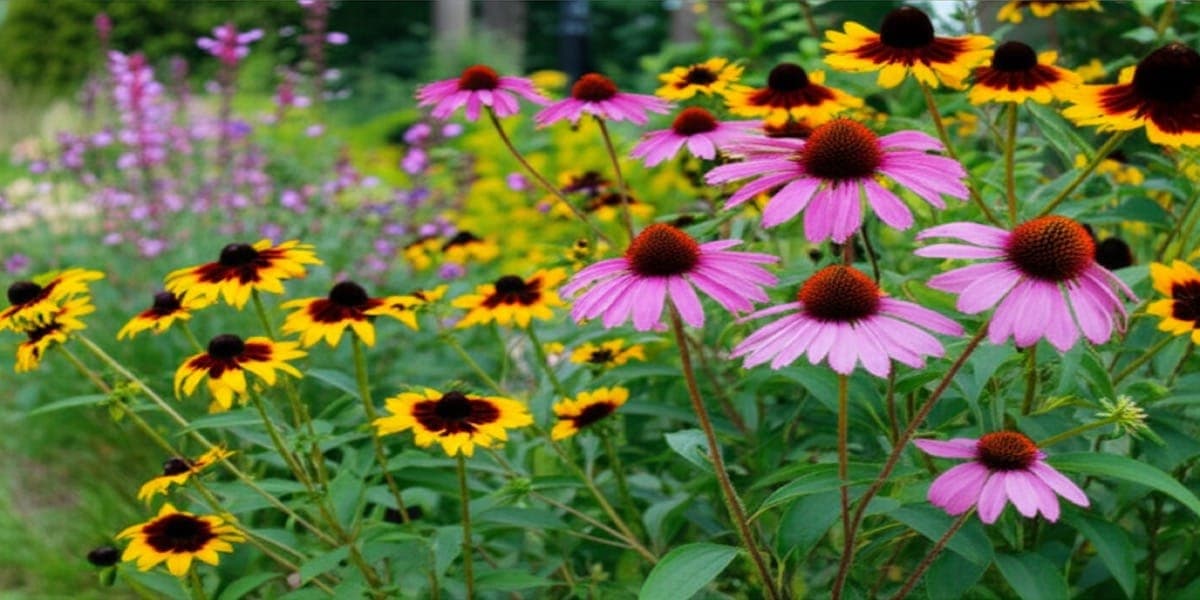
Native plants offer Fort Wayne gardeners a powerful combination of beauty, resilience, and environmental benefits that non-native species simply can’t match. These plants evolved alongside our local insects, birds, and wildlife over thousands of years, creating ecological relationships that support the entire food web. For homeowners, this translates to landscapes that require less water, fewer pesticides, and minimal fertilizer while providing year-round interest and supporting local pollinators.
In this comprehensive guide, I’ll introduce you to the native Indiana plants that perform best in Northeast Indiana gardens, organized by type and growing conditions. Whether you’re creating a pollinator garden, replacing a struggling lawn area, or adding native plantings to existing beds, you’ll find options suited to your site.

Why Should You Choose Native Plants for Your Fort Wayne Landscape?
Native plants are the best choice for Fort Wayne landscapes because they’ve adapted over millennia to our specific climate, soil conditions, and growing season, requiring far less maintenance than non-native alternatives. They support local wildlife, reduce water usage by 50% or more compared to traditional landscapes, and eliminate the need for chemical fertilizers and most pesticides.
Benefits of Native Plants
| Benefit | How It Helps You |
|---|---|
| Low water needs | Established natives rarely need irrigation |
| No fertilizer required | Adapted to local soil conditions |
| Pest resistance | Natural defenses reduce pesticide needs |
| Wildlife support | Food and habitat for birds, butterflies, bees |
| Erosion control | Deep root systems stabilize soil |
| Four-season interest | Many offer fall color, winter structure |
| Local adaptation | Thrive in Fort Wayne’s climate extremes |
Environmental Impact
Wildlife support:
- Native plants host 10-50x more caterpillar species than non-natives
- Caterpillars are essential food for baby birds
- Native flowers provide nectar and pollen for pollinators
- Seeds and berries feed songbirds year-round
Ecological benefits:
- Reduce stormwater runoff
- Filter pollutants from water
- Sequester carbon in deep root systems
- Create habitat corridors
Compared to Non-Native Landscapes
| Factor | Native Landscape | Traditional Landscape |
|---|---|---|
| Water needs | Low (after establishment) | High (ongoing) |
| Fertilizer | None | Regular applications |
| Pesticides | Rarely needed | Often required |
| Wildlife value | High | Low to none |
| Maintenance | Low (after establishment) | High (ongoing) |
| Long-term cost | Lower | Higher |
What Are the Best Native Flowers for Fort Wayne Gardens?
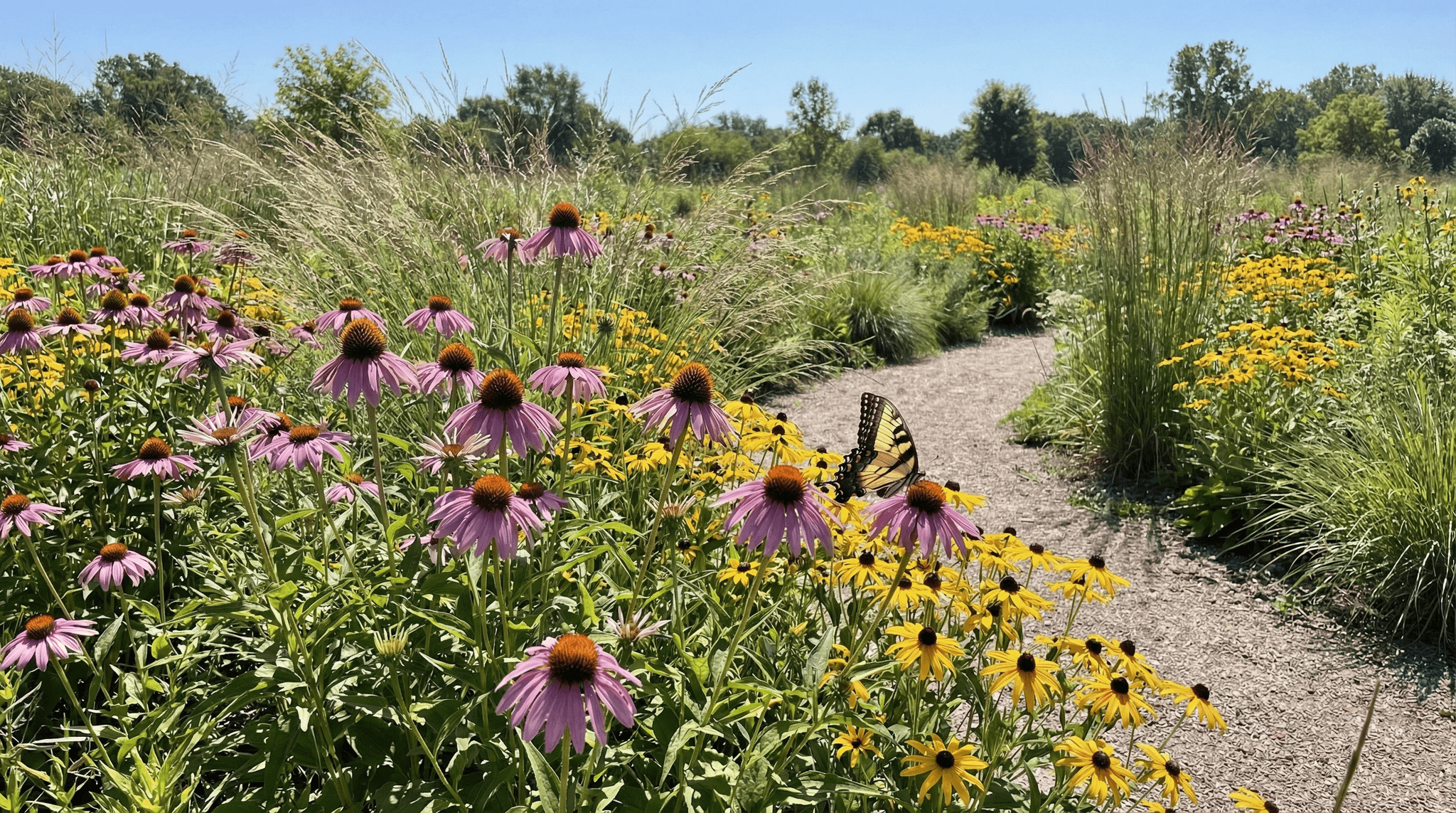
The best native flowers for Fort Wayne gardens include purple coneflower, black-eyed Susan, wild bergamot, blazing star, and native asters, all of which provide extended blooms, support pollinators, and require minimal care once established. These perennials return year after year, spreading gradually to fill garden spaces with color from late spring through fall frost.
Native Flowers for Full Sun
| Plant | Height | Bloom Time | Bloom Color | Wildlife Value |
|---|---|---|---|---|
| Purple Coneflower | 2-4 ft | June-Sept | Purple/pink | Butterflies, birds |
| Black-eyed Susan | 2-3 ft | July-Sept | Yellow | Bees, butterflies |
| Wild Bergamot | 2-4 ft | July-Aug | Lavender | Bees, butterflies |
| Blazing Star | 3-5 ft | Aug-Sept | Purple | Monarch butterflies |
| New England Aster | 3-6 ft | Sept-Oct | Purple | Late-season pollinators |
| Butterfly Milkweed | 1-2 ft | June-Aug | Orange | Monarch caterpillars |
| Prairie Dropseed | 2-3 ft | Sept (grass) | Pink panicles | Birds, shelter |
Native Flowers for Shade
| Plant | Height | Bloom Time | Bloom Color | Wildlife Value |
|---|---|---|---|---|
| Wild Geranium | 1-2 ft | April-June | Pink/purple | Early bees |
| Virginia Bluebells | 1-2 ft | April-May | Blue | Early pollinators |
| Solomon’s Seal | 2-3 ft | May-June | White | Berries for birds |
| Wild Columbine | 1-2 ft | April-June | Red/yellow | Hummingbirds |
| Woodland Phlox | 8-12 in | April-June | Blue/purple | Butterflies |
| Jack-in-the-Pulpit | 1-2 ft | April-June | Green/purple | Unique interest |
Creating a Pollinator Garden
For continuous blooms attracting pollinators:
Spring: Virginia bluebells, wild columbine, wild geranium Summer: Purple coneflower, black-eyed Susan, wild bergamot, butterfly milkweed Fall: Blazing star, native asters, goldenrod
Design tips:
- Plant in groups of 3-5 (easier for pollinators to find)
- Include plants of varying heights
- Provide continuous bloom through seasons
- Leave seed heads for birds
- Include host plants for butterflies (milkweed for monarchs)

What Native Shrubs Work Best in Northeast Indiana?
The best native shrubs for Northeast Indiana landscapes include serviceberry, ninebark, viburnum species, winterberry holly, and red twig dogwood, offering year-round interest through flowers, fall color, berries, and structural beauty. These shrubs provide essential habitat for birds while requiring far less maintenance than traditional landscape shrubs.
Native Shrubs for Full Sun
| Shrub | Height | Features | Wildlife Value |
|---|---|---|---|
| Ninebark | 5-8 ft | Exfoliating bark, purple foliage options | Nesting birds |
| American Hazelnut | 8-12 ft | Edible nuts, golden fall color | Birds, squirrels |
| Fragrant Sumac | 3-6 ft | Fragrant, spreading, brilliant fall color | Berries for birds |
| New Jersey Tea | 2-3 ft | White flowers, nitrogen-fixing | Bees |
| Lead Plant | 2-3 ft | Purple flowers, fine texture | Butterflies |
Native Shrubs for Part Shade to Shade
| Shrub | Height | Features | Wildlife Value |
|---|---|---|---|
| Serviceberry | 6-20 ft | White spring flowers, edible berries | Birds, butterflies |
| Spicebush | 6-12 ft | Aromatic, yellow fall color | Host for swallowtails |
| Arrowwood Viburnum | 6-10 ft | White flowers, blue berries | Birds |
| Nannyberry | 10-18 ft | Flowers, fruit, fall color | Birds |
| Pagoda Dogwood | 15-25 ft | Horizontal branching, berries | Birds |
Shrubs with Outstanding Berries
For bird-attracting berry production:
| Shrub | Berry Color | Berry Timing | Notes |
|---|---|---|---|
| Winterberry Holly | Red | Winter | Needs male pollinator |
| Serviceberry | Purple-black | June | Edible for humans too |
| Arrowwood Viburnum | Blue-black | Fall | Persistent |
| Chokeberry | Red or black | Fall-winter | Astringent but bird-loved |
| Elderberry | Black | Late summer | Wildlife magnet |
Four-Season Native Shrub Plan
Spring: Serviceberry flowers, spicebush blooms Summer: Ninebark foliage, elderberry fruit Fall: Viburnum berries, brilliant foliage colors Winter: Winterberry berries, red twig dogwood stems
What Native Trees Should You Plant in Fort Wayne?
The best native trees for Fort Wayne properties include oak species (white oak, swamp white oak, bur oak), serviceberry, redbud, American hornbeam, and native maples, providing shade, wildlife habitat, and beautiful seasonal displays. Native trees support hundreds of insect species compared to just a handful for non-native ornamentals.
Native Trees for Full Sun
| Tree | Mature Height | Features | Wildlife Value |
|---|---|---|---|
| White Oak | 50-80 ft | Long-lived, excellent fall color | 500+ insect species |
| Swamp White Oak | 50-60 ft | Adaptable, tolerates wet | Acorns for wildlife |
| Bur Oak | 60-80 ft | Drought tolerant, corky bark | Acorns for wildlife |
| Hackberry | 40-60 ft | Adaptable, wildlife magnet | Birds love berries |
| American Sycamore | 75-100 ft | Massive, white bark | Birds |
| Black Gum | 30-50 ft | Best fall color of any tree | Berries for birds |
Smaller Native Trees (Under 30 ft)
| Tree | Height | Features | Best Use |
|---|---|---|---|
| Serviceberry | 15-25 ft | Multi-season interest | Specimen, grouping |
| Redbud | 20-30 ft | Pink spring flowers | Understory, accent |
| American Hornbeam | 20-30 ft | Muscular bark, fall color | Shade, understory |
| Flowering Dogwood | 15-25 ft | White flowers, red berries | Shade, specimen |
| Witch Hazel | 15-20 ft | Late fall flowers | Woodland garden |
| Pawpaw | 15-20 ft | Tropical fruit, colonies | Shade, naturalized |
Why Native Trees Matter More
Native trees support vastly more wildlife:
| Tree Type | Caterpillar Species Supported |
|---|---|
| Oak (native) | 500+ |
| Cherry (native) | 450+ |
| Birch (native) | 400+ |
| Callery Pear (non-native) | < 5 |
| Ginkgo (non-native) | < 5 |
| Bradford Pear (invasive) | < 5 |
Planting for Succession
Plant trees of various ages and sizes:
- Immediate shade: Fast-growing sycamore, hackberry
- Long-term investment: Oaks (slow but long-lived)
- Understory: Redbud, serviceberry, hornbeam
- Replace as mature trees decline

How Do You Design a Native Plant Garden?
Designing a native plant garden follows many traditional landscape design principles—consider mature size, bloom time, height layering, and seasonal interest—with added attention to wildlife habitat needs and ecological relationships. Group plants with similar growing requirements, create drifts rather than single specimens, and plan for year-round food and shelter for wildlife.
Design Principles for Native Gardens
Layering:
- Canopy: Large trees (oaks, maples)
- Understory: Small trees (serviceberry, redbud)
- Shrub layer: Native shrubs (viburnum, ninebark)
- Herbaceous layer: Perennial flowers, ferns, grasses
- Ground layer: Ground covers, leaf litter
Grouping:
- Plant in drifts of 3, 5, 7 (odd numbers)
- Group same species for visual impact
- Easier for pollinators to find
- Creates natural appearance
Succession Planning:
- Early spring bloomers
- Late spring to early summer
- Mid to late summer
- Fall bloomers
- Winter interest (berries, structure)
Sample Native Garden Designs
Sunny Pollinator Garden (200 sq ft):
- 5 Purple coneflower
- 7 Black-eyed Susan
- 3 Butterfly milkweed
- 5 Little bluestem grass
- 3 Blazing star
- 5 Wild bergamot
- 3 New England aster
Shady Native Garden (200 sq ft):
- 1 Serviceberry (shrub form)
- 3 Spicebush
- 5 Wild geranium
- 7 Virginia bluebells
- 5 Solomon’s seal
- 3 Wild columbine
- 5 Woodland phlox
Native Plant Bed Preparation
Site assessment:
- Evaluate sun exposure
- Test or assess soil type
- Note drainage patterns
- Identify existing plants
Preparation:
- Remove existing vegetation (smothering or removal)
- Avoid tilling if possible (disturbs soil biology)
- Don’t amend soil excessively—natives prefer local conditions
- Mulch with leaf litter or hardwood mulch
How Do You Establish and Maintain Native Plants?
Establishing native plants requires patience during the first 1-2 years while deep root systems develop, with regular watering during this period, followed by dramatically reduced maintenance once plants are established. The key is proper initial planting, appropriate watering during establishment, and then stepping back to let natives do what they do best.
First-Year Care
Watering:
- Water thoroughly at planting
- 1 inch per week during first growing season
- Water deeply but less frequently to encourage deep roots
- Reduce once established (year 2+)
Mulching:
- 2-3 inches of hardwood mulch or leaf litter
- Keep away from stems
- Mimics forest floor conditions
- Suppresses weeds during establishment
Weeding:
- Critical during first year
- Remove competitive weeds before they seed
- Gets easier as natives establish
Long-Term Maintenance
After establishment (year 2+):
| Task | Frequency | Notes |
|---|---|---|
| Watering | Rarely | Only during extreme drought |
| Fertilizing | Never | Natives adapted to local soil |
| Weeding | Minimal | Dense plantings suppress weeds |
| Pruning | Occasional | Shape shrubs if desired |
| Cutting back | Early spring | Leave stems for overwintering insects |
| Mulching | Annually | Light replenishment |
What Not to Do
Avoid:
- Excessive watering after establishment
- Fertilizing (promotes weak growth)
- Cutting back in fall (leave for wildlife)
- Deadheading all flowers (seeds feed birds)
- Excessive tidiness (leave leaf litter)
Troubleshooting Common Issues
| Problem | Likely Cause | Solution |
|---|---|---|
| Poor growth | Wrong site conditions | Match plant to site |
| Flopping | Too much shade/fertilizer | Plant in appropriate sun, don’t fertilize |
| Not spreading | Normal—takes time | Be patient, 2-3 years typical |
| Pest damage | Usually temporary | Most natives recover; avoid pesticides |

Where Can You Buy Native Plants in the Fort Wayne Area?
For authentic native plants in the Fort Wayne area, purchase from reputable local nurseries that specialize in or carry native species, native plant sales organized by conservation groups, or certified native plant nurseries. Avoid big-box stores that may sell cultivars (nativars) that lack the ecological value of straight native species or worse, mislabeled non-native plants.
Local and Regional Sources
Native Plant Nurseries:
- Check for nurseries specializing in natives
- Indiana Native Plant Society recommendations
- Native seed suppliers for larger projects
Conservation Organization Sales:
- Allen County SWCD plant sales (spring)
- Indiana Native Plant Society sales
- Master Gardener plant sales
- Nature center plant sales
Quality Garden Centers:
- Ask specifically for straight native species
- Verify plants are not nativars or cultivars
- Confirm plants are nursery-propagated, not wild-collected
What to Look For
Choose plants that are:
- Local genotype (from regional seed sources)
- Nursery propagated (not wild-collected)
- True species (not cultivars/nativars)
- Healthy and well-rooted
- Appropriately labeled
Avoid:
- “Native” cultivars (like ‘Purple Emperor’ coneflower)
- Plants from distant regions
- Wild-collected plants
- Unclear labeling
Native vs Nativar (Cultivar)
| Type | Example | Ecological Value |
|---|---|---|
| Straight native | Echinacea purpurea (plain) | Full wildlife support |
| Nativar | Echinacea ‘PowWow’ | Reduced wildlife value |
| Non-native | Echinacea hybrid | Minimal wildlife value |
Native plant cultivars (nativars) may have changed flower structure, reduced pollen/nectar, or altered chemistry that reduces their value to wildlife.
What Native Plants Work Best for Specific Landscape Challenges?
Native plants can solve common landscape challenges including erosion on slopes, wet areas with poor drainage, dry shade under trees, and screening for privacy, often outperforming non-native solutions because of their deep root systems and adaptations to local extremes. Match the plant to the problem for best results.
Native Plants for Problem Areas
Slopes/Erosion Control:
- Little bluestem (grass)
- Fragrant sumac (shrub)
- Wild rose (shrub)
- Prairie dropseed (grass)
- Deep-rooted wildflowers
Wet Areas/Rain Gardens:
- Blue flag iris
- Swamp milkweed
- Joe Pye weed
- Cardinal flower
- Swamp white oak
- Red maple
Dry Shade:
- Wild geranium
- Solomon’s seal
- Pennsylvania sedge
- Wild ginger
- Christmas fern
Privacy Screening:
- Arrowwood viburnum
- Ninebark
- American hazelnut
- Serviceberry (tree form)
- Eastern red cedar
Deer-Resistant Natives:
- Wild bergamot
- Little bluestem
- Aromatic aster
- Spicebush
- Butterfly milkweed
Native Lawn Alternatives
For reducing lawn maintenance:
| Option | Best For | Maintenance |
|---|---|---|
| Pennsylvania sedge | Shade, low traffic | Very low |
| Buffalo grass | Full sun, low traffic | Very low |
| Prairie meadow | Large open areas | Annual mowing |
| Native ground covers | Shaded beds | Low |

Create a Beautiful Native Landscape
Native plants offer Fort Wayne homeowners the best of both worlds—beautiful landscapes that are easier to maintain and better for the environment. Start small with a native flower bed or rain garden, then expand as you see results.
Need help designing or installing a native landscape? Our landscaping services include native plant design and installation.
Request a Free Quote or call us at (260) 450-4676 to discuss native landscaping for your property.
Frequently Asked Questions
Will native plants look messy or weedy?
Native plants can look informal, but thoughtful design creates beautiful landscapes. Use structural elements (stone, paths), maintain defined bed edges, and choose plants with good form. Many natives are stunning when massed in drifts.
How long before native plants look established?
Most native perennials take 2-3 years to reach mature size. The first year they “sleep,” the second year they “creep,” and the third year they “leap.” Patience during establishment pays off with decades of low-maintenance beauty.
Do I need to water native plants?
During the first growing season, water regularly (1 inch weekly). After establishment (usually year 2), most natives rarely need supplemental water except during extreme drought.
Can I plant natives with non-natives?
Yes, you can mix natives with well-behaved non-invasive plants. However, the ecological benefits increase with the percentage of native plants. Avoid invasive non-natives that spread into natural areas.
What about cultivars of native plants?
Native cultivars (nativars) may have reduced wildlife value due to changed flower structure, reduced pollen, or altered chemistry. For maximum ecological benefit, choose straight native species rather than cultivars.
Do native plants attract more bugs?
Native plants support more insect species, but these are beneficial insects—pollinators, pest predators, and bird food. You won’t see more pest damage because natural predator-prey relationships keep populations balanced.
Can native plants survive Fort Wayne winters?
Yes! Native plants evolved here and are perfectly adapted to our climate extremes. They’re actually more reliable than many non-native ornamentals that may suffer winter damage.
How do I get rid of invasive plants before planting natives?
Remove invasives through digging, smothering (cardboard/mulch), or careful herbicide application. Some invasives require persistent removal over multiple seasons. Replace with natives that fill the same ecological niche.
Sources
- Indiana Native Plant Society
- Purdue Extension - Native Plants of Indiana
- Lady Bird Johnson Wildflower Center
- The Xerces Society - Pollinator Conservation
- Doug Tallamy’s Research - Native Plant Value
Related Articles
Adam Minnick is the owner of Minnick Lawn & Landscaping, serving Fort Wayne, Auburn, and Northeast Indiana since 2018. Our landscaping team designs and installs beautiful, sustainable landscapes throughout the region.