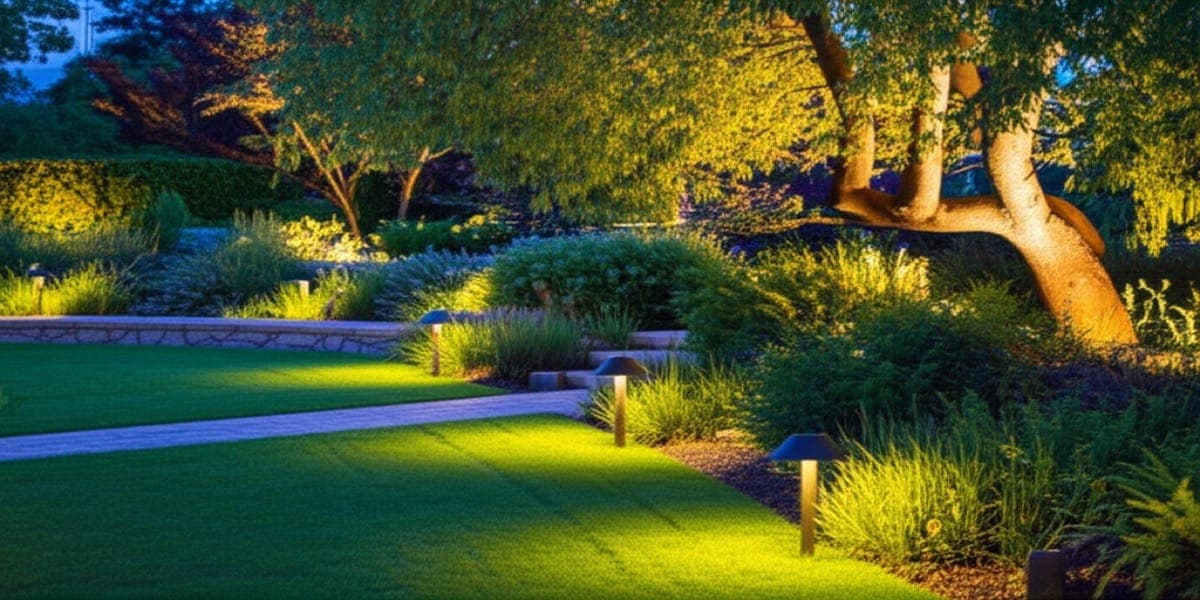
Beautifully lit Fort Wayne landscape at dusk with path lights and uplighting

Landscape lighting transforms your property after dark, extending outdoor living hours, enhancing safety, adding curb appeal, and creating dramatic focal points that aren’t visible during the day. A well-designed lighting plan addresses multiple functions—safety, security, and aesthetics—while avoiding the common mistake of over-lighting that creates glare and an artificial appearance.

This guide covers the essential lighting techniques, fixture types, and design principles that create beautiful, functional outdoor lighting for Fort Wayne properties.

Landscape lighting creating ambiance at dusk

What Are the Main Types of Landscape Lighting?

The main landscape lighting techniques are path lighting for walkways, uplighting for trees and architectural features, downlighting for natural moonlight effects, accent lighting for focal points, and deck/patio lighting for outdoor living areas. Each serves different purposes and combines to create comprehensive landscape illumination.

Lighting Techniques Overview

TechniquePurposeBest Use
Path lightingSafety, wayfindingWalkways, steps, driveways
UplightingDrama, accentTrees, architecture
DownlightingNatural ambianceFrom trees, structures
Accent/spotFocal pointsSculptures, specimens
SilhouettingDramaBehind plants against walls
Wash lightingLarge area illuminationWalls, fences
Deck/step lightsSafety, ambianceOutdoor living areas

Layer Your Lighting

Effective lighting uses three layers:

  1. Safety/Task lighting - Paths, steps, entry
  2. Accent lighting - Focal points, features
  3. Ambient lighting - General atmosphere

Combining layers creates depth and interest rather than flat, even illumination.

How Do You Light Walkways and Driveways?

Light walkways with path lights or bollards spaced 8-10 feet apart on alternating sides, positioned to illuminate the walking surface without creating glare in eyes. Path lighting is primarily functional—ensuring safe navigation—but well-designed path lights also contribute to landscape aesthetics.

Path Lighting Guidelines

FactorRecommendation
Spacing8-10 feet apart
ArrangementAlternating sides preferred
Height14-24 inches typical
Light directionDown onto path
BrightnessSubtle, not blinding

Path Light Styles

StyleLookBest For
Traditional mushroomClassicFormal landscapes
Contemporary bollardModernMinimalist designs
Pagoda/tierAsianJapanese gardens
Adjustable spotFlexibleVariable layouts
In-ground wellInvisibleModern, minimal

Driveway Lighting Options

  • Bollards - Mark edges, provide visibility
  • In-ground fixtures - Subtle, durable
  • Post lights - At entry points
  • Low-voltage pathway - Along edges

Path lights illuminating walkway safely

What Trees and Plants Should You Uplight?

Uplight trees with interesting bark, branching structure, or year-round interest, including specimens like oaks, maples, ornamental trees, and evergreens with compelling silhouettes. Position fixtures 6-12 inches from the trunk, angled to highlight the canopy without creating hot spots or excessive glare.

Best Trees for Uplighting

Tree TypeWhy It Works
OakBranching structure, bark
Japanese MapleDelicate structure, fall color
River BirchWhite bark contrast
Ornamental cherryForm, spring flowers
EvergreensYear-round interest
Crepe MyrtleBark, multi-stem

Uplighting Technique

Fixture placement:

  • 6-12 inches from trunk (small trees)
  • 1-2 feet from trunk (large trees)
  • Angle toward canopy
  • May need multiple fixtures for large trees

Common mistakes:

  • Fixture too close (hot spot on trunk)
  • Too bright (unnatural)
  • Wrong angle (misses canopy)
  • Only one fixture (flat appearance)

Other Uplighting Applications

Architectural features:

  • Columns, pillars
  • Interesting textures
  • Entry features

Garden elements:

  • Specimen shrubs
  • Ornamental grasses (backlighting)
  • Sculptures

How Do You Create Moonlighting Effects?

Moonlighting places fixtures high in trees pointing downward to create dappled, natural light that mimics moonlight filtering through branches. This technique provides subtle ambient illumination for outdoor living areas while creating shadow patterns that add visual interest and depth.

Moonlighting Technique

FactorRecommendation
Fixture location25+ feet up in tree
Pointing directionDown at angle
Light colorWarm white (2700-3000K)
IntensitySubtle, not bright
Best treesLarge oaks, maples with full canopy

Installation Considerations

  • Requires mature trees
  • Professional installation usually needed
  • Use tree-safe mounting methods
  • Allow for tree growth
  • Consider accessibility for maintenance

Combining with Uplighting

On the same tree:

  • Uplight illuminates trunk and canopy
  • Downlight creates ground patterns
  • Creates dramatic day/night difference

What Lighting Works Best for Decks and Patios?

Deck and patio lighting combines multiple techniques: step lights for safety, post cap lights for ambiance, under-rail lighting for deck definition, and overhead string lights or downlights for gathering areas. The goal is comfortable, functional light that doesn’t overwhelm the outdoor space or create harsh glare.

Deck Lighting Options

LocationFixture TypePurpose
StepsStep/riser lightsSafety
Post capsPost cap lightsAmbiance
Under railsLED stripsDefinition
OverheadString lightsAtmosphere
Seating areaDownlightsTask lighting

Patio Lighting Ideas

Ground-level patios:

  • Path lights at entries
  • Uplighting on nearby plants
  • String lights overhead
  • Portable fixtures for flexibility

Covered patios:

  • Ceiling-mounted downlights
  • Pendant lights
  • Fans with lights
  • Sconces on posts

Avoiding Common Mistakes

Don’t:

  • Over-light (too bright)
  • Create hot spots
  • Point lights at seating
  • Forget dimmer capability
  • Use mismatched styles

Deck lighting creating evening ambiance

What Color Temperature Should Outdoor Lights Be?

For landscape lighting, warm white light (2700K-3000K) creates the most inviting, natural appearance that complements plants and architecture. Cool white (4000K+) appears harsh and commercial. LED technology makes color temperature selection easy and efficient.

Color Temperature Guide

TemperatureAppearanceBest Use
2700KWarm, incandescent-likeMost residential
3000KWarm whiteGeneral landscape
4000KCool whiteSecurity, commercial
5000K+DaylightRarely appropriate

LED vs Halogen

FactorLEDHalogen
Energy useVery lowHigh
Lifespan25,000+ hours2,000-5,000 hours
HeatMinimalSignificant
CostHigher upfrontLower upfront
Long-term costMuch lowerHigher
Color qualityExcellentExcellent

Recommendation: LED is the clear choice for most applications due to efficiency, longevity, and lower long-term costs.

Should You Use Low-Voltage or Line-Voltage Lighting?

Low-voltage (12V) lighting is the standard for residential landscape lighting—it’s safer, easier to install, more energy-efficient, and doesn’t require an electrician for basic installations. Line-voltage (120V) is reserved for larger commercial applications or when significant brightness is required.

Comparison

FactorLow-Voltage (12V)Line-Voltage (120V)
SafetyVery safeRequires care
InstallationDIY possibleElectrician required
Wire burialShallow acceptableDeep burial required
TransformerRequiredNot needed
Fixture optionsExtensiveLimited
Energy useLowerHigher
Best forMost residentialCommercial, high-output

Low-Voltage System Components

Basic system includes:

  • Transformer (converts 120V to 12V)
  • Cable/wiring
  • Fixtures
  • Timer/controller

Transformer sizing:

  • Add up all fixture wattages
  • Choose transformer 10-20% larger
  • Consider future expansion

How Do You Plan a Landscape Lighting Layout?

Plan your landscape lighting layout by first identifying functional needs (paths, steps, entry), then aesthetic goals (focal points, ambiance), and finally considering timer controls and maintenance access. Start with less—you can always add fixtures, but removing over-lighting means wasted investment.

Planning Process

  1. Walk property at night - Identify dark areas, hazards
  2. Note focal points - Trees, features to highlight
  3. Map functional needs - Paths, steps, doors
  4. Sketch layout - Mark fixture locations
  5. Calculate wattage - Size transformer appropriately
  6. Consider controls - Timers, zones, automation

Common Layout Mistakes

MistakeProblemSolution
Too many fixturesOver-lit, unnaturalLess is more
All same brightnessFlat, boringVary intensity
No focal pointsEverything equalCreate hierarchy
Ignoring glareUncomfortableShield, position carefully
No timerWastefulAutomate operation

Professional landscape lighting layout diagram

What Does Landscape Lighting Cost?

Professional landscape lighting costs $2,000-$10,000+ for typical residential installations depending on property size, fixture quality, and complexity. DIY installations using quality components range from $500-$2,000 for basic systems. Factor in long-term energy costs and maintenance when comparing options.

Cost Factors

FactorImpact on Cost
Property sizeMore area = more fixtures
Fixture qualityProfessional-grade costs more
Number of fixturesEach adds to total
ComplexitySpecialty applications cost more
LaborProfessional vs DIY
ControlsAutomation adds cost

Budget Tiers

LevelCost RangeWhat You Get
Basic DIY$300-800Path lights, simple accent
Quality DIY$800-2,000Comprehensive coverage
Professional basic$2,000-5,000Full design, quality fixtures
Professional premium$5,000-15,000+Extensive, high-end

Ongoing Costs

Annual maintenance:

  • Bulb replacement (LED minimal)
  • Fixture cleaning
  • Timer adjustment
  • Wire/connection checks

Energy costs:

  • LED systems: $2-10/month typical
  • Much lower than halogen

Our landscaping services include professional landscape lighting design and installation.


Light Up Your Landscape

Well-designed landscape lighting extends your enjoyment of outdoor spaces while improving safety and curb appeal. Start with the basics—path lighting and a few accent lights—then expand as you see the impact quality lighting makes.

Request a Free Quote or call us at (260) 450-4676 to discuss landscape lighting for your property.


Frequently Asked Questions

Can I install landscape lighting myself?

Basic low-voltage lighting is DIY-friendly. Complex installations, high locations (moonlighting), or line-voltage work should be professionally installed.

How long do LED landscape lights last?

Quality LED fixtures last 25,000-50,000 hours (15-25+ years at typical usage), far exceeding halogen alternatives and significantly reducing maintenance.

Should landscape lights be on all night?

Most designs run from dusk until 10-11 PM, then shut off to conserve energy. Motion sensors or separate circuits can maintain security lighting all night.

How deep should landscape lighting wire be buried?

Low-voltage wire should be buried 6 inches minimum. Using wire burial as shallow as 3 inches is acceptable if protected by mulch. Line-voltage requires 12-18 inch burial.

What maintenance do landscape lights need?

Periodic cleaning of lenses, checking connections, replacing mulch that covers fixtures, and adjusting timers seasonally. LED fixtures require minimal bulb replacement.


Sources


Adam Minnick is the owner of Minnick Lawn & Landscaping, serving Fort Wayne, Auburn, and Northeast Indiana since 2018.