A tree needs pruning before winter when it has dead branches, cracked or split limbs, or branches hanging over your roof, driveway, or power lines. Fall is a good time to look for these problems in Fort Wayne because leaves are thinning and the structure of the tree is easier to see. Catching them now means fewer surprises when Northeast Indiana's winter wind, ice, and heavy snow start putting weight on every branch.
What Are the Clearest Signs a Tree Needs Pruning in Fort Wayne?
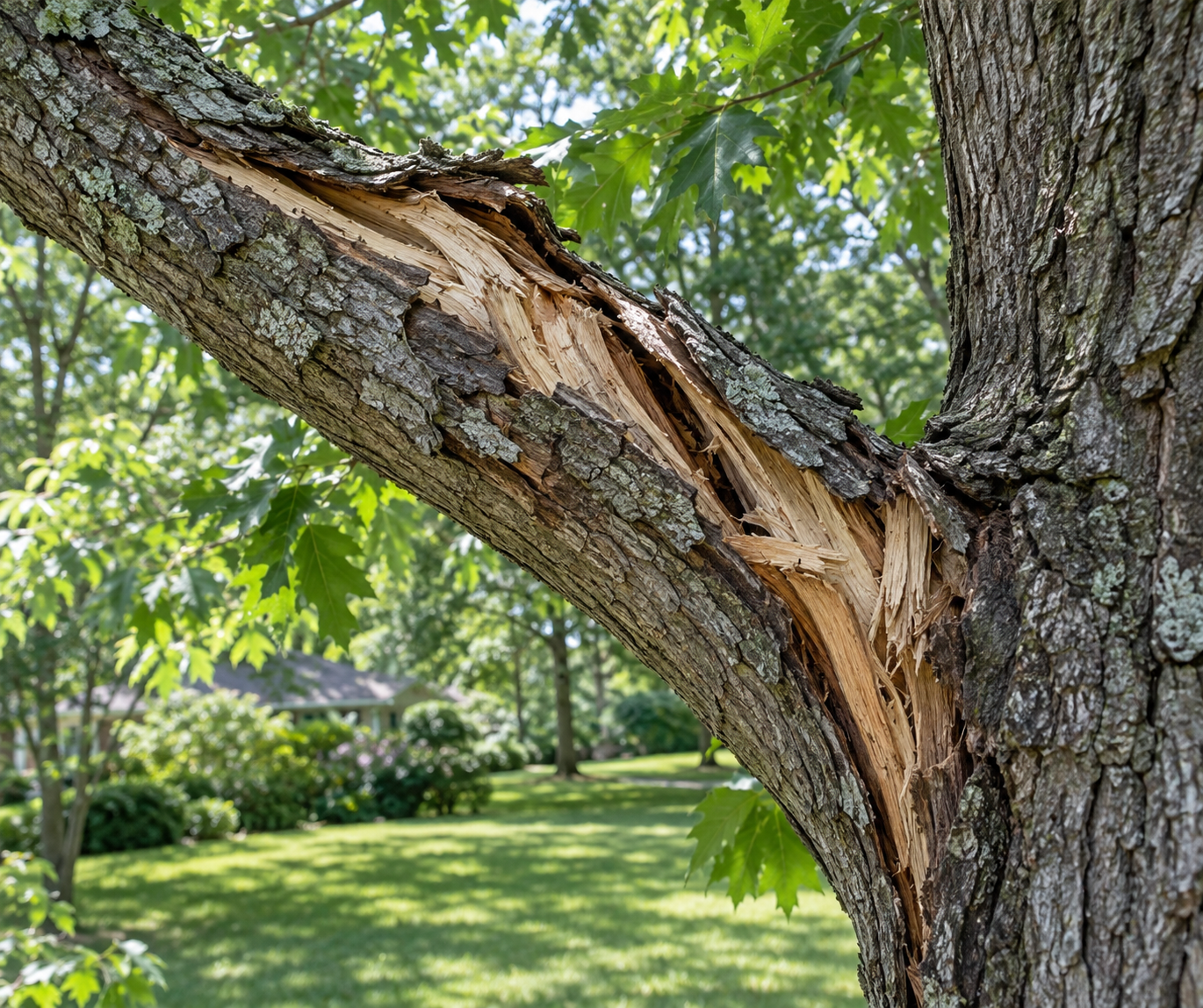
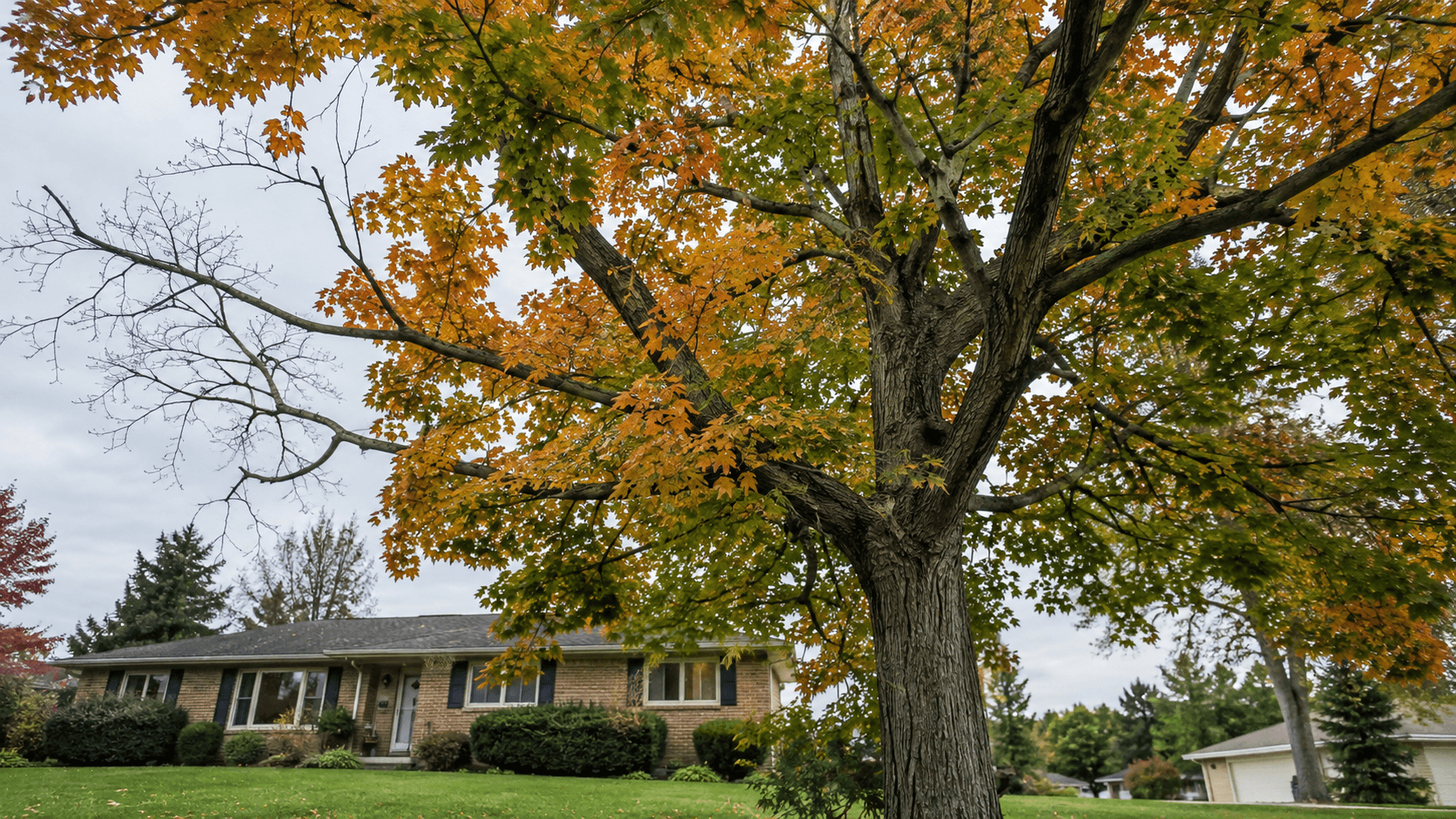
The most reliable signs are visible once you walk around the tree and look up through the canopy. Dead wood is the easiest to spot in fall, because dead branches hold no leaves or hold brown leaves long after the rest of the tree has changed color or dropped them.
- Dead or leafless branches: Bare limbs in the middle of a canopy that is otherwise full of fall color.
- Cracks and splits: Visible fractures where a branch meets the trunk or along the limb itself.
- Hanging or broken limbs: Branches partially torn loose and caught in the canopy.
- Peeling or missing bark: Patches where bark has fallen away, which can point to decay underneath.
- Crossing branches: Limbs rubbing against each other and wearing through the bark.
The best time to deal with a weak branch is before winter weather tests it for you.
Why Does Timing Matter Before Winter in Northeast Indiana?
Northeast Indiana sits in USDA Zone 5b, which means cold winters, strong winds, and the possibility of ice and heavy, wet snow. Branches that are already dead, cracked, or poorly attached are the ones most likely to fail under that load. A limb that looked fine in July can come down in January.
Removing dead and damaged wood is generally something that can be done whenever you spot it, so there is no reason to wait for spring. Pruning live, healthy branches is different, and the right season depends on the species. Some trees are usually best pruned while dormant in late winter, while others do better with a different approach. A certified arborist can tell you which applies to your tree.
Which Branches Pose the Biggest Risk to Your Home?
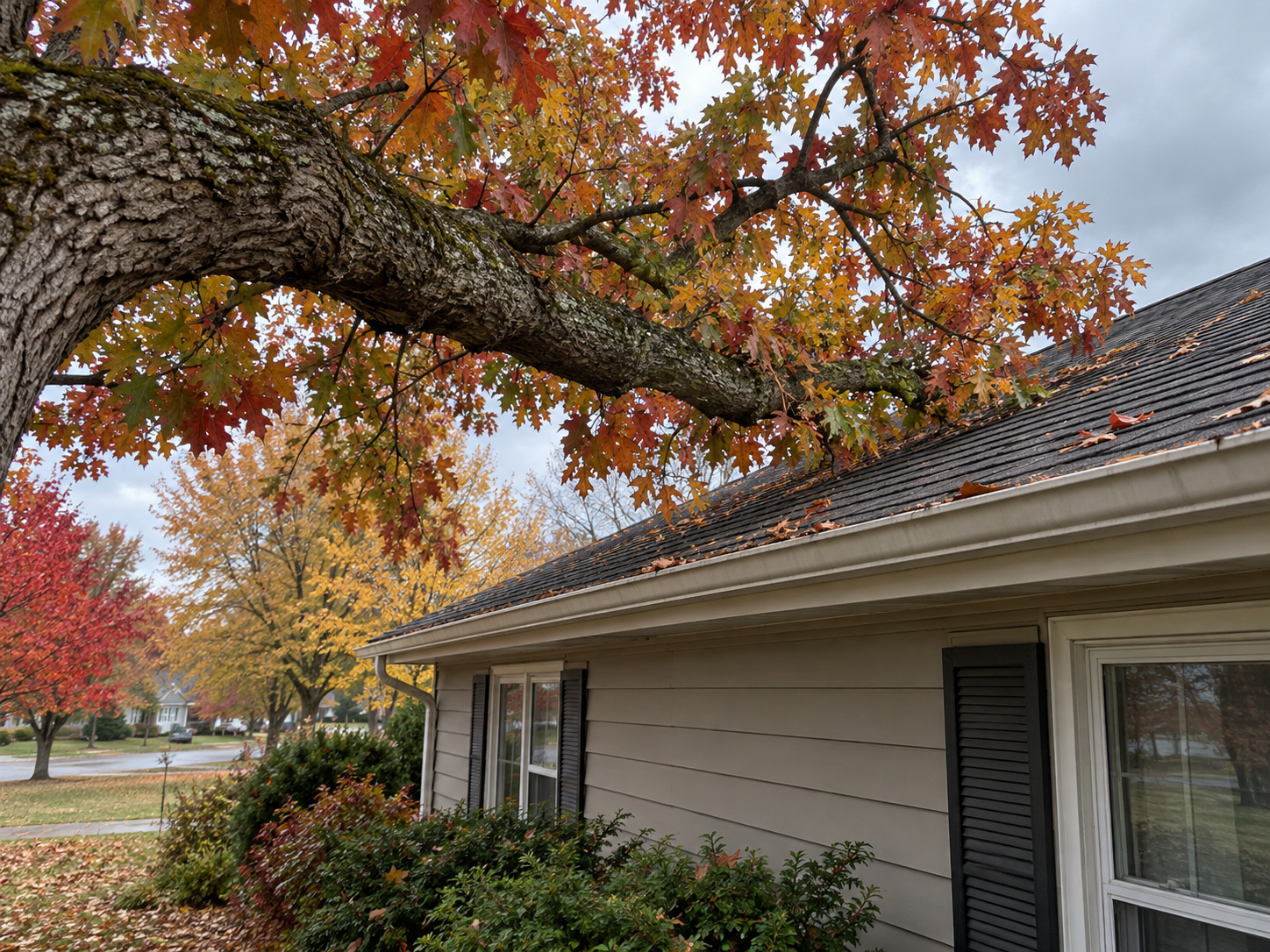
Branches that overhang the house are the ones that deserve attention first. Limbs that touch or sit close to the roofline can scrape shingles, drop debris into gutters, and cause real damage if they fail. Branches near driveways, patios, and play areas matter too, because that is where people spend time.
- Roof contact: Branches rubbing the shingles or sitting directly above the roof.
- Gutter clutter: Limbs that drop twigs and leaves into gutters all season.
- Walkways and driveways: Large limbs hanging over areas where people and vehicles pass.
- Utility lines: Branches near power lines should be handled by the utility or a qualified professional, never by a homeowner on a ladder.
How Does Clay Soil Affect Tree Health Around Fort Wayne?
Much of the soil in the Fort Wayne area is clay-heavy, which holds water and can drain slowly. Trees growing in wet, compacted ground can struggle to anchor and take up nutrients, and stressed trees often show it first through thin canopies and dieback. If a tree has several dead branches and also sits in a spot that stays soggy, it is worth having a professional look at the whole picture rather than just trimming the visible damage.
Can You Prune a Tree Yourself, or Should You Hire a Pro?
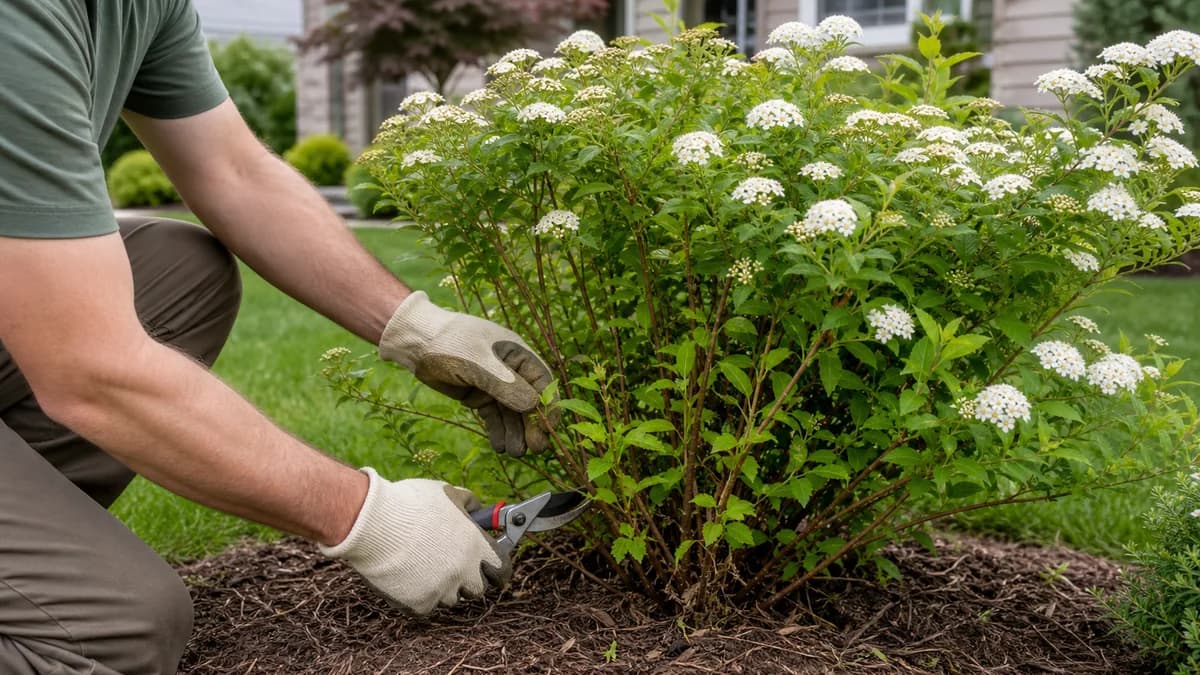
Small dead twigs and low branches you can reach from the ground with hand pruners are reasonable DIY jobs. Anything that requires a ladder, a chainsaw, or climbing is a different story. Falling limbs, unstable ladders, and branches under tension make this work genuinely risky.
Hire a professional when the work involves any of the following:
- Branches larger than you can safely cut with hand tools
- Limbs over the roof, a fence, or utility lines
- Any work above head height
- A tree with cracks near the trunk or major structural damage
What Should You Expect From Professional Tree Pruning?
A good pruning visit starts with an assessment of the whole tree, not just the branch you pointed at. The crew should explain what will be removed and why, make clean cuts at the proper point on the branch, and avoid removing more of the canopy than the tree can handle. Cleanup of the cut material should be part of the conversation before the work starts. Minnick Lawn & Landscaping offers tree care services for properties in Fort Wayne and the surrounding Northeast Indiana area.
When Should You Schedule Tree Work This Fall?
The sooner the better. Once you notice a dead, cracked, or overhanging branch, getting it looked at before the first hard freeze and winter storms gives you the most options. Ready to get your trees ready for winter? Request a free quote from Minnick Lawn & Landscaping this season, and we will take a look at the trees on your property and recommend what makes sense.