A solid patio base is the hidden foundation that separates a beautiful backyard feature from a maintenance nightmare. In Fort Wayne, Indiana, where our Northeast Indiana clay soil and seasonal freeze-thaw cycles test outdoor structures, choosing the right base material is non-negotiable. The base prevents settling, cracking, and uneven surfaces that plague poorly constructed patios. We'll walk you through the materials that work best for our climate and how each performs under real-world conditions.
Why Does Patio Base Material Matter in Fort Wayne?
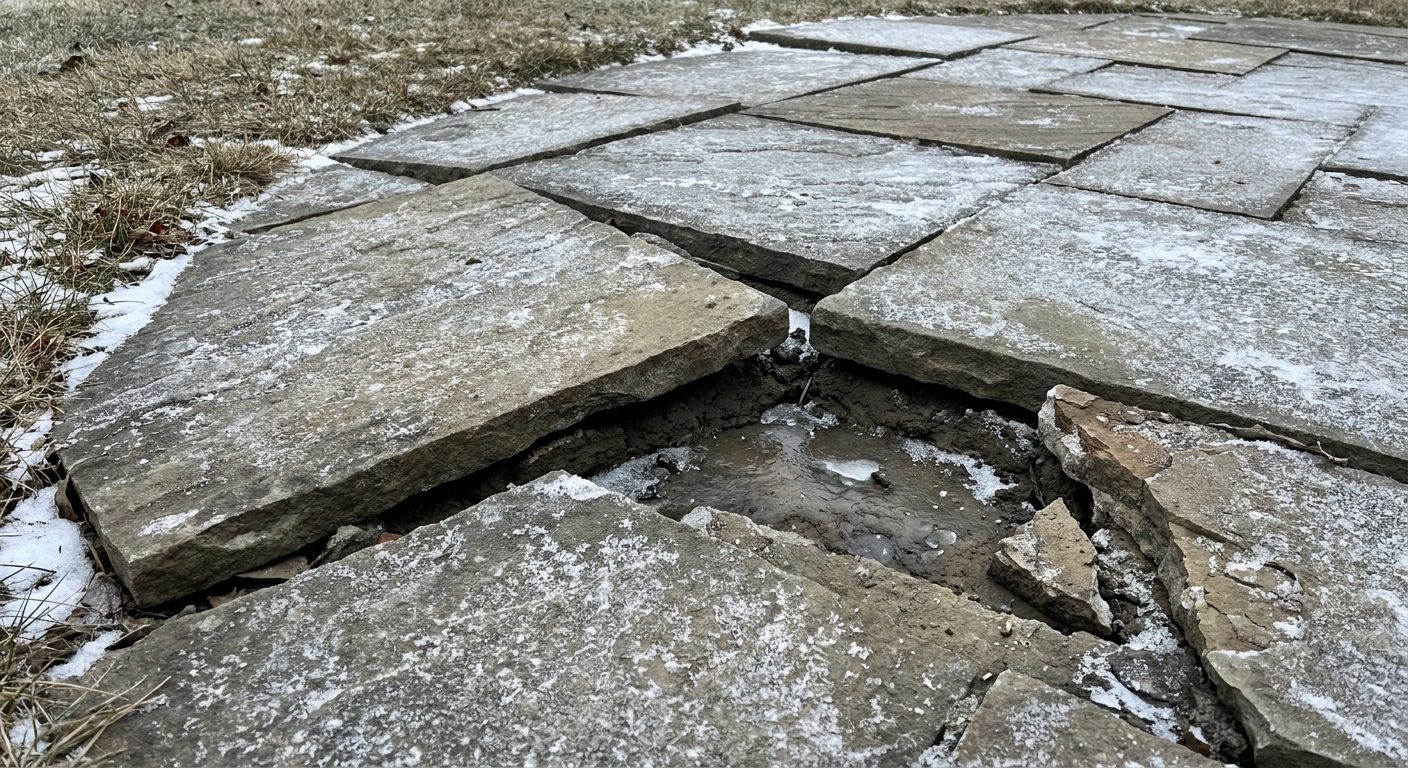
Fort Wayne sits in USDA Zone 5b with heavy clay soil and significant winter freeze-thaw cycles. Without a proper base, water infiltrates, freezes, expands, and pushes your patio upward—a process called frost heaving. A quality base system allows drainage, prevents water pooling, and keeps your patio level for years. The difference between a ten-year patio and a twenty-year patio often comes down to base preparation.
Our Northeast Indiana soil naturally retains moisture, making drainage your primary concern. A patio built directly on soil or with inadequate base materials will shift within the first few winters. Investing in proper base materials upfront costs far less than replacing a failed patio.
What Is Crushed Stone and Why Is It Popular?
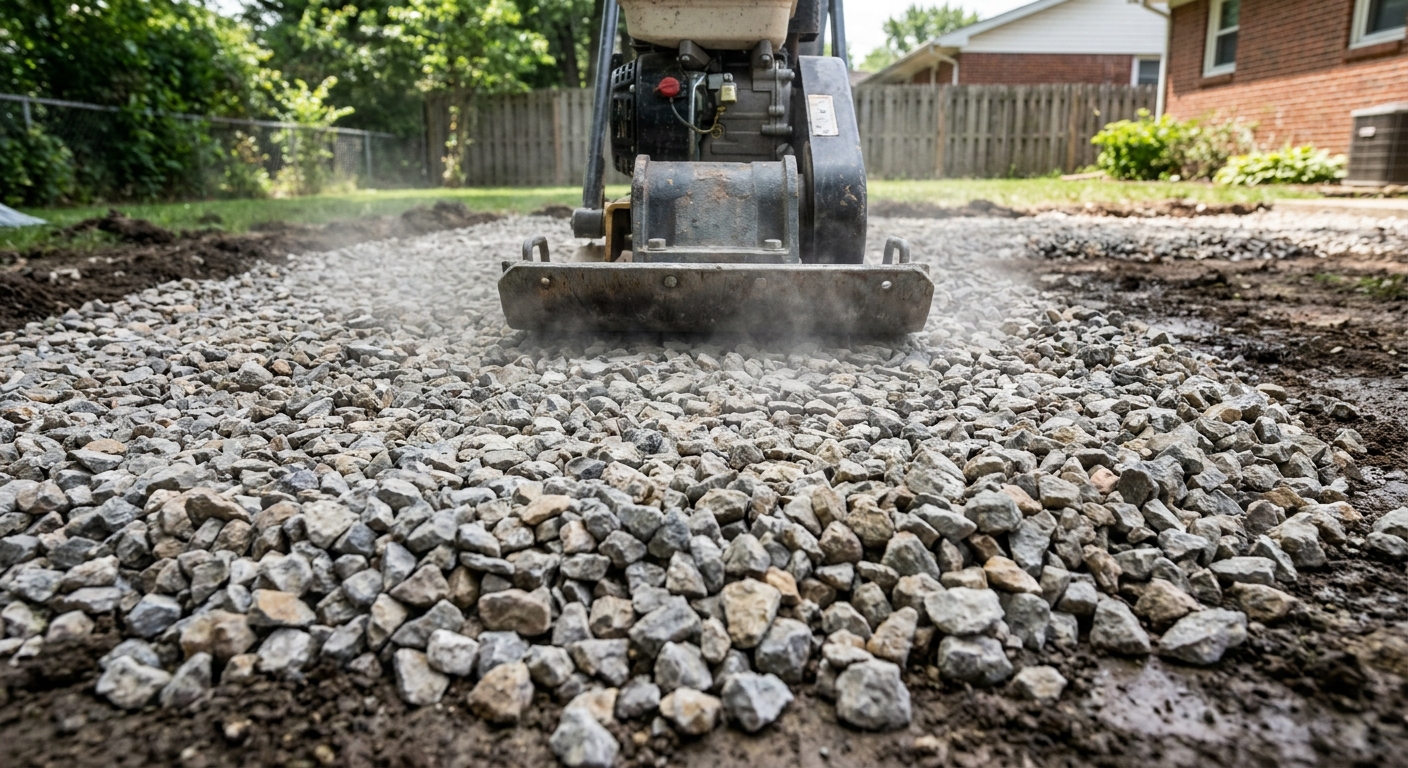
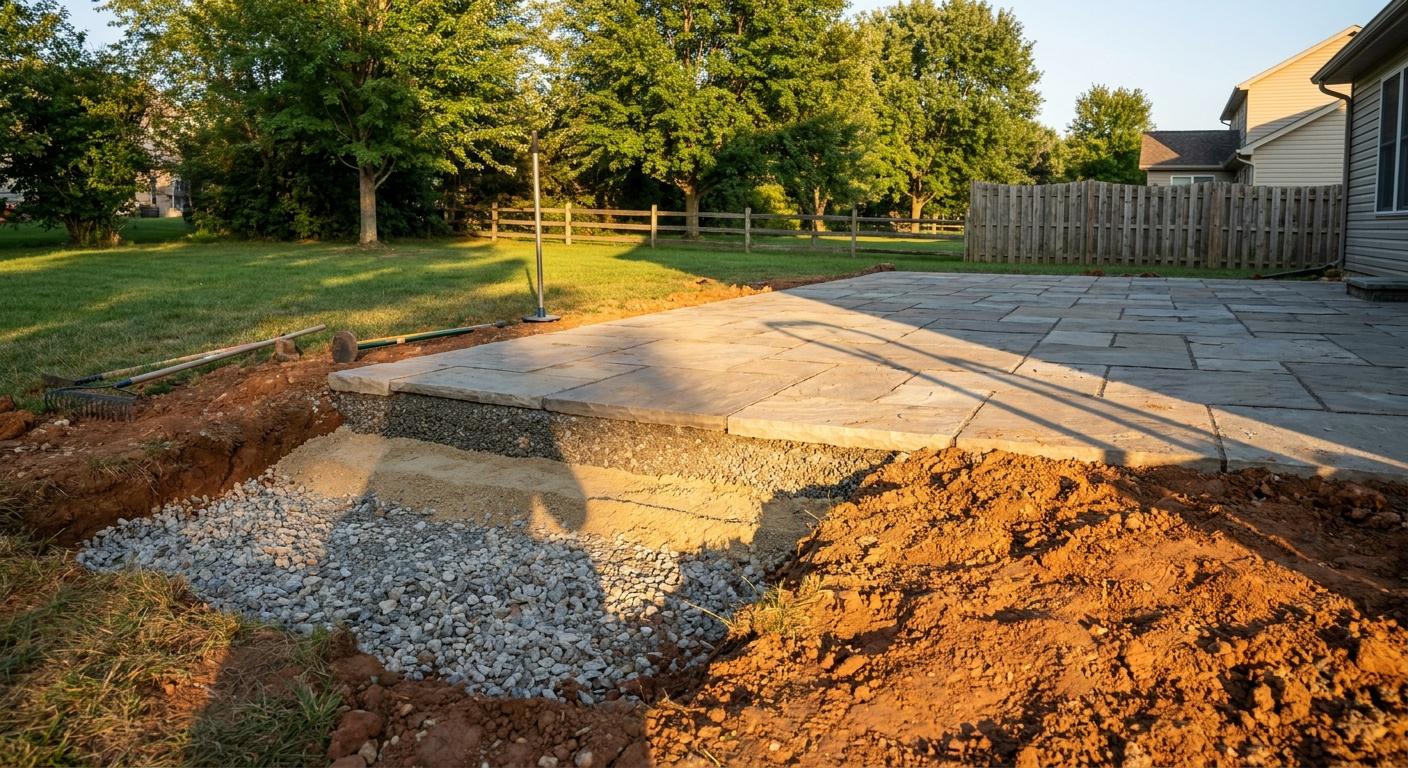
Crushed stone (also called crushed limestone or quarry process) is the most common base material for patios across Fort Wayne. This angular stone compacts densely, creating excellent stability and drainage. It typically comes in 3/4-inch size and is laid 4-6 inches deep, then compacted with a plate tamper.
The angular edges lock together better than rounded gravel, providing superior support for heavy pavers and concrete. In Northeast Indiana's clay-heavy soil, crushed stone's permeability is essential—it allows water to drain rather than pool beneath your patio. The material costs roughly $40-60 per ton delivered and is locally available from Fort Wayne area quarries.
- Compacts to rock-solid density when properly tamped
- Exceptional drainage in our clay soil
- Angular edges prevent shifting under paver weight
- Locally sourced and cost-effective
- Works as base for concrete, pavers, or permeable systems
Should You Consider Paver Base or Recycled Asphalt?
Paver base (also called class 2 recycled asphalt or RAP) combines crushed stone with asphalt dust, creating a self-binding material that compacts even denser than crushed stone alone. When compacted, the asphalt dust partially binds the stones, locking them together. Many Fort Wayne hardscaping professionals prefer paver base for its superior compaction and stability.
Recycled asphalt typically costs less than virgin crushed stone—around $30-50 per ton—making it budget-friendly without sacrificing performance. Apply 4-6 inches and compact thoroughly. One caution: in intense heat, the asphalt content may slightly soften, though this rarely causes issues in Northeast Indiana's climate. The self-binding property makes it excellent for areas that experience significant settling pressure.
A properly compacted paver base or crushed stone layer is the most cost-effective insurance against costly patio repairs. Skipping or skimping on base preparation guarantees problems within Fort Wayne winters.
Is Geotextile Fabric Necessary for Fort Wayne Patios?
Geotextile fabric is a synthetic landscape cloth placed between soil and base material, preventing soil migration into your base layer while allowing water drainage. In Fort Wayne's clay soil, this becomes especially valuable—it stops fine clay particles from pumping up through your crushed stone base.
Most professional patio installations in Northeast Indiana include geotextile fabric. It costs $0.15-0.40 per square foot and extends base material life by 5-10 years. Consider it mandatory for clay-heavy areas, optional on sandy or loamy soils. The fabric doesn't replace proper base depth—use it in addition to your 4-6 inch crushed stone layer.
- Lay landscape fabric on compacted, leveled soil
- Ensure fabric extends slightly beyond patio edges
- Overlap seams by 6-12 inches
- Add crushed stone or paver base on top
- Compact thoroughly before laying pavers or concrete
What About Concrete Base for Fort Wayne Patios?
Some patios use a concrete sub-base under pavers, particularly in high-traffic areas or commercial settings. A 3-4 inch concrete layer provides rigidity and excellent load distribution but increases cost by $8-12 per square foot. In residential Fort Wayne applications, this is rarely necessary and can actually trap water if the concrete cracks.
Concrete bases work best when you're building over very soft or marshy soil. For typical Northeast Indiana clay, crushed stone or paver base provides equal or superior performance at a fraction of the cost. Concrete also reduces the patio's ability to handle frost heave—the rigid layer may crack rather than settle evenly.
How Do You Compact Base Materials Properly?
Proper compaction determines whether your patio lasts five years or fifteen. Crushed stone and paver base must be compacted in 2-inch layers using a plate compactor (vibratory tamper), not just walked on. Each 2-inch layer should be compacted at least 4-5 passes until the material no longer visibly settles with each pass.
Fort Wayne homeowners often underestimate compaction. A half-inch of settling during installation seems minor but telegraphs through your finished patio, creating low spots that puddle water. Use a long straightedge to check for high and low points after compacting each layer. Professional hardscaping services in Fort Wayne include proper compaction equipment—it's one area where DIY often falls short.
Rent or hire professional plate compaction equipment. Hand tamping won't achieve the density needed for Northeast Indiana's freeze-thaw cycles. Undercompacted bases fail within 2-3 winters.
What Thickness of Base Do You Need?
Standard patio base thickness in Fort Wayne is 4-6 inches of compacted crushed stone or paver base, applied directly to leveled and fabric-lined soil. For high-traffic areas or load-bearing situations, increase to 6-8 inches. Residential patios rarely need more than 6 inches when properly compacted.
The base should be slightly sloped (1/8 inch per foot) toward a drainage area to encourage water flow away from your home. This simple slope prevents the water pooling that leads to frost heave and structural damage in Northeast Indiana winters. Your finished patio surface should slope the same direction—base and surface work together to manage water.
Ready to build a patio that lasts decades in Fort Wayne's climate? Minnick Lawn & Landscaping's hardscaping team handles every layer of proper patio installation, from soil preparation through base selection and compaction. We understand Northeast Indiana's specific challenges and build accordingly. Request a free quote today and discover why 79+ customers gave us five-star reviews for our attention to foundation details.