Aeration and dethatching are two of the most effective lawn renovation practices, yet many Fort Wayne homeowners confuse them or don’t know which their lawn actually needs. While both improve lawn health by addressing underlying problems, they target completely different issues—compaction versus thatch accumulation. Understanding the distinction helps you invest in the right service at the right time.
After years of providing these services to properties across Northeast Indiana, I’ve developed a reliable system for diagnosing which treatment—or both—a lawn needs. In this guide, I’ll explain exactly what each service does, how to determine which your lawn requires, and the best timing for each in our Fort Wayne climate.

What’s the Difference Between Aeration and Dethatching?
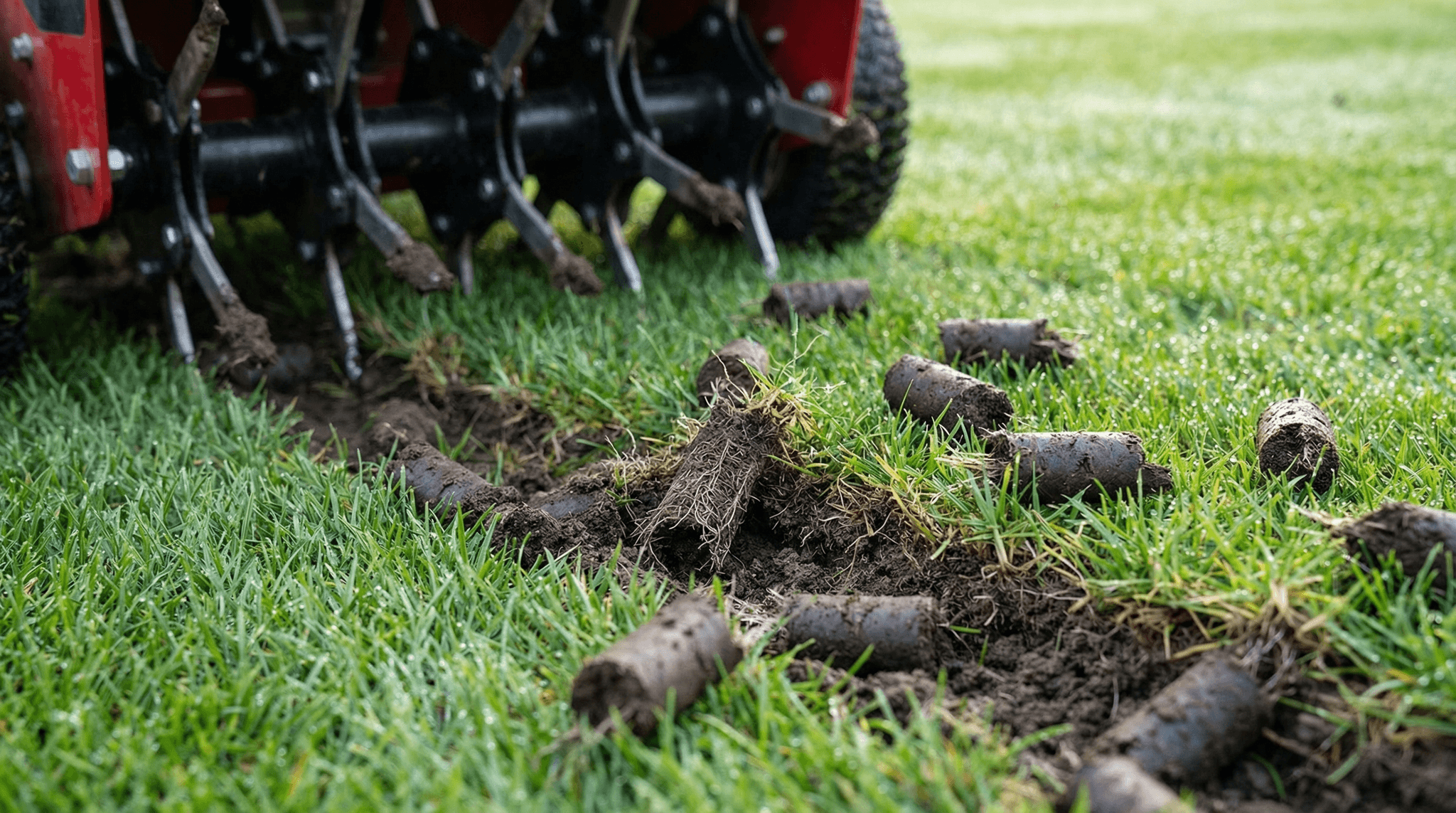
Aeration removes small cores of soil from your lawn to relieve compaction and improve air, water, and nutrient penetration to the root zone, while dethatching mechanically removes the layer of dead organic matter (thatch) that builds up between the grass blades and soil surface. Though both improve lawn health, they address fundamentally different problems with different mechanical processes.
Aeration Explained
What It Does:
- Removes 2-3 inch plugs of soil
- Creates channels for air and water
- Relieves soil compaction
- Stimulates root growth
- Helps break down existing thatch
The Process:
- Mechanical aerator punches hollow tines into soil
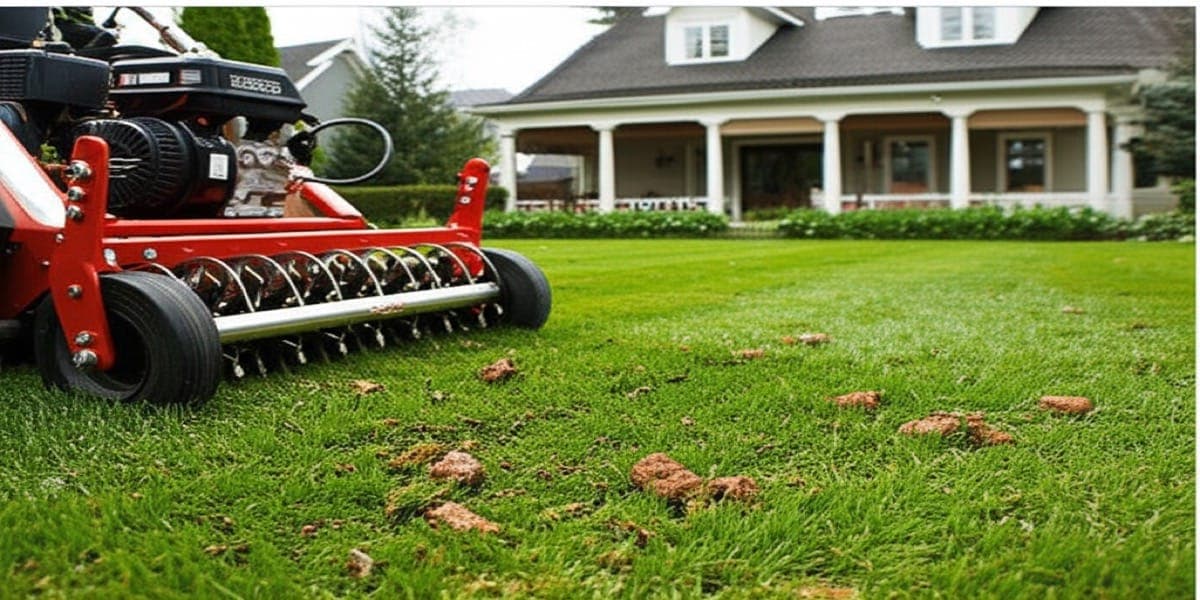
- Plugs are extracted and left on lawn surface
- Plugs break down naturally in 2-3 weeks
- Lawn can be used normally within days
Dethatching Explained
What It Does:
- Removes accumulated dead material
- Cuts through thatch layer mechanically
- Brings debris to surface for removal
- Exposes soil for better water penetration
- Creates space for new growth
The Process:
- Power rake or vertical mower cuts into thatch
- Rotating blades or tines pull material up
- Debris must be raked and removed
- More aggressive than aeration
- Lawn may look rough temporarily
Side-by-Side Comparison
| Feature | Aeration | Dethatching |
|---|---|---|
| Primary Purpose | Relieve compaction | Remove thatch |
| Method | Core removal | Mechanical raking |
| Depth | 2-3 inches | 0.5-1 inch |
| Lawn Stress | Low | Moderate to high |
| Recovery Time | 2-3 weeks | 3-6 weeks |
| Best Season | Fall | Fall (or early spring) |
| Frequency | Annually | Every 2-5 years |
How Do You Know if Your Lawn Needs Aeration?
Your lawn needs aeration if soil is hard and difficult to penetrate with a screwdriver, if water puddles or runs off rather than soaking in, if the lawn receives heavy foot traffic, or if you notice thin growth and poor color despite proper watering and fertilization. These symptoms indicate soil compaction that’s restricting root growth and nutrient uptake.
Signs of Soil Compaction
Physical Tests:
Screwdriver Test - Push a screwdriver into moist soil
- Easy penetration = good soil structure
- Difficult to push in = compacted
Water Infiltration Test - Pour water on lawn
- Absorbs quickly = good drainage
- Puddles or runs off = compacted
Root Depth Test - Dig small plug and examine roots
- Deep roots (4+ inches) = healthy soil
- Shallow roots (1-2 inches) = compacted
Visual Indicators
| Sign | What It Means |
|---|---|
| Thin, struggling grass | Roots can’t grow properly |
| Heavy moss growth | Poor drainage, compacted soil |
| Water puddling after rain | Can’t penetrate compacted soil |
| Hard, dry soil | Compaction prevents moisture retention |
| Thatch not breaking down | Lack of oxygen limits decomposition |
| Poor fertilizer response | Nutrients can’t reach roots |
High-Risk Areas for Compaction
- Areas with regular foot traffic
- Where kids play or pets run
- Along pathways and driveways
- Under swing sets or play equipment
- Where vehicles park on grass
- Heavy clay soil areas (common in Fort Wayne)
Fort Wayne’s clay-heavy soils are particularly prone to compaction, making annual aeration beneficial for most local lawns.

How Do You Know if Your Lawn Has a Thatch Problem?
Your lawn has a thatch problem if the spongy layer of dead organic matter between the grass blades and soil measures more than half an inch thick. To check, cut a small wedge of turf with a knife and measure the brown, fibrous layer above the soil line. Excessive thatch blocks water, air, and nutrients while harboring insects and disease.
How to Measure Thatch
- Use a sharp knife or trowel
- Cut a 3-inch wedge of turf
- Identify the three layers:
- Top: Living grass blades
- Middle: Thatch (tan/brown fibrous material)
- Bottom: Soil
- Measure thatch thickness
Thatch Assessment:
- Less than 0.5 inch: Normal, beneficial
- 0.5 to 1 inch: Monitor, may need attention
- More than 1 inch: Problem, dethatching needed
What Causes Thatch Buildup?
| Factor | How It Contributes |
|---|---|
| Excessive nitrogen | Promotes fast growth that can’t decompose quickly |
| Acidic soil | Slows microbial decomposition |
| Heavy clay soil | Poor drainage reduces decomposition |
| Over-watering | Reduces soil oxygen, slowing breakdown |
| Certain grass types | Kentucky bluegrass and creeping fescues thatch more |
| Pesticide overuse | Kills beneficial microorganisms |
Problems Caused by Excessive Thatch
Water Issues:
- Thatch acts like a sponge
- Water stays in thatch, doesn’t reach roots
- Roots grow in thatch (shallow rooting)
- Increased drought stress
Disease and Pest Issues:
- Fungal diseases thrive in moist thatch
- Insects shelter in thick thatch
- Temperature fluctuations stress grass
Maintenance Issues:
- Scalping when mowing
- Uneven lawn surface
- Poor fertilizer response
- Increased mowing difficulty
What Are the Benefits of Core Aeration?
Core aeration delivers multiple benefits: it reduces soil compaction allowing roots to grow deeper, improves water and nutrient penetration, stimulates new growth, helps thatch decompose naturally, and prepares the lawn for overseeding. For Fort Wayne lawns dealing with clay soil and foot traffic, annual aeration often produces the most dramatic improvements in lawn health.
Primary Benefits
Improved Root Growth:
- Roots can penetrate deeper into loosened soil
- Deeper roots = better drought tolerance
- Better access to nutrients and water
- Stronger, healthier grass plants
Better Water Management:
- Water penetrates instead of running off
- Reduced puddling after rain
- More efficient irrigation
- Less drought stress
Enhanced Nutrient Uptake:
- Fertilizer reaches root zone
- Better response to applications
- More efficient nutrient use
- Healthier grass color
Thatch Reduction:
- Soil microbes mix with thatch layer
- Accelerates natural decomposition
- Works with dethatching if needed
- Long-term thatch management
Secondary Benefits
| Benefit | How It Helps |
|---|---|
| Overseeding prep | Creates seed-to-soil contact |
| pH correction | Allows amendments to penetrate |
| Disease reduction | Healthier grass resists infection |
| Earthworm activity | Improved soil brings worms |
| Lawn resilience | Better stress tolerance |
Results Timeline
- Week 1-2: Plugs visible on surface
- Week 2-3: Plugs break down
- Week 3-4: New root growth begins
- Month 2-3: Visible improvement in grass vigor
- Month 4-6: Full benefits realized
- Next spring: Dramatic improvement evident

What Are the Benefits of Dethatching?
Dethatching removes the barrier of dead material that prevents water, air, and nutrients from reaching your lawn’s root zone, allowing for better penetration and healthier grass growth. For lawns with more than half an inch of thatch, dethatching can transform a struggling lawn by restoring proper soil-to-atmosphere exchange.
Primary Benefits
Restored Water Penetration:
- Water reaches soil instead of sitting in thatch
- Roots can access moisture properly
- Reduced drought stress
- Better response to irrigation
Improved Air Exchange:
- Oxygen reaches root zone
- Microbial activity increases
- Decomposition processes resume
- Healthier soil biology
Better Fertilizer Efficiency:
- Products reach soil, not thatch
- Nutrients available to roots
- Less product needed for results
- More cost-effective maintenance
Disease Reduction:
- Removes disease-harboring layer
- Improves air circulation
- Reduces fungal disease pressure
- Creates healthier environment
When Dethatching is Essential
Dethatching becomes necessary when:
- Thatch exceeds 0.75 inches
- Lawn feels spongy when walking
- Grass looks thin despite care
- Water beads up instead of absorbing
- Scalping occurs even at proper mower height
- Insect or disease problems persist
Important Considerations
Timing Matters:
- Best in early fall (September)
- Can be done in early spring
- Avoid summer stress periods
- Give lawn time to recover
Recovery Expectations:
- Lawn will look rough initially
- May appear thin or sparse
- Full recovery takes 3-6 weeks
- Fall timing allows winter dormancy for recovery
When is the Best Time to Aerate in Fort Wayne?
The best time to aerate cool-season lawns in Fort Wayne is early to mid-fall, specifically from late August through September, when soil is moist enough for good plug removal, grass is actively growing for quick recovery, and temperatures are moderate. Fall aeration also prepares your lawn perfectly for overseeding and fall fertilization.
Fall Aeration Timing
Optimal Window: August 25 - September 30
Why Fall is Best:
- Soil usually moist from fall rain
- Grass in active growth phase
- Roots growing vigorously
- Time to recover before winter
- Perfect for overseeding
- Weed competition minimal
Spring Aeration Timing
Acceptable Window: April 15 - May 15
Spring Considerations:
- Must wait for soil to dry enough
- Avoid disturbing pre-emergent herbicides
- Grass recovers but competes with weeds
- Less ideal than fall but helpful
When NOT to Aerate
| Condition | Why to Wait |
|---|---|
| Saturated soil | Won’t pull proper plugs |
| Dry, hard soil | Tines won’t penetrate |
| Extreme heat | Stresses grass |
| During drought | Roots can’t recover |
| Winter dormancy | No active growth |
| New lawn (< 1 year) | Not established enough |
Aeration Before Other Services
Best Sequence:
- Core aerate
- Apply soil amendments (if needed)
- Overseed (if desired)
- Apply starter fertilizer
- Fall fertilizer application 4-6 weeks later
When is the Best Time to Dethatch in Fort Wayne?
The best time to dethatch cool-season lawns in Fort Wayne is early fall (early September) when grass is actively growing and has several weeks to recover before winter dormancy, or early spring (late April) when grass is breaking dormancy but before summer stress. Fall is preferred because it coincides with the optimal overseeding window.
Fall Dethatching Timing
Optimal Window: September 1-20
Advantages:
- Active grass growth
- Recovery time before dormancy
- Ideal overseeding conditions
- Moderate temperatures
- Good soil moisture
Spring Dethatching Timing
Acceptable Window: April 15 - May 10
Considerations:
- Grass just starting growth
- Disturbs pre-emergent treatments
- Summer stress approaching
- Weed seeds may germinate
- Less recovery time
When NOT to Dethatch
Avoid dethatching when:
- Summer heat is present (June-August)
- Lawn is drought-stressed
- During winter dormancy
- Grass is diseased
- Within 4 weeks of heavy traffic event
- If thatch is less than 0.5 inches

Should You Aerate, Dethatch, or Do Both?
Whether you need aeration, dethatching, or both depends on your specific lawn conditions. Most Fort Wayne lawns benefit from annual aeration due to clay soil, while dethatching is only needed every 2-5 years when thatch exceeds half an inch. Some lawns need both services in the same year to address multiple problems simultaneously.
Decision Guide
Choose Aeration Only If:
- Soil is compacted but thatch is normal
- Heavy foot traffic but good maintenance
- Clay soil with normal thatch (<0.5")
- Want to overseed this fall
Choose Dethatching Only If:
- Thatch exceeds 0.5 inch
- Soil is loose and uncompacted
- Limited traffic areas
- Haven’t dethatched in 3+ years
Choose Both If:
- Compacted soil AND thick thatch
- Lawn is struggling significantly
- Planning major renovation
- Haven’t done either in years
Service Order (If Doing Both)
- Dethatch first - Removes material from surface
- Remove debris - Rake and dispose of thatch
- Core aerate - Now plugs reach soil, not thatch
- Overseed - Seeds reach soil through holes
- Fertilize - Nutrients reach roots effectively
Frequency Recommendations
| Service | Fort Wayne Recommendation |
|---|---|
| Core Aeration | Annually (every fall) |
| Dethatching | Every 2-5 years (as needed) |
| Both Services | Rarely needed same year |
What Should You Expect After Aeration or Dethatching?
After aeration, you’ll see soil plugs scattered across your lawn that break down naturally within 2-3 weeks, with noticeable improvement in grass health within one to two months. After dethatching, your lawn may look thin and rough initially but will recover within 3-6 weeks with proper care and watering.
Post-Aeration Expectations
Immediately After:
- Soil plugs covering lawn
- Plugs are normal, leave them
- Can mow over plugs to break up faster
- Can use lawn normally
Week 1-2:
- Plugs begin breaking down
- Rain or irrigation speeds process
- Some may still be visible
Week 2-4:
- Plugs fully broken down
- May see increased worm activity
- Grass color beginning to improve
Month 1-3:
- Root growth improvement
- Better water absorption
- Grass appears healthier
- Overseeding germinating (if done)
Post-Dethatching Expectations
Immediately After:
- Lawn looks rough or thin
- Exposed soil may be visible
- Some grass damage normal
- Don’t panic at appearance
Week 1-2:
- Water and fertilize appropriately
- Keep traffic minimal
- Begin to see recovery
- New growth emerging
Week 3-6:
- Significant recovery visible
- Grass filling in
- Color returning to normal
- Nearly fully recovered
Month 2-3:
- Full recovery complete
- Improved water penetration
- Healthier overall appearance
- Benefits fully realized
Post-Service Care Tips
For Best Results:
- Water appropriately (don’t overwater)
- Continue regular mowing at proper height
- Apply fall fertilizer 2-3 weeks after
- Keep traffic light for first week
- Overseed if done in conjunction

How Much Do Aeration and Dethatching Cost?
Core aeration for a typical Fort Wayne lawn (5,000-10,000 square feet) costs between $75-150 for professional service, while dethatching costs $150-350 due to the more intensive equipment and labor required plus debris disposal. DIY equipment rental runs $60-100 per day for aerators and $50-80 for power rakes.
Professional Service Costs
| Service | Small Lawn (<5,000 sf) | Medium Lawn (5,000-10,000 sf) | Large Lawn (>10,000 sf) |
|---|---|---|---|
| Core Aeration | $50-75 | $75-150 | $150-250+ |
| Dethatching | $100-200 | $150-350 | $300-500+ |
| Both Services | $125-250 | $200-450 | $400-700+ |
DIY Equipment Rental
| Equipment | Daily Rental | Where to Rent |
|---|---|---|
| Core Aerator | $60-100 | Home improvement stores |
| Power Rake | $50-80 | Equipment rental centers |
| Tow-Behind Aerator | $40-60 | Some garden centers |
Value Considerations
Professional Service Benefits:
- Commercial equipment more effective
- No equipment transport hassle
- Experienced operators
- Time savings
- Often includes cleanup
DIY Benefits:
- Lower cost if you have time
- Can do multiple passes
- Learn your lawn better
- Share rental with neighbors
At Minnick Lawn & Landscaping, our lawn care services include professional aeration and dethatching for properties throughout Fort Wayne and Northeast Indiana.
Get Your Lawn the Treatment It Needs
Understanding whether your lawn needs aeration, dethatching, or both helps you invest wisely in services that actually address your lawn’s problems. When in doubt, start with a compaction and thatch assessment—the results will guide your decision.
Need help determining what your lawn needs? We’re happy to assess your property.
Request a Free Quote or call us at (260) 450-4676 to schedule professional aeration or dethatching services.
Frequently Asked Questions
Can I aerate my lawn myself?
Yes, you can rent a core aerator from most home improvement stores. However, the machines are heavy and require physical effort to operate. For large lawns or those with slopes, professional service is often more practical and produces better results with commercial equipment.
How soon can I mow after aeration?
You can mow immediately after aeration if needed. In fact, mowing over the soil plugs helps break them down faster. Just maintain your normal mowing height and don’t scalp the lawn.
Will aeration kill my grass?
No, properly done aeration won’t kill grass. The plugs create temporary holes, but grass quickly recovers and benefits from improved soil conditions. Some minor stress is possible if done during extreme heat or drought.
How long do aeration holes stay visible?
Aeration holes typically fill in within 2-3 weeks as plugs break down and grass spreads into the openings. Rain or irrigation speeds this process. The holes may remain visible longer in dry conditions.
Should I bag grass clippings after dethatching?
Yes, bag clippings for the first two or three mowings after dethatching to remove any remaining debris brought to the surface. After that, return to mulching clippings normally.
Can I dethatch and aerate on the same day?
Yes, if you need both services, they can be done the same day. Dethatch first, remove debris, then aerate. This order ensures the aerator pulls clean soil cores rather than punching through thatch.
How do I know if my lawn needs dethatching again?
Monitor thatch thickness annually by cutting a small soil wedge and measuring. When thatch reaches 0.5 inches or you notice symptoms (spongy feel, water beading up), it’s time to dethatch again.
Is dethatching harmful to grass?
Dethatching causes temporary stress and can damage some grass plants. This is why timing and proper technique matter. Done correctly at the right time, grass recovers quickly and benefits from reduced thatch.
Sources
- Purdue University Extension - Lawn Aeration
- Penn State Extension - Dethatching and Aerating Lawns
- University of Minnesota Extension - Lawn Care
- The Lawn Institute - Aeration Best Practices
- Ohio State University Extension - Lawn Renovation
Related Articles
- Why Your Lawn Has Brown Patches and How to Fix Them
- Fall Lawn Care Checklist for Fort Wayne Homeowners
Adam Minnick is the owner of Minnick Lawn & Landscaping, serving Fort Wayne, Auburn, and Northeast Indiana since 2018. With years of experience in professional lawn care, Adam and his team help hundreds of local homeowners achieve beautiful, healthy lawns.